
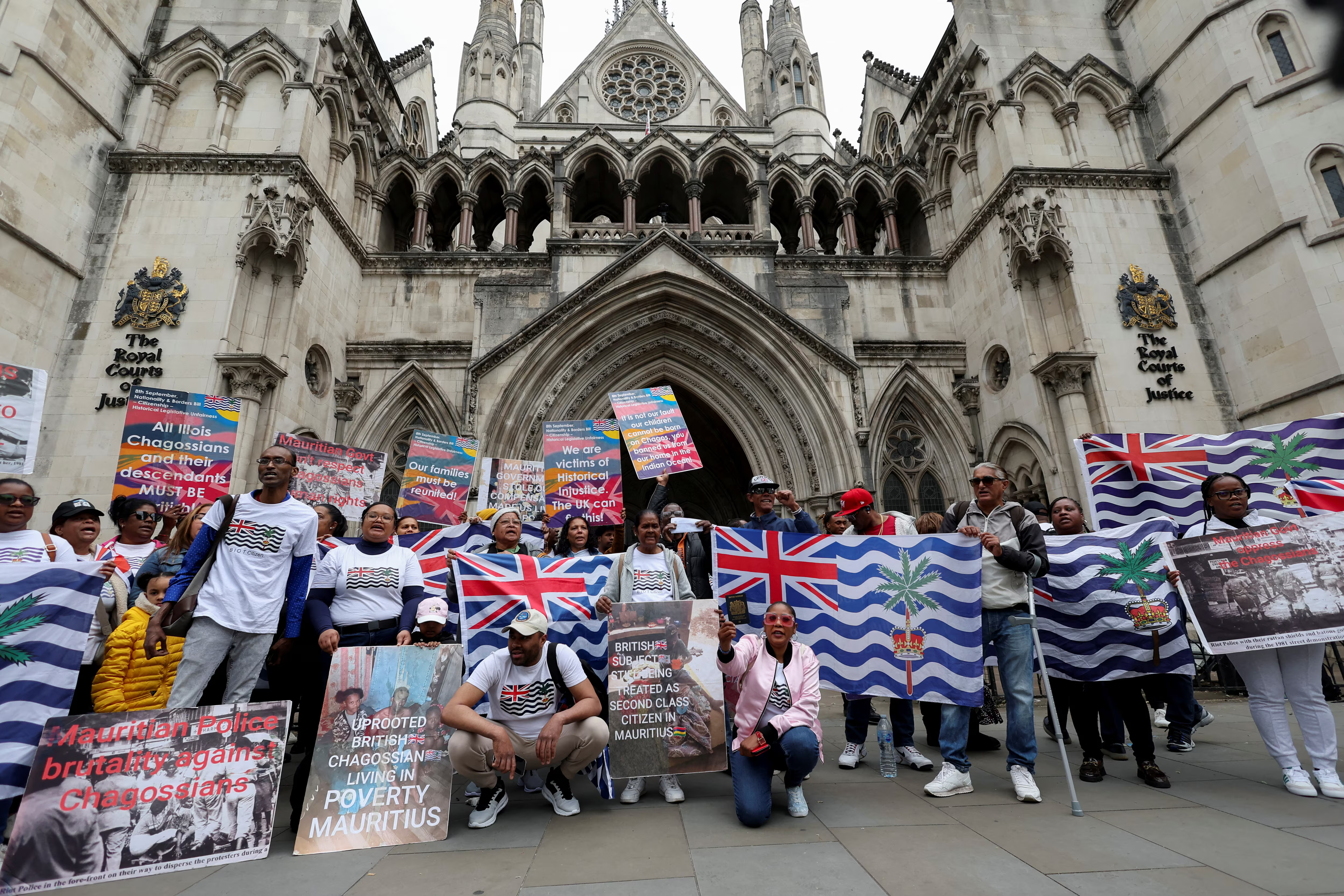
Why Did the UK Government Hand Over the Chagos Islands Now? The Legal Battle and Security Trade-Off Explained

Why Did the UK Give Up the Chagos Islands Now?
At first glance, it may seem strange for the UK to hand over the Chagos Islands—a strategically important territory in the Indian Ocean—to Mauritius. In a world filled with conflicts and political uncertainty, critics argue this move weakens UK national security.
So, what prompted this surprising decision to give up British sovereignty over these islands located thousands of miles away?
The answer lies in a mix of legal pressure and practical security considerations.
The Legal Backdrop: International Court Ruling
The UK government’s decision was largely driven by legal developments. The International Court of Justice (ICJ) ruled that the UK’s continued control of the Chagos Islands was unlawful and recommended their return to Mauritius.
Following this, the United Nations General Assembly passed a resolution urging the UK to respect the ICJ ruling and hand back the islands.
With mounting international pressure and the need to uphold international law, the UK government found it increasingly difficult to maintain its claim over the islands without damaging its global reputation.
Practical Security: Keeping Diego Garcia Operational
While sovereignty shifts to Mauritius, the UK and the US have secured an agreement to continue operating their military base on Diego Garcia for at least 99 years.
This base is vital for the UK’s military reach and intelligence capabilities across the Indian Ocean region. By leasing back the base, the UK preserves its strategic military presence despite giving up sovereignty.
Prime Minister Sir Keir Starmer described the deal as essential for the “long-term future” of this key security asset.
Balancing Legal Obligations and National Security
The UK government’s decision reflects a delicate balance between respecting international law and safeguarding national security interests.
Rather than risking diplomatic isolation and legal defiance, the government chose a pragmatic solution that acknowledges Mauritius’s sovereignty while protecting the military base’s operational future.
What Comes Next?
This deal closes a long-standing dispute but also signals a shift in the UK’s approach to overseas territories and global diplomacy.
How this balance of sovereignty and security will play out remains to be seen, especially amid rising geopolitical competition in the Indo-Pacific.

