
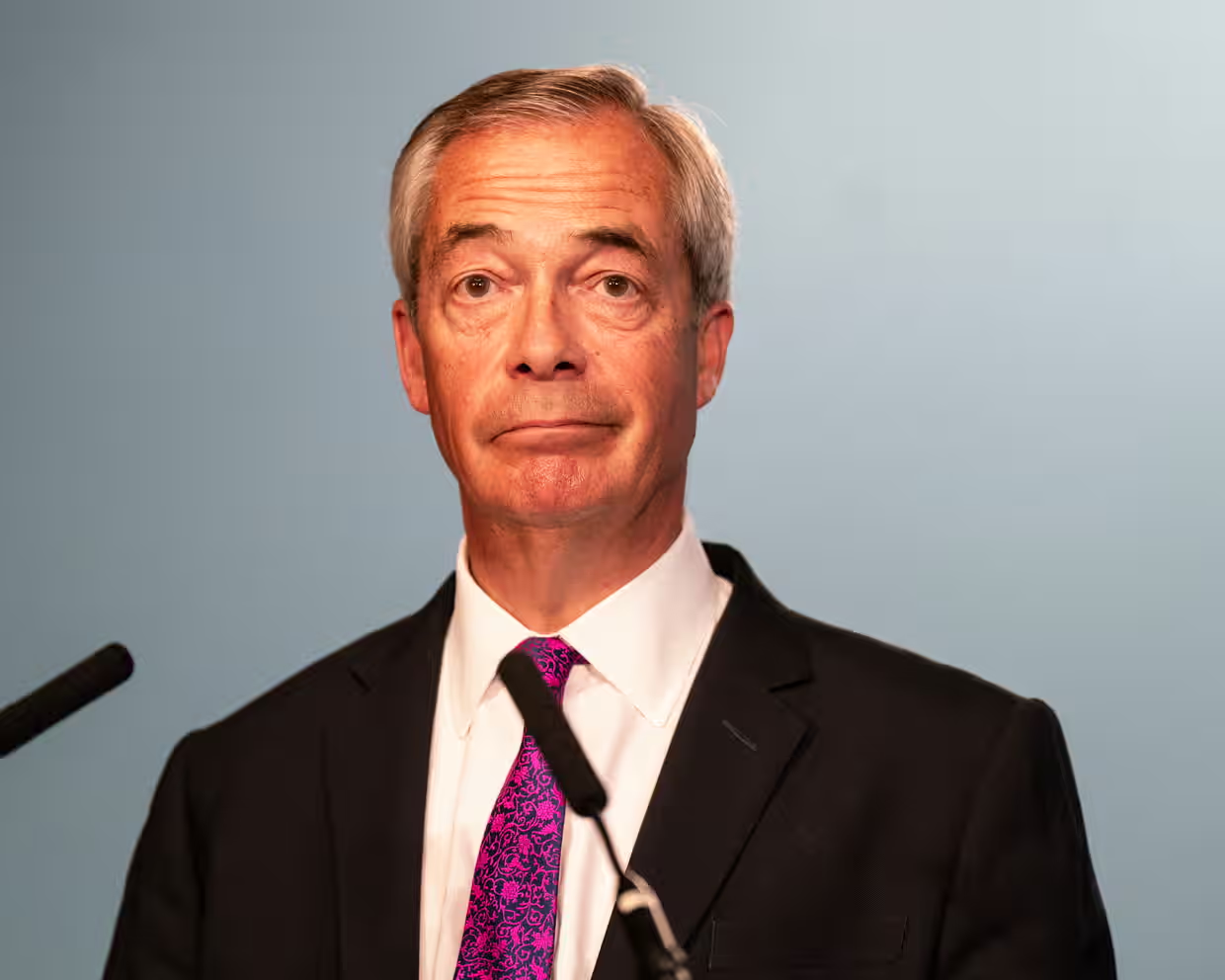
Farage Accuses Sarwar of ‘Race Obsession’ as Toxic Hamilton Byelection Row Boils Over

Farage Doubles Down on Attacks Against Sarwar Amid Heated Hamilton Byelection
The race for the Hamilton, Larkhall and Stonehouse seat has taken a dramatic — and increasingly toxic — turn as Nigel Farage escalates his personal attacks on Scottish Labour leader Anas Sarwar, accusing him of being “obsessed about race.”
The clash marks a new low in the campaign rhetoric, with Reform UK posting a second attack video targeting Sarwar. This follows a widely condemned Facebook ad that falsely claimed Sarwar had pledged to prioritise Pakistani communities — a claim dismissed by Sarwar and slammed by political opponents as misleading and divisive.
A Byelection Turning Into a Personal Battle
What began as a local contest in central Scotland has now morphed into a national political flashpoint, with party leaders on both sides turning up the heat. Reform UK and Labour are locked in a head-to-head battle, but the messaging has veered sharply into personal territory.
Farage’s latest comments accusing Sarwar of “race obsession” come just days after Scottish Labour and the SNP filed formal complaints to Meta, Facebook’s parent company, over Reform UK’s original ad campaign. The ad claimed Sarwar would give preferential treatment to ethnic groups — a claim no official policy or statement supports.
Farage, undeterred, has used the backlash to double down, releasing another video reiterating his accusations and framing Sarwar’s politics as “identity-driven.”
Farage’s Rhetoric Sparks Outrage
Farage’s statements have drawn sharp condemnation from across the political spectrum. Labour leader Keir Starmer, speaking during a campaign event in north-west England, hit back forcefully.
“What we’ve seen with Reform in Scotland in relation to this particular video is manipulation,” Starmer said.
“As ever with Reform and Nigel Farage, it’s about trying to divide people with a toxic narrative and poison our politics.”
Starmer’s intervention highlights the seriousness with which Labour is treating the incident. With growing concerns over racialised messaging and misinformation, many fear the byelection could set a dangerous precedent.
Meta Under Pressure to Act
The controversy now places Meta under the spotlight. Both Scottish Labour and the Scottish National Party (SNP) have submitted complaints requesting the removal of the Reform ad and a review of the platform’s ad policies.
The ad in question has been labeled “deliberately misleading,” with critics accusing Farage of stoking racial tensions for political gain. Meta has yet to confirm if action will be taken.
Campaign watchdogs and civil rights groups have also raised alarms, calling for greater oversight of political advertising and clearer rules around disinformation in election campaigns.
Reform UK Defends Its Messaging
Despite the backlash, Reform UK continues to defend its campaign. Party officials argue that they are simply “asking tough questions” and “challenging identity politics,” claiming that mainstream parties refuse to confront cultural issues.
Farage has used media appearances to insist that “Britain is fed up with race being used as a political tool,” doubling down on his claim that Sarwar is “fixated on race.”
Political analysts say this messaging is part of a broader strategy to galvanise Reform’s core voter base, which tends to be anti-establishment, nationalistic, and skeptical of what they see as politically correct mainstream narratives.
Anas Sarwar: “This is Straight-Up Dog-Whistle Politics”
Sarwar, who has long advocated for inclusive politics and racial equality, has condemned Reform UK’s campaign as “straight-up dog-whistle politics” designed to inflame divisions.
He told reporters:
“This isn’t just about me — this is about what kind of country we want to be. Farage is taking UK politics down a dark road. We have to stand up to it.”
Sarwar has called for cross-party unity against hate speech and disinformation, saying the Hamilton byelection could serve as a test case for whether British democracy can withstand such tactics.
What’s at Stake in Hamilton?
The Hamilton, Larkhall and Stonehouse byelection is shaping up to be far more than a local vote. It could become a bellwether for the direction of UK political discourse heading into the next general election.
Key dynamics to watch:
- Reform UK’s rise: Will their provocative messaging boost their standing or alienate voters?
- Labour’s response: Can Sarwar maintain focus on policy while deflecting personal attacks?
- Voter reaction: Will divisive ads energize or repel undecided voters?
- Social media’s role: Can platforms like Meta effectively regulate political misinformation?
With tensions rising, all eyes will be on the outcome — and whether it rewards the politics of division or rebukes it.
A Race That’s About More Than Votes
This byelection has become a microcosm of broader political battles — over race, truth, digital campaigning, and the limits of free speech. As Reform UK pushes the boundaries of political messaging, parties and platforms alike face tough questions.
Will Farage’s gamble on incendiary tactics pay off? Or will voters push back against what critics are calling a dangerous slide toward racialized populism?
The answer may come sooner than expected — and its ripple effects could shape the UK’s political climate for years to come.

