
Tears, Prayers, and History: MPs Reflect as Assisted Dying Vote Passes in Parliament

Emotional Scenes Mark a Landmark Moment in Britain’s Long Debate Over End-of-Life Choice
The House of Commons was steeped in emotion as Members of Parliament passed a historic bill that brings assisted dying one step closer to legalisation in England and Wales. For many in the chamber, the vote was not only a political act but also a deeply personal milestone — the culmination of years of advocacy, grief, and soul-searching.
As the Speaker read out the final vote count, relief, sorrow, and quiet celebration rippled through Westminster. Some MPs wept. Others stood quietly, grasping the hands of campaigners and colleagues who had fought hard — and in some cases, at great personal cost — to bring Britain closer to a compassionate end-of-life policy.
A Decade of Campaigning, a Moment of Clarity
Cross-Party Support and Private Struggles
For Conservative MP Kit Malthouse, the passage of the bill marked the close of a 10-year internal campaign. Malthouse had long worked to persuade colleagues within his party to consider assisted dying not as a moral failure, but as a matter of dignity, autonomy, and compassion.
“I thought maybe ten or twelve [MPs] would come with me,” he said afterward, “but over 20 Conservative votes — that shows how far we’ve come.”
On the other side of the aisle, Labour MP Lizzi Collinge appeared near tears, overwhelmed by the moment and the enormity of what the bill represents. Though Labour’s leadership did not whip the vote, support among backbenchers was strong — though not universal.
Indeed, some veteran Labour women MPs, long opposed to assisted dying on ethical or religious grounds, looked visibly shaken by the outcome.
Kim Leadbeater: A Vote Shadowed by Grief and Resolve
Personal Loss, Political Purpose
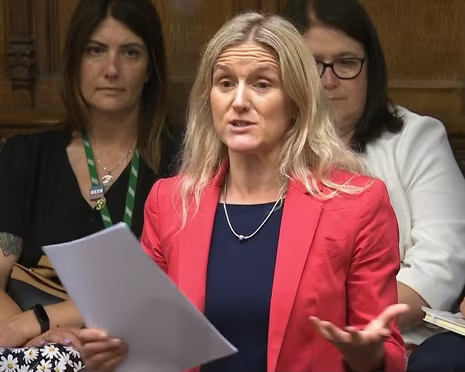
For Kim Leadbeater, the vote was deeply personal. Sunday marked what would have been her sister Jo Cox’s birthday, while last Monday was the ninth anniversary of Jo’s murder — a tragic milestone that added emotional weight to an already charged moment.
As she exited the Commons chamber, Leadbeater was embraced by assisted dying campaigners — some of whom had expressed doubts they would live to see the vote take place.
“Overwhelmingly, the sense is relief,” Leadbeater told reporters. “But it’s also emotional. For so many people, this is more than just politics. It’s their life. Or the end of it.”
Despite initially strong cross-party support, Leadbeater faced increasingly vocal opposition in the months leading up to the vote. Several MPs she had hoped would back her changed their stance, and the backlash — especially online — became personal and painful.
Still, she remained resolute, calling the bill a chance for the UK to provide “a kind, compassionate, and dignified end for those facing unbearable suffering.”
A Nation Divided, Yet Moving Forward
The Complexity of Conscience Votes
Assisted dying has long been one of the most divisive issues in British politics, often cutting across party lines and ideological camps. As with abortion or capital punishment, it is a debate guided more by personal values, religious beliefs, and lived experience than by conventional party policy.
This vote was no exception. In the final hours before the tally, MPs were texting each other in the voting lobbies, unsure whether the bill would survive the final hurdle. The tension was palpable — a rare show of raw, unscripted emotion in an increasingly stage-managed political arena.
Even Keir Starmer, who has voiced his support for the principle of assisted dying but tried to remain neutral during the debate, allowed himself a quiet smile when the numbers were read.
What the Bill Means and What Comes Next
Legal Framework, Safeguards, and Public Support
The assisted dying bill, as it currently stands, allows terminally ill, mentally competent adults with less than six months to live to request medical assistance to end their life. It includes multiple safeguards:
- Two independent doctors must confirm eligibility
- A mandatory cooling-off period
- Review and oversight by a national panel
Polling has consistently shown that a majority of the British public supports assisted dying, often by margins of 70% or more. However, the issue remains deeply controversial among religious institutions, some medical professionals, and disability rights advocates who fear unintended consequences.
The bill now heads to the House of Lords, where it will face further scrutiny and potential amendments. But after years of political inertia, campaigners say the tide has finally turned.
Opponents Remain Vocal and Organised
Concerns Over Slippery Slopes and Medical Ethics
Despite the bill’s passage, strong opposition remains — especially among MPs, peers, and advocacy groups who argue that legalising assisted dying could undermine trust in the healthcare system and place pressure on the vulnerable.
Critics warn of a potential “slippery slope” effect, where eligibility could be gradually widened beyond terminal illness. Others highlight failures in countries like Canada and Belgium, where cases of medically assisted death for non-terminal conditions have sparked backlash.
Religious leaders, including the Archbishop of Canterbury, have also condemned the move, calling it “a profound moral failure” and warning that the sanctity of life must not be eroded by legislative convenience.
A Nation at a Moral Crossroads
The historic vote on assisted dying may not yet mark the end of the road, but it has fundamentally changed the conversation. Britain is now moving toward a future where the right to die with dignity is seen not as a taboo, but as a choice — one rooted in compassion and control.
For MPs like Leadbeater and Malthouse, this week was about more than legislation. It was about honouring pain, responding to real suffering, and finally giving voice to those who no longer have one.
As the bill advances through Parliament, the country continues to wrestle with questions that have no easy answers — but, finally, a meaningful debate has begun.

