
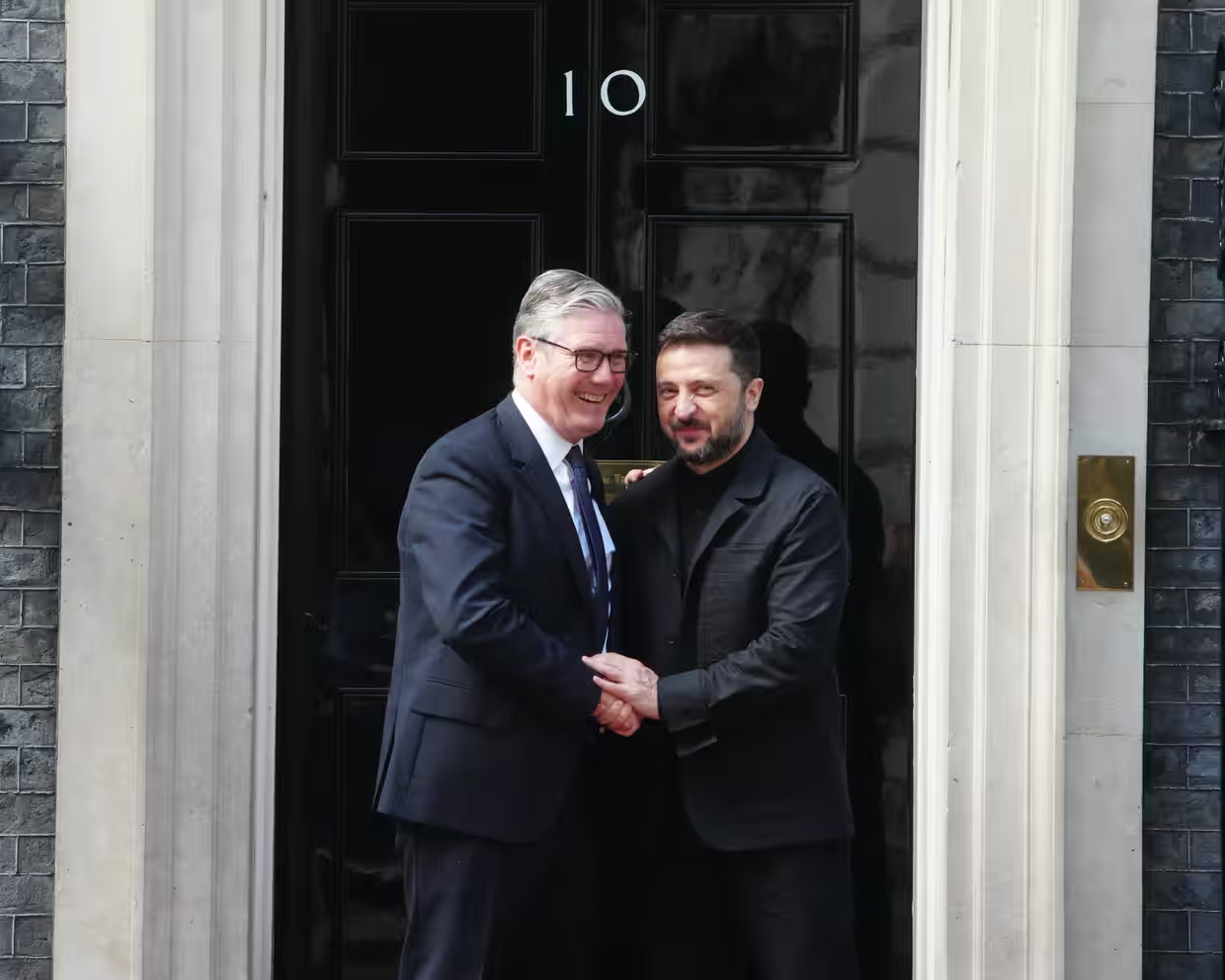
UK Pledges to Spend 5% of GDP on Defence by 2035: A Strong Signal Amid Rising Global Threats

UK Commits to Boost Defence Spending to 5% of GDP by 2035
In a major announcement ahead of the NATO summit in The Hague, the UK government has committed to raising its defence spending to 5% of GDP by the year 2035. This long-term pledge marks a significant shift in the country’s national security strategy and signals Britain’s determination to deepen its role within NATO amid mounting global conflicts and growing security challenges.
Prime Minister Keir Starmer, preparing to meet with NATO leaders and US President Donald Trump, emphasized that this increase in defence investment will strengthen the UK’s commitment to collective security and help address a changing global threat landscape.
Background: Why Now?
The decision follows weeks of intense diplomatic pressure and negotiations with NATO allies. As the alliance responds to Russia’s aggressive actions in Ukraine and rising instability worldwide, NATO has called for its members to boost defence budgets. The UK’s announcement aligns with NATO’s new spending targets, although it comes with a longer timeline compared to some other key allies.
Poland, for example, has pledged to meet the 5% spending target by 2030, while the UK’s deadline is set for 2035. The UK government negotiated a later date amid concerns from Treasury officials about the financial implications of rapid defence spending increases.
What Does the 5% Spending Commitment Include?
Officials have clarified that the 5% target will consist of two parts:
- 3.5% of GDP for core defence: This covers traditional military expenditures such as personnel, equipment, and operations.
- 1.5% of GDP for broader “whole of society” security investments: This includes resilience efforts in infrastructure, energy security, cyber defences, and economic shock absorption.
This broader approach reflects the UK’s understanding of modern security threats, which extend beyond conventional military risks to include digital sabotage, supply chain disruptions, and economic coercion.
Military and Political Reactions
Military chiefs are expected to welcome the increased funding, but some defence insiders caution that the headline figure risks confusing actual military capability investments with other government spending already planned in areas like infrastructure and cyber security.
The government’s ambition to reach 5% defence spending will only be fully realized after the next two general elections, a timeline that has raised concerns among some MPs and defence advocates who argue the UK risks lagging behind NATO peers if spending grows too slowly.
Political Dynamics and Internal Pressures
Labour Chancellor Rachel Reeves faced significant lobbying from pro-defence Labour MPs and military figures eager for a higher and faster spending commitment. The pressure was fueled by warnings that the UK could fall behind its NATO allies if it didn’t boost its defence budget more aggressively.
Despite these pressures, the government opted for a gradual approach to balance fiscal responsibility with strategic necessity.
Strategic Timing: Ahead of the NATO Summit
The UK government is presenting this commitment as a sign of serious intent before the NATO summit, where global security and European military self-reliance will dominate discussions. However, some MPs worry that announcing the pledge now, so close to the summit, could weaken the UK’s leverage during negotiations.
The formal pledge will coincide with the government’s publication of its updated national security strategy, which includes a long-awaited review of UK-China relations—a key point in Labour’s manifesto—and plans to address a range of emerging security challenges.
UK’s Defence Spending Trajectory
In the nearer term, the government has committed to spending 2.5% of GDP on defence by 2027-28, with ambitions to reach 3% during the following parliamentary term. These intermediate goals are designed to set the foundation for the longer-term 5% target.
NATO’s Call for Higher Defence Spending
NATO Secretary General Mark Rutte has urged member states to commit to the 5% GDP defence spending target amid ongoing global tensions, particularly with Russia’s invasion of Ukraine. This push is part of a broader effort to strengthen the alliance’s collective defence capabilities and to ensure that all members contribute fairly to common security goals.
Rutte’s call reflects the shifting geopolitical landscape where the risk of military confrontation remains significant.
US Pressure and Support
The UK’s pledge also aligns with pressure from the United States, where President Donald Trump has repeatedly threatened to reduce US involvement in NATO if European allies do not increase their defence contributions. The US currently spends around 3.4% of GDP on defence, a figure the Trump administration wants NATO allies to match or exceed.
British officials believe the 5% spending goal is realistic and necessary to confront the full spectrum of threats, from conventional military risks to cyberattacks and economic pressures.
The Broader Context: Modern Security Challenges
The UK’s commitment acknowledges that security threats today go far beyond traditional battlefield concerns. Supply chain vulnerabilities, energy security, cyber warfare, and economic coercion are all recognized as critical challenges.
By allocating part of the 5% spending target to these areas, the UK aims to build resilience across society and ensure the nation can withstand and respond to diverse security shocks.
Concerns and Criticisms
Despite broad support, some defence officials have expressed concern that the headline figure of 5% GDP spending might give a misleading impression of military readiness. They stress the importance of ensuring that the majority of funds go directly to enhancing military capabilities rather than being absorbed by broader security initiatives already budgeted by other government departments.
Additionally, the slow timeline—reaching 5% only by 2035—has raised questions about whether the UK is moving fast enough to keep pace with emerging threats and allies’ commitments.
What’s Next for UK Defence?
The announcement sets the stage for a significant transformation of the UK’s national security posture over the next decade and beyond. The upcoming national security strategy will provide more details on how this funding increase will be deployed and how the UK plans to manage evolving global risks.
Prime Minister Starmer’s leadership at the NATO summit will be closely watched as Britain aims to reassert itself as a key player in international security and alliance cooperation.
The UK’s pledge to raise defence spending to 5% of GDP by 2035 is a clear response to growing global uncertainty and the need for stronger collective defence. Balancing fiscal caution with strategic ambition, this commitment highlights Britain’s intent to deepen its NATO ties while addressing new security challenges in an increasingly complex world.
With international pressure mounting and threats evolving, the UK’s defence strategy will be a vital part of global efforts to maintain peace and stability over the coming decades.

