
Shocking Vote Shake-Up: Mayoral Elections in England to Scrap First-Past-the-Post – What This Means for Reform Party’s Power Grab

In a bold political move that could reshape local government across England, ministers are set to overhaul the voting system for mayoral elections — ditching the controversial first-past-the-post (FPTP) method introduced by the Conservatives just last year. The switch back to a preferential voting system aims to stop Reform Party candidates from sweeping key regions like Lincolnshire and Hull, where they secured victories with less than majority support. But what’s driving this change — and why are Labour and local councils celebrating this dramatic “radical reset”?
Why Are Ministers Scrapping First-Past-the-Post Already?
The first-past-the-post system, where the candidate with the most votes wins outright regardless of majority, was brought in by the Conservatives in 2022. It replaced the supplementary vote system, which allowed voters to rank candidates by preference and ensured winners had broader backing.
The move quickly drew criticism after Reform Party mayors won crucial regions with only 35-42% of the vote, causing frustration among Labour MPs and local authorities who saw their chances diminished despite higher combined opposition votes.
What’s Changing Under the New Devolution Bill?
The government’s upcoming English Devolution Bill proposes:
- Replacing FPTP with a preferential voting system for mayoral elections
- Merging multiple district and county councils into larger unitary “strategic” authorities
- Giving local governments more power but with a clearer mandate from the public
The preferential system allows voters to rank candidates by preference — if no one wins over 50% initially, second preferences come into play — ensuring mayors elected represent a true majority rather than a simple plurality.
How Will This Affect Reform Party’s Recent Wins?
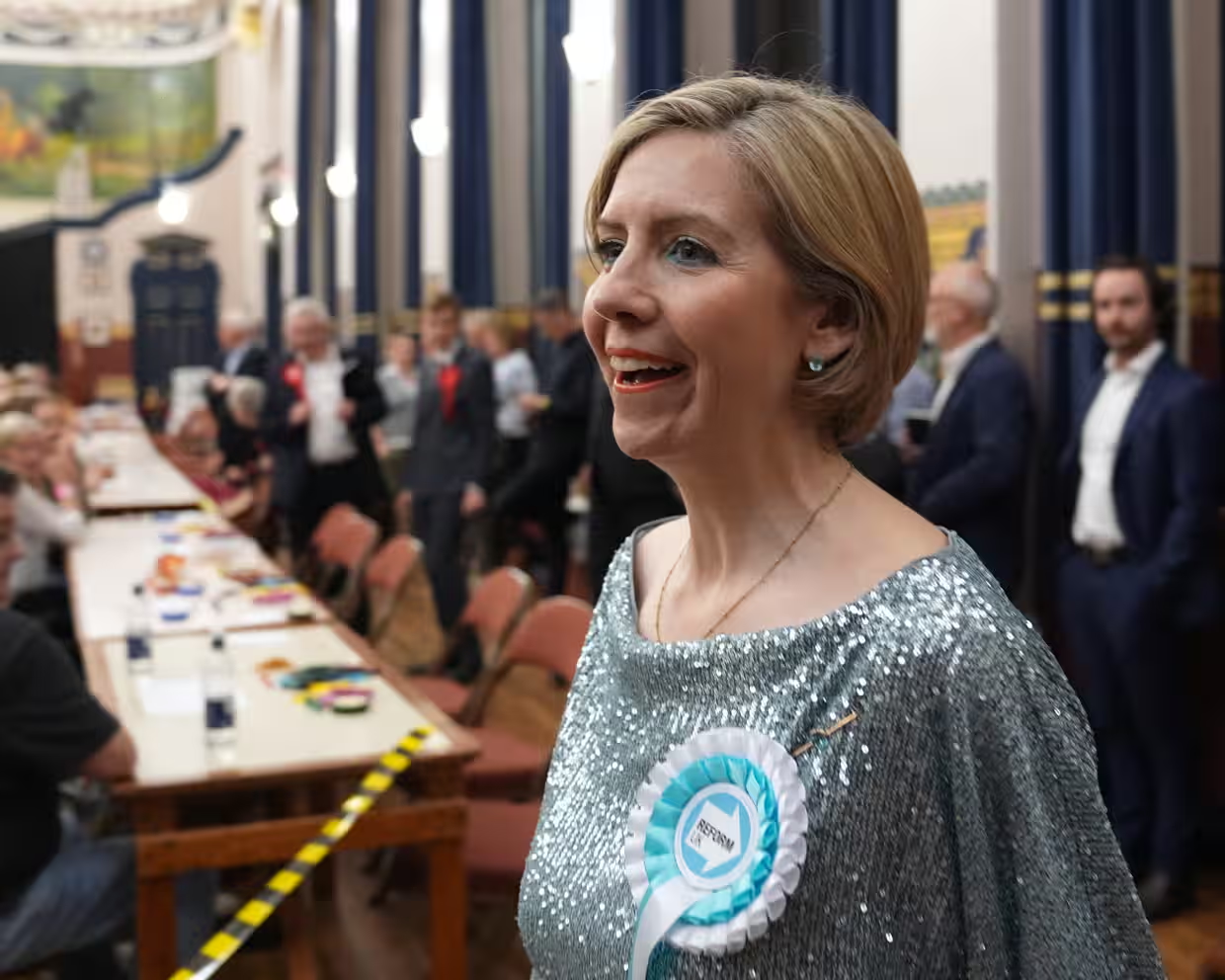
This reform is widely seen as a direct response to Reform’s recent successes. Andrea Jenkyns took the mayoral seat in Lincolnshire with just 42%, while Luke Campbell won in Hull and East Yorkshire with 35% — victories that might not have happened under a preferential system where vote transfers often help more broadly supported candidates.
With this change, Reform’s ability to claim major regional powerhouses could be significantly curtailed, leveling the playing field for Labour, the Lib Dems, Greens, and independents — all of whom tend to benefit from vote transfers.
Labour’s Take: A Victory Against “Vote Splitting”
Labour MPs have welcomed the change, describing the return to preferential voting as a way to fix the “broken” election system that allowed fringe parties to disrupt traditional politics by splitting votes.
Luke Sheehy, CEO of Universities Australia, has called it a “welcome reset” that could prevent future unexpected victories by parties like Reform that don’t command a true majority.
The Conservative Perspective and Political Fallout
The Conservatives’ original move to FPTP was criticized for favoring right-wing parties by simplifying elections where multiple left-leaning candidates might split the vote. Now, reversing this decision signals a major shift in political strategy and priorities — but not everyone agrees.
Some Conservatives argue that preferential voting complicates elections and undermines voter clarity, while Reform and other smaller parties warn that the change unfairly targets them and stifles political diversity.
What’s Next for England’s Local Government?
The devolution bill’s impact goes beyond voting methods. By merging councils into larger strategic authorities, the government hopes to:
- Streamline decision-making
- Improve local services through more coordinated governance
- Give mayors clearer mandates backed by majority voter support
But critics warn these changes might reduce local representation and concentrate power too heavily.
Why You Should Care: The Future of Local Democracy Is at Stake
This shake-up in voting rules will affect how millions of people are represented at the local level for years to come. Whether you live in Lincolnshire, Hull, or any other English region, the new system aims to ensure your mayor has real, broad support — but it will also reshape the political landscape and power dynamics for decades.

