
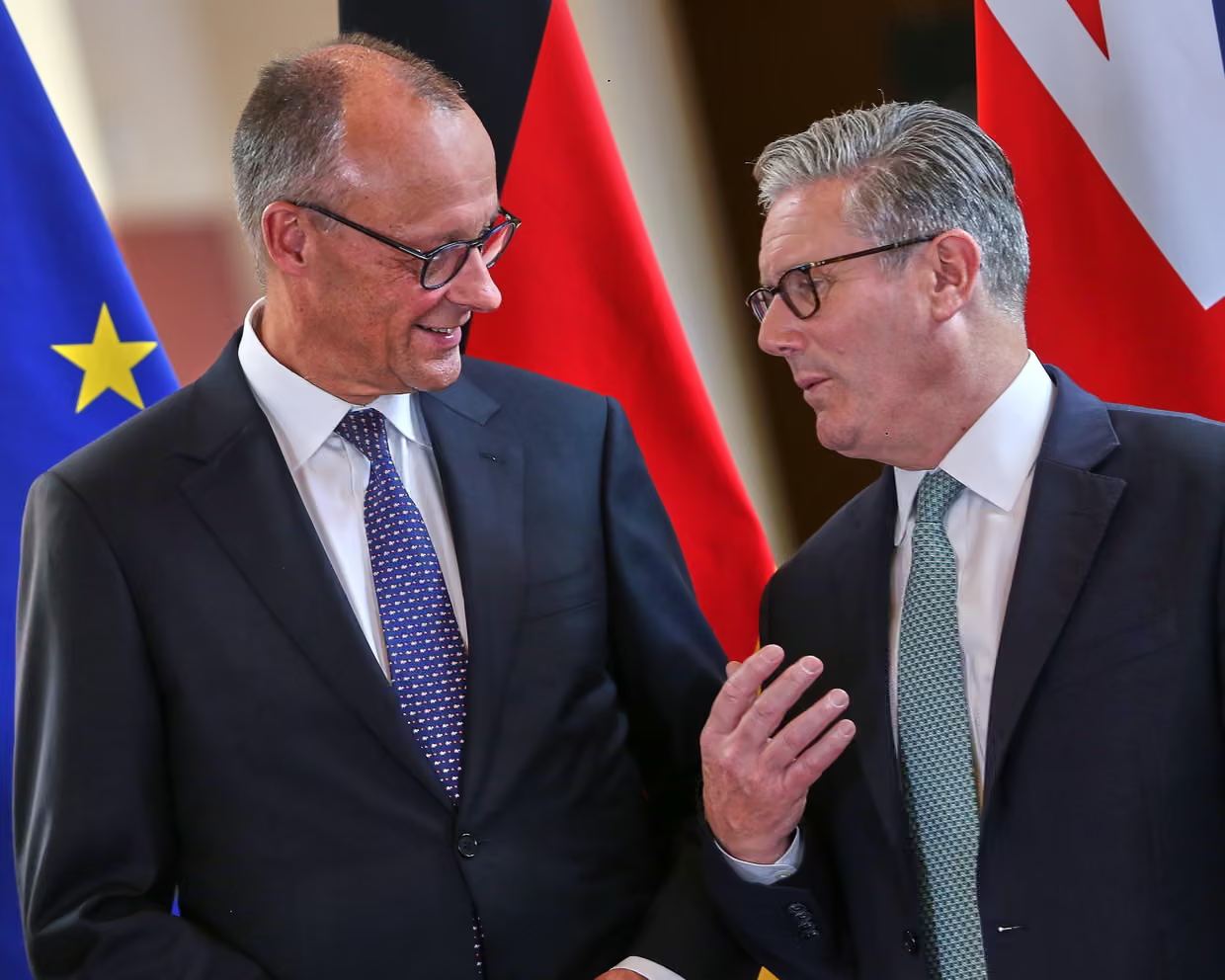
Merz Calls for UK, France, and Germany to Form Strategic Axis on Migration and Defence

Germany’s Merz Pushes for UK-EU Realignment Amid Historic Post-Brexit Treaty
In a move signaling a new era of European cooperation, German Chancellor Friedrich Merz has called for the UK, Germany, and France to form a strategic alliance focused on tackling illegal migration and boosting defense ties. His remarks come during a high-profile visit to the UK, where he and Prime Minister Keir Starmer signed the Kensington Treaty — the first formal bilateral pact between the UK and Germany since World War II.
While Merz acknowledged that he “deeply deplores” Brexit, he emphasized the urgency of rebuilding strong cross-Channel ties in the face of shared global challenges. Speaking at a joint press conference in Stevenage, Merz said:
“We had you in the European Union, and we thought that was enough … but we are now learning that it’s not enough, so we have to do more.”
What Is the Kensington Treaty?
Signed at the V&A Museum in London and followed by meetings at 10 Downing Street, the Kensington Treaty outlines deepened cooperation between the UK and Germany in several key areas:
- Migration policy coordination
- Joint defense strategy and military readiness
- Bilateral trade and investment frameworks
- Education programs, including a formal school exchange initiative
- Science and innovation partnerships
This marks a symbolic and practical re-commitment to European collaboration — even with Britain outside the EU.
Why a Strategic Axis Now?
Chancellor Merz’s proposal to create a trilateral strategic axis — comprising London, Berlin, and Paris — reflects a growing recognition among European leaders that security and migration challenges transcend national borders.
Key motivating factors include:
- Ongoing irregular migration pressures across the Mediterranean and eastern Europe
- Russia’s continued aggression in Ukraine, highlighting the need for stronger defense coordination
- The weakening of traditional U.S. leadership in NATO and global affairs
- A rising threat from far-right populism across European democracies
For Merz, the timing is both political and pragmatic: “If Europe’s three biggest powers don’t act together, we risk falling apart separately,” one Berlin official told German media.
Starmer’s Support: A Shift in UK Foreign Policy
Prime Minister Keir Starmer welcomed the treaty and Merz’s vision, signaling a clear break from the isolationist tone of previous UK administrations.
“This agreement is a statement of our ambition to work ever more closely together,” Starmer said, emphasizing the UK’s willingness to re-engage with Europe “not through rejoining the EU, but through rebuilding mutual trust.”
Starmer’s government has made practical diplomacy a cornerstone of its foreign policy approach, seeking to repair ties frayed by Brexit while maintaining sovereignty.
France’s Role: The Missing Third Voice
While France has not yet officially responded to Merz’s proposed trilateral axis, it’s clear the German chancellor envisions Paris playing a critical leadership role. Given France’s defense capabilities and historical alignment with Germany on EU matters, it is likely that French President Emmanuel Macron or his successor will weigh in soon.
Analysts say France may support such an initiative, especially as it aligns with Macron’s long-standing push for a more autonomous European defense identity — one less reliant on U.S. leadership.
What This Means for Europe
If realized, the trilateral cooperation between the UK, Germany, and France would amount to a de facto strategic leadership council within Europe, influencing not only migration and defense, but also trade, technology, and global diplomacy.
It could also:
- Create unified positions on border security and asylum processing
- Coordinate joint military deployments, particularly in NATO and European missions
- Enhance cybersecurity and counterterrorism capabilities
- Set the tone for EU–UK collaboration post-Brexit without requiring formal re-entry
A Treaty 80 Years in the Making
The significance of the Kensington Treaty cannot be overstated: it is the first bilateral pact between the UK and Germany since the end of World War II. It not only marks a historic reconciliation, but a mutual recommitment to democratic values, stability, and cooperation in a volatile world.
It also reflects a growing consensus that Europe must build stronger internal alliances, especially with uncertainty surrounding the upcoming U.S. election and rising instability in Russia, the Middle East, and Africa.
Final Thoughts: The Return of Quiet Diplomacy
With the Kensington Treaty, diplomacy is back at the center of European politics. Both Merz and Starmer are seen as technocratic, center-ground leaders who value pragmatism over posturing — a shift that could reset the tone of European cooperation in the post-Brexit, post-pandemic era.
While many in Europe still see Brexit as a historical mistake, the treaty — and Merz’s call for a UK-France-Germany axis — suggests that collaboration doesn’t require a shared institution, only shared purpose.

