
Keir Starmer Faces Tough Challenge Persuading Donald Trump to Push for Gaza Peace Talks

A Crucial Meeting Amid Gaza Crisis
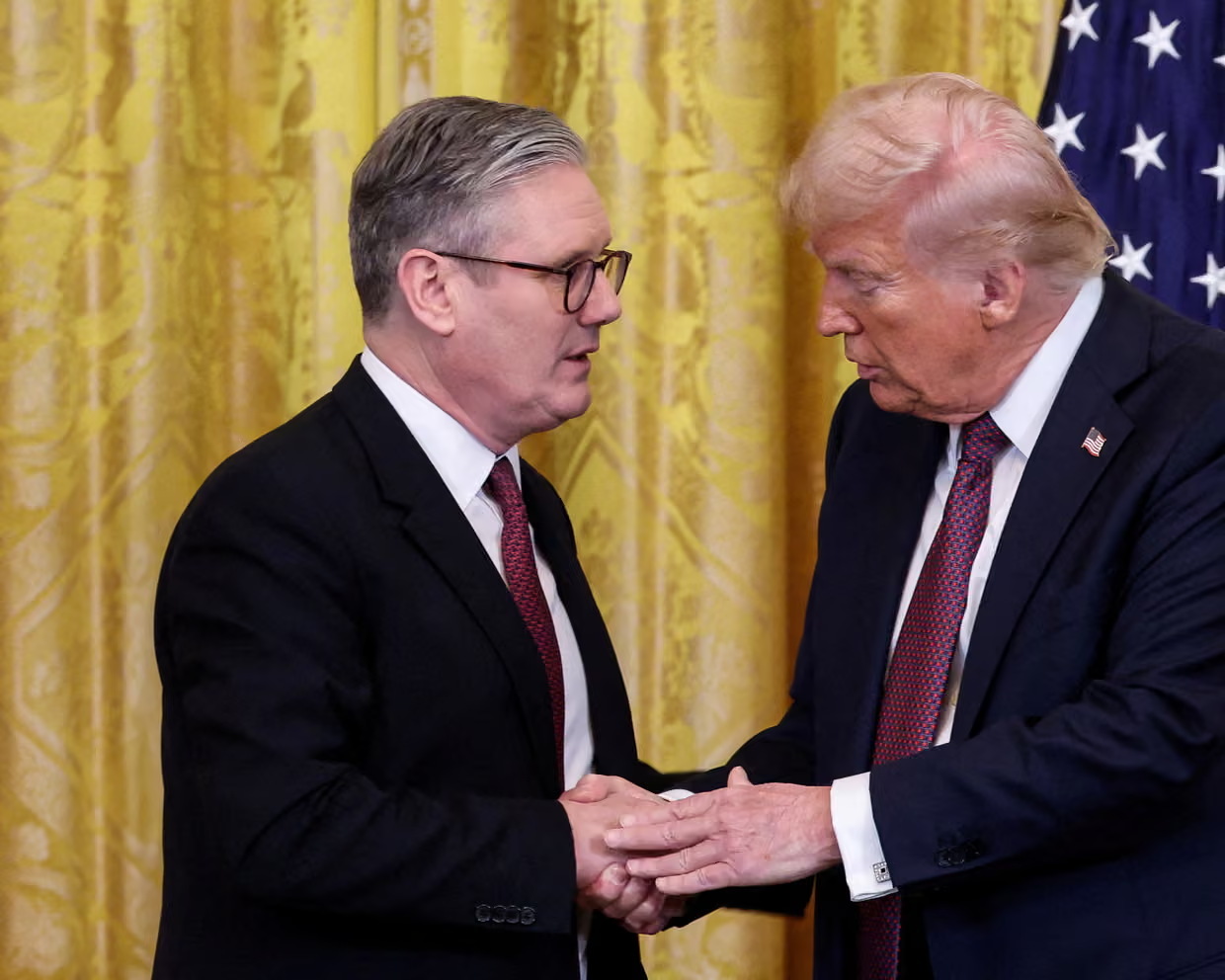
As UK Prime Minister Keir Starmer prepares to meet former US President Donald Trump in Scotland this Monday, the stakes could not be higher. With the ongoing humanitarian crisis in Gaza worsening by the day, Starmer faces the delicate task of convincing Trump to push Israeli Prime Minister Benjamin Netanyahu to revive peace talks and take a tougher stance toward the conflict.
This meeting comes at a time when the UK urgently needs the support of its closest ally to help bring about a ceasefire and a renewed diplomatic effort in the Middle East. But winning over Trump to this cause is no simple task.
Trump’s Relationship with Starmer: A Complex Dynamic
When Air Force One landed in Prestwick last Friday, Trump was asked about his view of Keir Starmer. His response was cautiously positive: “I like your prime minister. He’s slightly more liberal than I am, as you’ve probably heard. But he’s a good man.”
This comment, while light-hearted, carries weight. It signals a degree of respect from Trump toward Starmer, which is important given the strained and complicated relationship the two leaders have navigated.
Starmer’s decision to work with Trump—even during times when their views diverged—has been a calculated move to protect UK interests. Despite some difficult moments, this approach has so far yielded results, such as the recently agreed US-UK economic deal that reduced tariffs on key exports like cars, aluminum, and steel.
Starmer’s Diplomatic Balancing Act
Starmer’s relationship with Trump is one of careful diplomacy. Before Trump’s re-election, Starmer made it clear he would cooperate if it served Britain’s national interests. Since then, he has managed to maintain an uneasy but functional working relationship.
This pragmatic stance helped the UK secure a landmark trade deal with the US, signaling hopes for closer economic ties. Moreover, Starmer has joined other Western leaders in encouraging Trump to reconsider his stance on critical global issues, most notably the conflict in Ukraine.
Initially, Trump appeared sympathetic to Russian President Vladimir Putin, blaming Ukraine’s leadership for the invasion. However, under pressure from allies including Starmer, Trump publicly expressed his unhappiness with Putin’s actions, marking a significant shift in US rhetoric.
The Gaza Challenge: Why Trump’s Role Matters
The Gaza crisis represents one of the most pressing challenges for Starmer’s foreign policy. The conflict has sparked international outrage over the humanitarian toll, with images of suffering children and civilians dominating global media.
Starmer is expected to urge Trump to take a stronger stance toward Israel, particularly to encourage Netanyahu to engage in ceasefire talks and seek a peaceful resolution. The UK Prime Minister views the US as a key player with significant influence over Israeli policies, making Trump’s cooperation essential.
However, persuading Trump to push Israel toward peace talks is complicated by the former president’s close ties to Netanyahu and his historically supportive stance on Israeli government policies.
What Starmer Will Likely Push for in Scotland
Starmer’s agenda during the Scotland meeting includes:
- Reviving ceasefire negotiations: Urging Trump to encourage Israel to halt military operations and return to diplomatic talks.
- Increasing humanitarian aid: Coordinating efforts to deliver emergency assistance to Gaza’s civilian population.
- Promoting a two-state solution: Highlighting the need for renewed international efforts to establish lasting peace through mutual recognition and compromise.
Given Trump’s influence within Republican circles and his continuing popularity among many US conservatives, Starmer’s success in influencing Trump could sway broader US policy and increase pressure on Israel.
Challenges Ahead: Political and Public Pressures
Despite the potential, Starmer faces significant hurdles. Trump’s strong pro-Israel stance and his often unpredictable approach to foreign policy make the prospect of him advocating for a tougher line on Israel uncertain.
Domestically, Starmer is also under pressure from MPs across parties and a UK public increasingly vocal about the Gaza humanitarian crisis. Many expect decisive leadership and clearer support for Palestinian rights, adding to the urgency of Starmer’s diplomatic efforts.
Wider Implications for UK Foreign Policy
Starmer’s handling of the Gaza crisis and his approach to working with Trump will signal the direction of the UK’s foreign policy in turbulent times. Balancing the “special relationship” with the US while responding to global humanitarian crises will test the government’s diplomatic agility.
Starmer’s recent actions, such as recalling the cabinet for emergency meetings and signaling openness to formally recognize Palestinian statehood, reflect a government trying to navigate complex geopolitics while responding to moral and public imperatives.
A Pivotal Moment in UK-US Diplomacy
As Keir Starmer meets Donald Trump in Scotland, the world watches to see if this crucial dialogue can help change the course of the Gaza conflict. The prime minister’s ability to persuade Trump to leverage his influence over Israel and push for peace talks could mark a turning point.
Success would not only provide much-needed relief to millions suffering in Gaza but also strengthen UK-US cooperation on some of the most pressing global challenges.

