
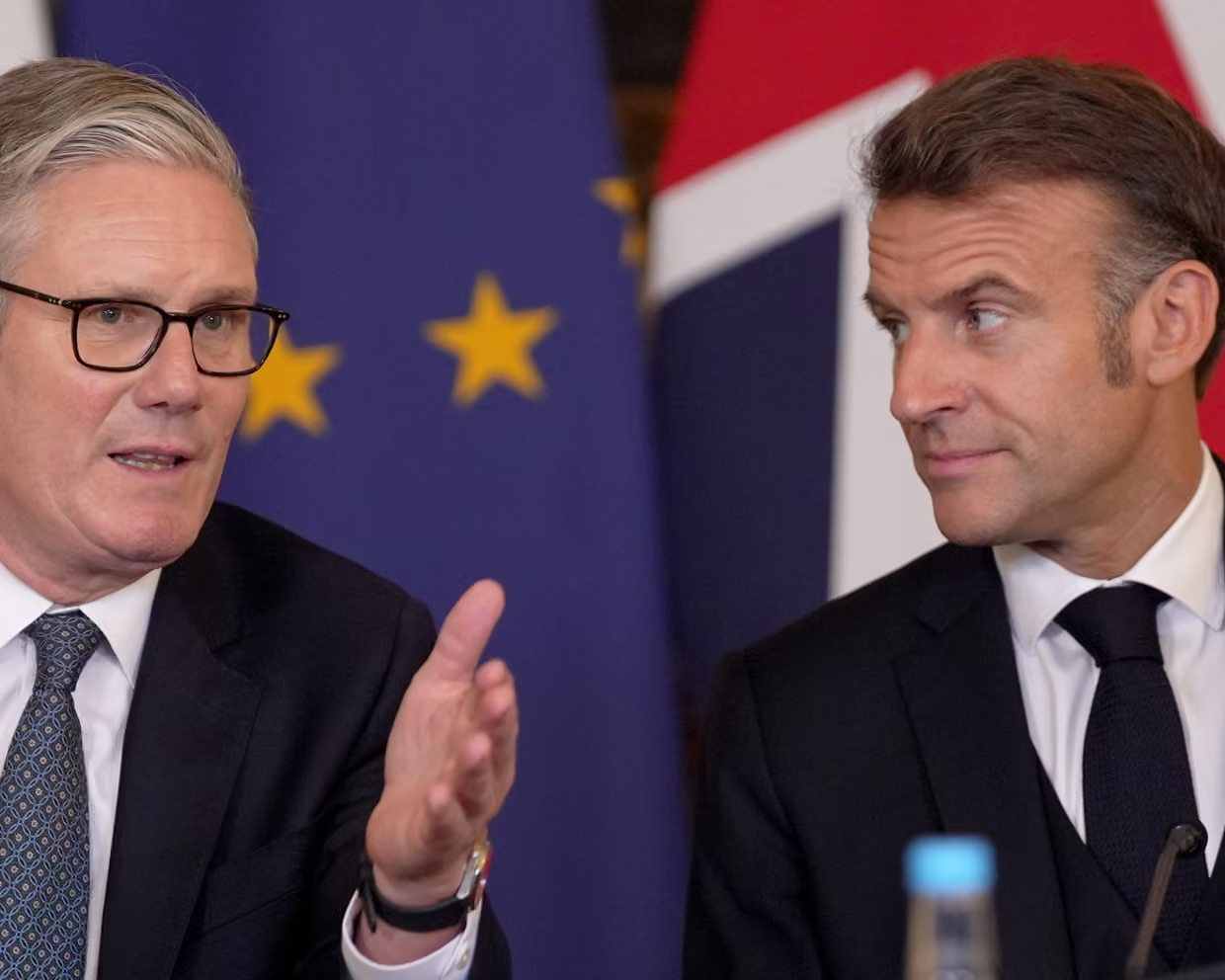
Macron’s Move to Recognise Palestine Puts UK’s Starmer Under Intense Pressure on Gaza Crisis

Macron’s Bold Step Raises the Stakes for Starmer’s Government
French President Emmanuel Macron has taken a dramatic stand on the Gaza crisis by announcing plans to recognise Palestine at the upcoming United Nations General Assembly. This decisive move sharply contrasts with the cautious stances of the US, UK, and other Western powers, highlighting deep divisions over how to respond to the escalating violence in Gaza.
Macron’s announcement, made late Thursday on social media, is aimed at breaking the stalemate among Western nations, which many see as having been largely passive amid Israel’s deadly military campaign against Palestinians. His decision is not just a symbolic gesture—it is a call to action that could reshape diplomatic dynamics and increase pressure on other leaders, especially UK Prime Minister Keir Starmer.
The Diplomatic Divide: France vs. The US and UK
France’s plan signals a growing impatience within Europe to move beyond rhetoric and take concrete steps toward resolving the conflict. By committing to recognise Palestinian statehood, Macron is positioning France as a leader for change in an arena long dominated by the US and its firm support for Israel.
This move risks creating friction with the White House, which has been cautious about recognising Palestine formally and remains closely allied with Israel. The US approach focuses on supporting Israel’s security and pushing for indirect negotiations rather than rapid diplomatic recognition.
In the UK, the decision puts Starmer in a difficult position. His government faces intense pressure from activists, MPs, and public opinion to follow France’s lead. However, Starmer also risks alienating Washington if he pushes too hard for recognition, complicating the “special relationship” that is central to UK foreign policy.
Starmer’s Dilemma: Balancing Party Unity and International Alliances
Within Starmer’s Labour government and the wider UK political landscape, there is significant division over how to respond. Some cabinet members and MPs advocate for bold moves, including immediate recognition of Palestine and stronger condemnation of Israeli actions.
Others caution that such a step could provoke a political mutiny within the party or strain vital diplomatic ties with the US and Israel.
Government sources acknowledge the gravity of the situation, suggesting that recognition of Palestinian statehood is a matter of “when, not if,” but have so far withheld details about timing and strategy. This ambiguity fuels frustration among those demanding urgent action.
International Momentum and the UN General Assembly
Macron’s announcement aims to galvanize other countries to follow suit at the UN General Assembly, where the issue of Palestinian recognition will be debated. If a coalition of nations endorses the move, it could dramatically shift international norms and increase diplomatic pressure on Israel.
Such a step would mark a significant departure from past Western policies and could pave the way for renewed peace negotiations based on mutual recognition and respect for international law.
Public Opinion and the Humanitarian Crisis
The backdrop to these diplomatic maneuvers is a worsening humanitarian disaster in Gaza, with rising casualties, food shortages, and widespread suffering. Public opinion in many Western countries, including the UK and France, has increasingly favored stronger action to protect Palestinian civilians.
Macron’s decision responds directly to this shift in sentiment, acknowledging the urgent need for political solutions alongside humanitarian aid.
What’s Next for Starmer and the UK?
Keir Starmer now faces a critical crossroads. Will he follow France’s lead and push for formal recognition of Palestine, signaling a break with US policy? Or will he prioritize maintaining close ties with Washington and seek more cautious, incremental approaches?
His response will not only shape the UK’s role in the Middle East but could also influence its standing on the world stage and impact domestic political stability.
With an emergency cabinet meeting scheduled and talks planned with key international players, the coming days are likely to define Starmer’s legacy on this issue.
A Defining Moment for Western Leadership
Emmanuel Macron’s bold move to recognise Palestine at the UN General Assembly has reshaped the diplomatic landscape and intensified pressure on Keir Starmer. The UK prime minister must now navigate complex international relations and internal political challenges as he decides the country’s course on one of the most divisive and urgent crises of our time.
How Starmer responds will signal whether the UK is ready to break with past approaches or maintain the cautious diplomacy that has defined Western policy for decades.

