
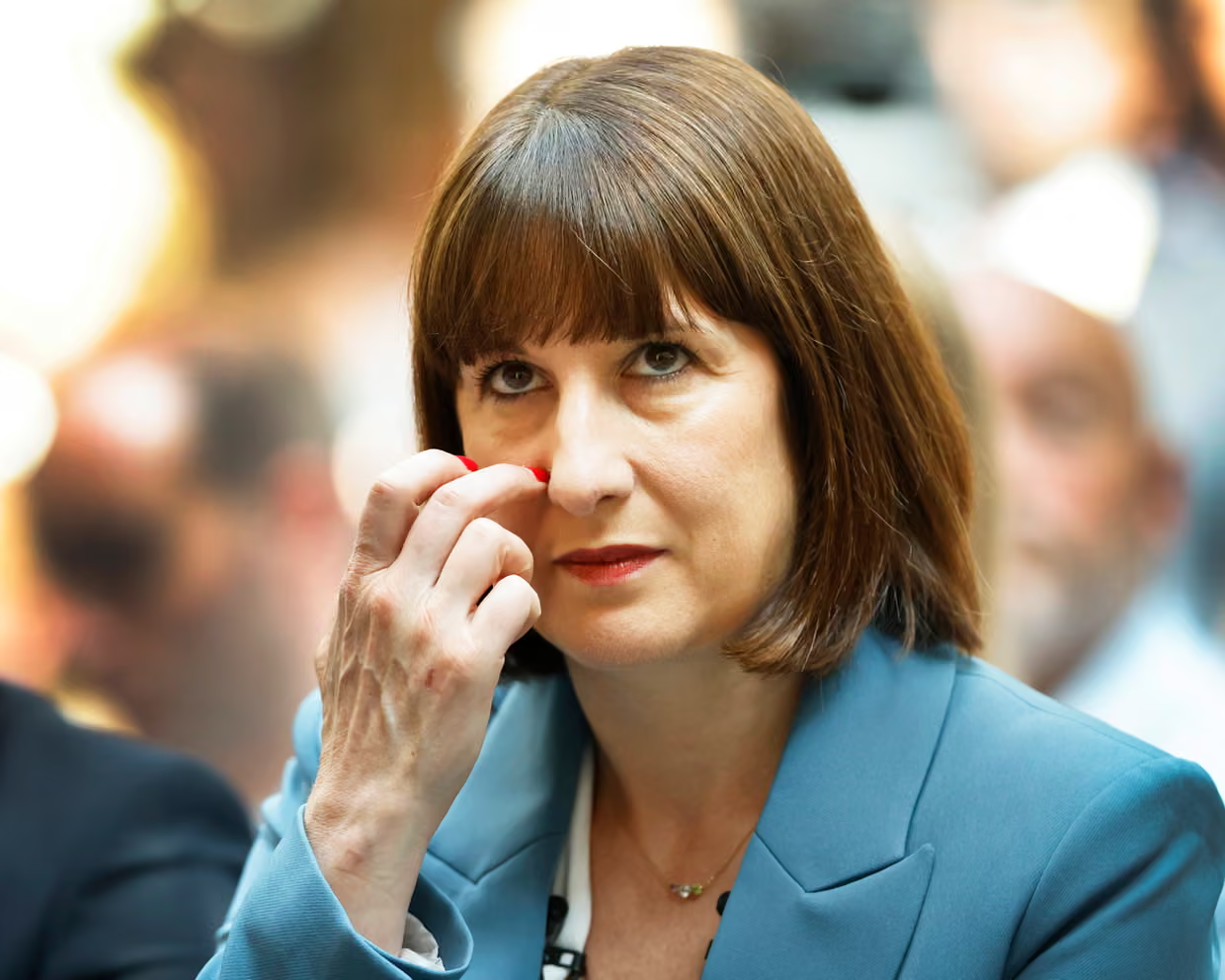
UK Government Borrowing Costs Near 27-Year High, Mounting Pressure on Chancellor Rachel Reeves

The UK’s long-term borrowing costs have surged to levels not seen since 1998, adding financial strain on Chancellor Rachel Reeves and increasing the urgency for the government to clarify its strategy for tackling the growing budget deficit ahead of the autumn budget.
On Tuesday, the yield on 30-year UK government bonds climbed to 5.62%, up eight basis points from the day before. This brings borrowing costs perilously close to the 27-year high of 5.66% reached briefly in April, intensifying concerns about the sustainability of public finances and the country’s rising debt burden.
Government Debt Now Costs Over £100 Billion a Year
The sharp rise in yields has serious fiscal implications. The UK government is now spending more than £100 billion annually just to service its debt — nearly 10% of the entire national budget. This growing cost of borrowing significantly reduces fiscal space for investment, public services, and welfare support.
Economists warn that the UK’s debt challenge is being exacerbated by broader structural issues, including an ageing population, mounting welfare obligations, and rising healthcare costs. These trends, which are affecting most industrialised economies, are particularly acute in the UK given its recent economic volatility, including the long-term impacts of Brexit, the pandemic, and the energy crisis triggered by the war in Ukraine.
Markets Watching Closely for Reeves’ Next Move
Investors are now watching closely for how Chancellor Rachel Reeves intends to respond to the market pressure. While she has repeatedly pledged to maintain fiscal discipline and avoid reckless spending, her government faces competing demands — including a slowing economy, public sector pay pressures, and the need for increased infrastructure investment.
Analysts say markets are looking for a clear signal ahead of the Autumn Budget on how Reeves plans to balance the books.
“The clock is ticking for the Chancellor,” said one senior economist at a London investment firm. “Markets need reassurance that the government has a credible plan to bring borrowing under control without stifling growth.”
Reeves has previously committed to sticking within existing fiscal rules, which require debt as a share of GDP to fall within five years. However, rising interest costs make that goal significantly harder to achieve without either cutting spending or raising taxes — both politically sensitive options.
“Get a Grip,” Say Critics
Opposition parties and some economists have criticised the government for failing to act sooner to address the worsening fiscal outlook. Critics argue that the government has lacked a coherent long-term economic strategy and that recent increases in public spending have not been matched with sufficient revenue-raising measures.
“It’s time for the Chancellor to get a grip on the public finances,” said a Conservative MP. “Kicking the can down the road is no longer an option when borrowing costs are spiraling out of control.”
Labour, meanwhile, continues to argue that sustainable investment in public services and infrastructure can drive long-term growth and help reduce the debt burden over time. However, some on the left are calling for more immediate action to address the rising cost of debt servicing, suggesting potential windfall taxes or reforming tax reliefs.
Global Context: A Challenging Time for Governments Everywhere
The UK is not alone in facing fiscal challenges. Across the world, central banks have raised interest rates aggressively over the past two years to fight inflation. While inflation is now easing, rates remain high — making it more expensive for governments to borrow.
The UK’s financial position is particularly fragile due to a combination of domestic and international factors, including sluggish productivity, weak business investment, and ongoing uncertainty around trade and regulation post-Brexit.
Recent data also suggests that foreign investors have reduced their holdings of UK government bonds in favour of more stable or higher-yielding alternatives, placing further pressure on domestic financial institutions to absorb new debt issuance.
What Happens Next?
The Chancellor is expected to outline her fiscal roadmap in the autumn budget, due later this year. This will be a key test of the government’s ability to reassure markets, maintain investor confidence, and present a credible plan to stabilise the public finances.
Options on the table could include targeted tax increases, spending restraint in non-essential areas, or renewed efforts to boost economic growth through strategic investment in high-productivity sectors.
However, with interest rates expected to remain elevated for the foreseeable future, any plan will have to grapple with the reality that borrowing is no longer cheap — and every pound spent on interest is a pound not spent elsewhere.

