
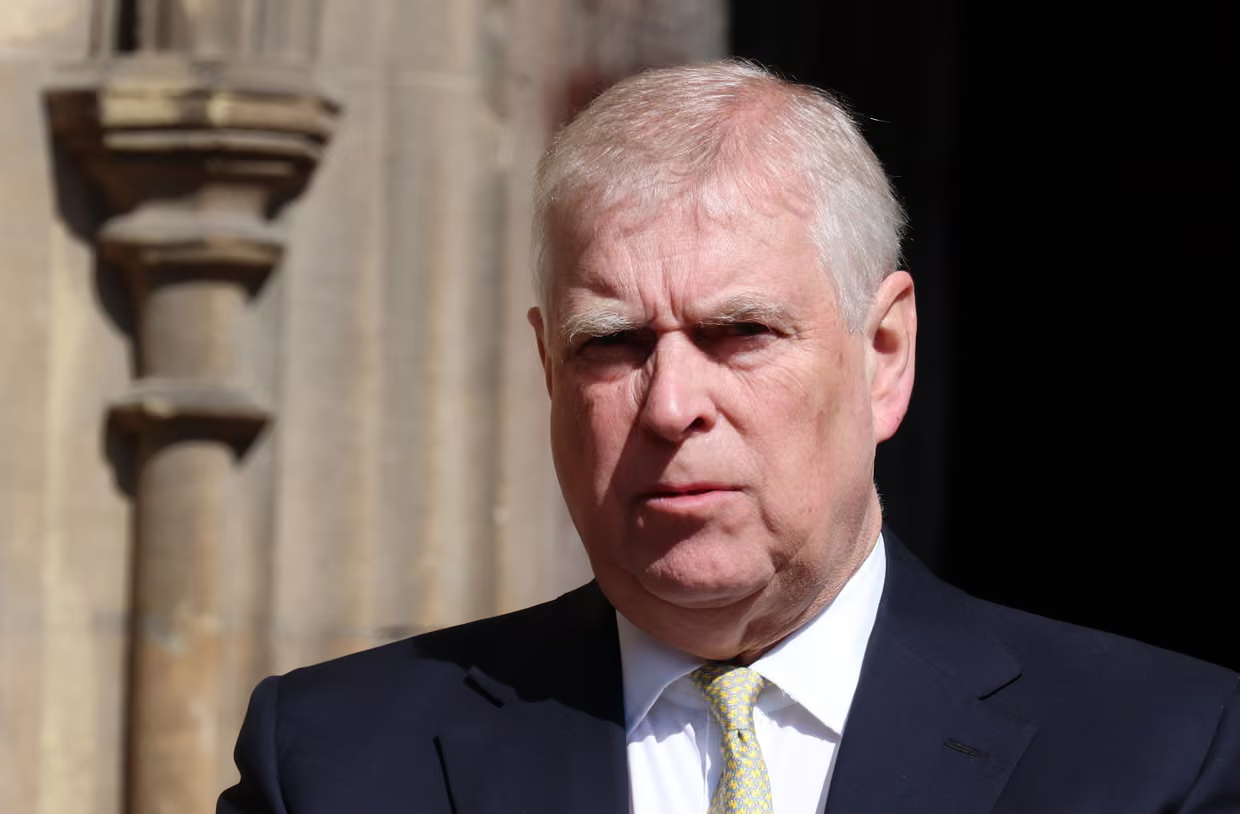

The arrest of Prince Andrew in the United Kingdom has reignited international attention on the Epstein case, highlighting a striking contrast between how the UK and the US have responded to allegations surrounding Jeffrey Epstein and his network. While Britain has taken decisive legal action, the United States has largely remained passive, leaving many to question the accountability of Epstein’s high-profile associates on American soil.
UK Steps Into the Spotlight
In the UK, Andrew’s arrest represents a significant moment of legal accountability. Authorities have pursued the case with vigor, reflecting a growing willingness to hold powerful figures to account. The arrest followed years of investigative work and public pressure, culminating in a judicial process that has shocked the British establishment.
This development signals that, at least in Britain, even those at the highest levels of society are not immune from scrutiny. The case has become emblematic of a broader movement toward transparency and justice, where social status does not guarantee immunity from prosecution.
US Passivity on Epstein’s Network
In contrast, the US response has been markedly muted. Despite extensive documentation of Epstein’s crimes and the influential network of individuals connected to him, there has been little meaningful legal or political reckoning for many high-profile figures in the United States. Observers note that Epstein’s associates, sometimes referred to as “the Epstein class,” have largely escaped scrutiny, fueling criticism of systemic impunity.
The lack of action in the US underscores deep structural issues in how power and wealth can shield individuals from accountability. While civil lawsuits have proceeded in some cases, the absence of significant criminal investigations has left many victims feeling that justice remains elusive.
The Public Reaction
Andrew’s arrest has triggered intense media coverage and public debate, both in the UK and internationally. For many in Britain, the arrest represents a long-overdue assertion of the rule of law. In the US, by contrast, public outrage has not translated into comparable legal consequences for Epstein’s American associates, highlighting a gap between public sentiment and institutional action.
Analysts argue that this disparity may reflect differences in legal systems, media scrutiny, and political culture. The UK’s centralized legal process has allowed for swift action, whereas the US system, with its complex federal and state jurisdictions, may slow or complicate accountability.
Implications for Justice and Society
The contrasting responses between the UK and US have broader implications for perceptions of justice, power, and privilege. The British example demonstrates that public and legal pressure can overcome entrenched societal hierarchies, while the US inaction fuels narratives of systemic protection for the wealthy and influential.
Advocates for victims argue that the disparity underscores the need for reforms in the US legal system to ensure that individuals, regardless of status, can be held accountable for serious crimes. Until such measures are implemented, questions about fairness and equality before the law remain.
Prince Andrew’s arrest in the UK highlights a stark transatlantic divide in responses to the Epstein files. While Britain has taken decisive action to confront powerful individuals, the United States has largely remained passive, leaving many victims and observers frustrated. The case serves as a reminder that justice is not automatic and that societal and political will play a crucial role in holding the powerful accountable.

