
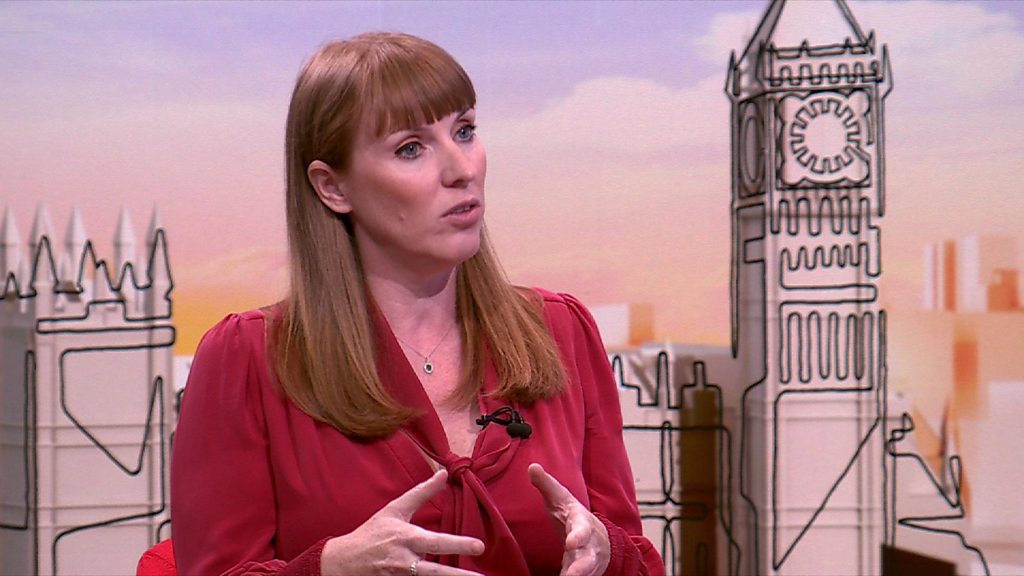
Angela Rayner Dodges Questions on Two-Child Benefit Cap as Pressure Mounts on Labour

Labour’s Silence on Child Benefit Cap Raises Eyebrows
Deputy Prime Minister Angela Rayner has refused to confirm whether the Labour government will scrap the two-child benefit cap, a controversial welfare policy that has sparked growing criticism from within the party and beyond.
Appearing on Sunday with Laura Kuenssberg, Rayner was pressed on Labour’s position following reports that Prime Minister Sir Keir Starmer privately supports removing the cap. But she remained tight-lipped, saying only:
“I’m not going to speculate on what our government is going to do.”
The Two-Child Benefit Cap: What Is It?
The two-child benefit cap was introduced in April 2017 under Conservative-led austerity reforms. It prevents most families from claiming means-tested benefits for a third or subsequent child born after that date.
Critics argue the policy disproportionately affects low-income families and contributes to rising child poverty. Campaigners, charities, and many Labour MPs have long called for the cap to be scrapped.
Keir Starmer’s Private Position – Public Silence
According to a report in The Observer, Starmer has privately told colleagues that he backs ending the cap and has asked the Treasury to find the £3.5 billion needed to fund the policy reversal.
Despite this, there has been no official commitment or public timeline from Starmer or the government. The lack of clarity is fueling frustration among Labour backbenchers and left-leaning supporters who expected a stronger stance on tackling child poverty.
Rayner’s Response: A Political Tightrope
Angela Rayner, a key figure in Labour’s leadership, declined to offer clarity when asked directly if she supports ending the cap. Instead, she dodged the question, emphasizing the government’s focus on broader economic management.
“We’ve got to look at the full fiscal picture and make decisions responsibly,” she said.
Her comments are seen as a political balancing act—trying not to alienate either the party’s progressive base or the more fiscally cautious wing of Labour’s leadership.
Internal Party Pressure Is Growing
Several Labour MPs and campaigners have made clear they want to see immediate action:
- Zarah Sultana, MP for Coventry South, said: “If we want to tackle child poverty, the cap has to go.”
- The Child Poverty Action Group says lifting the cap would pull 250,000 children out of poverty and improve the lives of over 850,000 more.
The longer the government delays making its position clear, the more pressure it risks facing from within its own ranks.
Public Sentiment and Political Calculations
Labour’s caution may be strategic. With economic uncertainty still looming and a focus on fiscal responsibility, the leadership may be hesitant to commit to any policy requiring large-scale spending—even one with strong moral and political backing.
Still, the public mood may be shifting, especially as the cost-of-living crisis continues to hit working families. An unequivocal commitment to end the cap could win Labour support in key constituencies—but also risks backlash if not managed properly within the budget.
Reform UK Steps In
Nigel Farage’s Reform UK has already seized the moment, announcing a clear pledge to scrap the two-child benefit cap if the party enters government.
Their bold stance puts more pressure on Labour to clarify its position—and could influence the wider political conversation as the general election approaches.
Time for Clarity?
Angela Rayner’s refusal to commit to ending the two-child cap has only intensified questions about Labour’s social welfare priorities. While the party navigates economic constraints and political expectations, one thing is clear: voters—and vulnerable families—are watching closely.
As the debate heats up, Labour will need to decide whether to take a bold stand on child poverty—or risk being outflanked on an issue that strikes at the heart of its values.

