

Introduction: A Debate Over Safety and Security at Westminster
The Palace of Westminster, home to the UK Parliament, is known for its historic bars, where MPs unwind after a long day of debates and discussions. But now, following an alleged spiking incident at one of its famous bars, the Strangers’ Bar, a new debate has emerged. Should all bars on the parliamentary estate be closed? And could doing so actually make MPs more vulnerable to security risks?
What Happened at Strangers’ Bar?
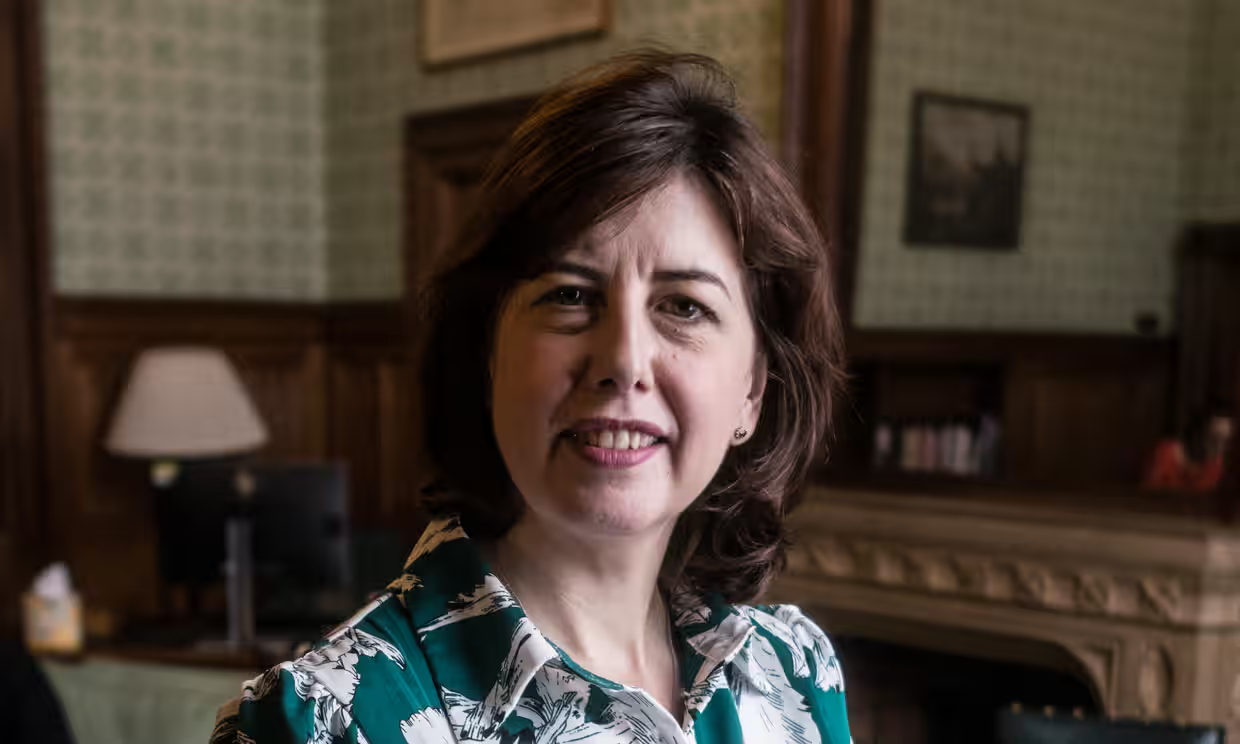
On 7 January 2025, an alleged spiking incident took place at the Strangers’ Bar, one of the most well-known bars in the Palace of Westminster. The incident is still under investigation by the Metropolitan Police. While the bar remains temporarily closed during this investigation, Lucy Powell, the leader of the House of Commons, has expressed her concerns about the consequences of shutting all bars on the estate.
Lucy Powell’s Warning: Closing Bars Could Endanger MPs
Lucy Powell, the Commons leader, has voiced her support for reopening Strangers’ Bar after a proper review of the situation. However, she also raised a significant concern: closing all bars in Parliament could leave MPs and their staff at risk.
Speaking on BBC Radio 5 Live with Matt Chorley, Powell said, “We definitely need to look at this and make sure we have the measures in place so that people aren’t in situations where they think they’ve been spiked or showing the effects of being spiked.”
She pointed out that if MPs and their aides were forced to drink at pubs away from the estate, they would be “less well protected” and could face increased security risks. In contrast, bars within the parliamentary estate are heavily protected by police security and the presence of security personnel.
The Safety Concerns of Drinking Away from Westminster
Powell emphasized the importance of having secure spaces like the bars within Parliament for MPs and their staff. “If they were forced to go off the estate to bars like The Red Lion, they wouldn’t have the same level of protection,” she said. This could leave them vulnerable, as they would be away from the security presence that ensures their safety inside the Westminster complex.
She explained that the parliamentary estate is a secure workplace, unlike most other workplaces. This level of security is necessary because MPs often face threats, including attacks from those who may wish to harm them or disrupt Parliament’s functions. Powell highlighted that the Independent Complaints and Grievance Scheme (ICGS), a body designed to protect MPs and their staff, would not extend to bars outside the estate.
A Larger Debate: Should Westminster’s Bars Be Closed?
While Powell has voiced her concerns about the safety implications of closing Parliament’s bars, she also acknowledged that there could be a broader discussion about whether such venues should exist at all.
“I don’t feel there is a groundswell of ‘let’s shut it all down,’” Powell stated. But she did admit that the question of whether there should be bars in Parliament at all is worth discussing.
MPs and their aides often meet informally at the bars after a long day of debates, but these venues are also places where tensions, alcohol, and stressful discussions could lead to problems. The Strangers’ Bar incident has forced the issue into the spotlight, with some questioning the role of alcohol in parliamentary life.
A Balance Between Safety and Tradition
The bars at Westminster have been part of the parliamentary culture for generations. They are seen as spaces where MPs and their staff can engage in informal conversations, network, and take a break from the rigors of political life. However, incidents like the alleged spiking raise important questions about how to balance tradition with safety and well-being.
On one hand, Powell makes a valid point that shutting down the bars could have unintended consequences, such as putting MPs in more vulnerable situations. On the other hand, incidents like this one highlight the need for increased safety measures and perhaps more oversight in these spaces.
What’s Next?
The investigation into the spiking incident is still ongoing, and many are awaiting updates from the Metropolitan Police. In the meantime, the conversation around Parliament’s bars is likely to continue. Will MPs push for more stringent regulations, or will the tradition of these informal spaces remain unchanged?
Closing Thoughts: A Growing Debate on Alcohol, Security, and Politics
The debate over whether to close all the bars in Parliament may seem trivial to some, but for MPs and their staff, it’s a matter of personal safety. While most agree that incidents like spiking should be taken seriously, the issue of balancing alcohol consumption with the security of Parliamentarians is a more complex one.
Lucy Powell’s concerns highlight a growing tension between maintaining tradition and ensuring the well-being and safety of MPs in their workplace. If the government can find the right balance between security measures and the need for informal spaces, they may be able to continue offering a safe environment for MPs to meet and discuss, while avoiding risks like the one that occurred at Strangers’ Bar.

