
Gerry Adams Stunned by 1996 Docklands Bombing, Denies Prior Knowledge in High Court

Adams Testifies in High Court
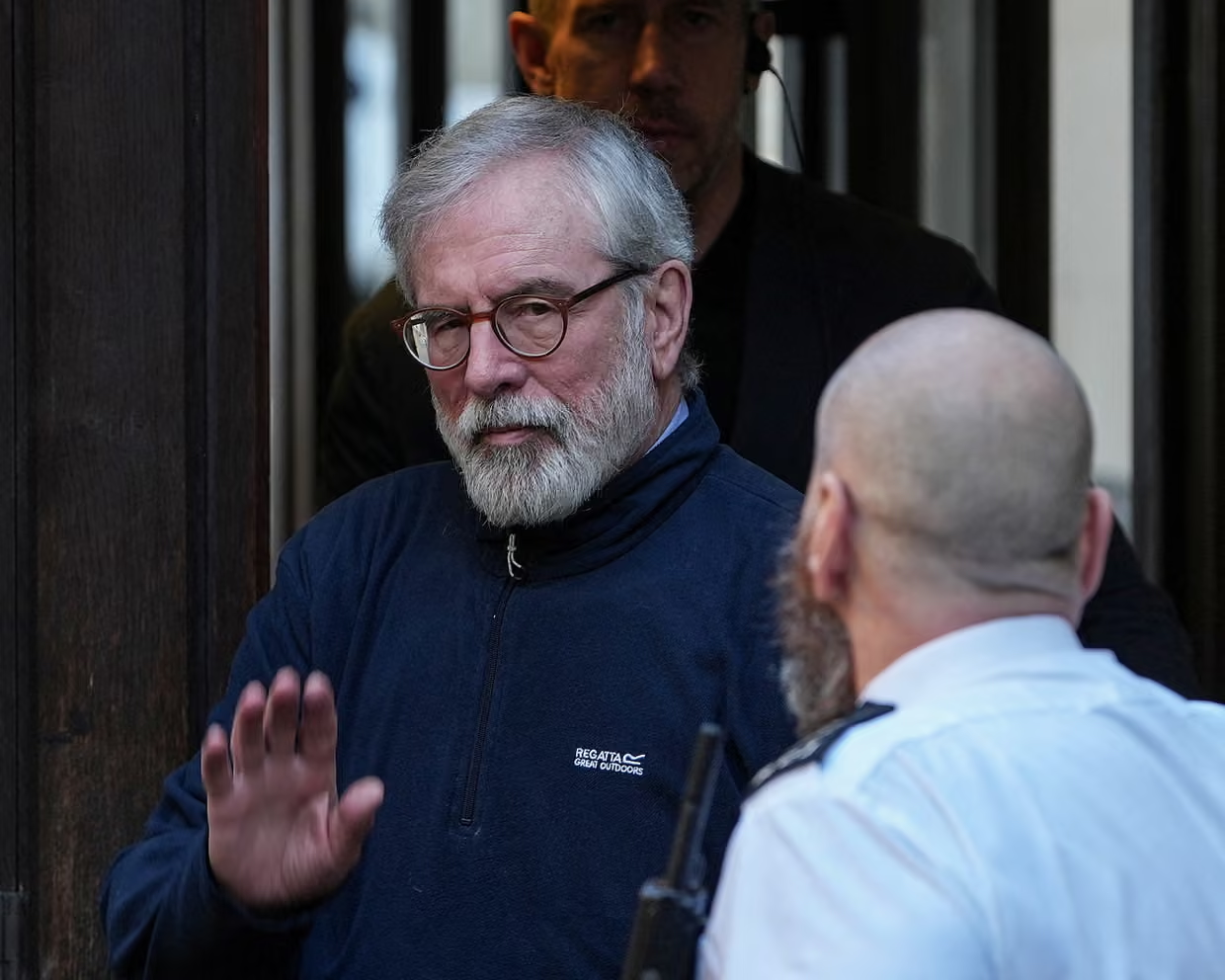
Gerry Adams appeared in the High Court this week, describing himself as “stunned” by the 1996 Docklands bombing. Adams is facing a civil case seeking symbolic damages related to the attack.
During proceedings, Adams denied any prior knowledge of the bombing, emphasizing that he had no involvement in planning or authorizing the attack.
Background on the Docklands Bombing
The Docklands bombing occurred in 1996 in London, targeting the financial district and causing widespread damage. While the attack caused no fatalities, it became one of the most high-profile IRA-related incidents of the 1990s.
The civil case seeks symbolic damages—compensation for the historical significance of the attack rather than personal injury claims. It highlights continuing legal scrutiny over past paramilitary actions and their leaders.
Adams’ Defense
Adams’ legal team argued that he:
- Had no prior knowledge of the bombing.
- Condemned the attack once it occurred.
- Cannot be held personally responsible for actions carried out by others in the organization.
Adams testified that he was “shocked” by the scale of the damage and disruption caused by the attack, reinforcing his claim of non-involvement.
Implications of the Case
- Legal precedent: The case could set important benchmarks for civil liability linked to historical paramilitary attacks.
- Political implications: While Adams has long left frontline politics, the proceedings keep his role in the past conflicts under public scrutiny.
- Public perception: His testimony may influence how historical figures involved in political violence are viewed in modern courts.
Next Steps
The High Court will continue hearings, with both sides presenting evidence regarding Adams’ knowledge and potential responsibility. Legal analysts note that symbolic damages cases are rare and complex, balancing historical accountability with practical enforcement.
Final Thoughts
Gerry Adams’ testimony underscores the lingering legal and political consequences of the Northern Ireland conflict. By denying prior knowledge of the 1996 Docklands bombing, he aims to clarify his personal role while navigating a civil case that reflects on decades-old paramilitary violence.

