
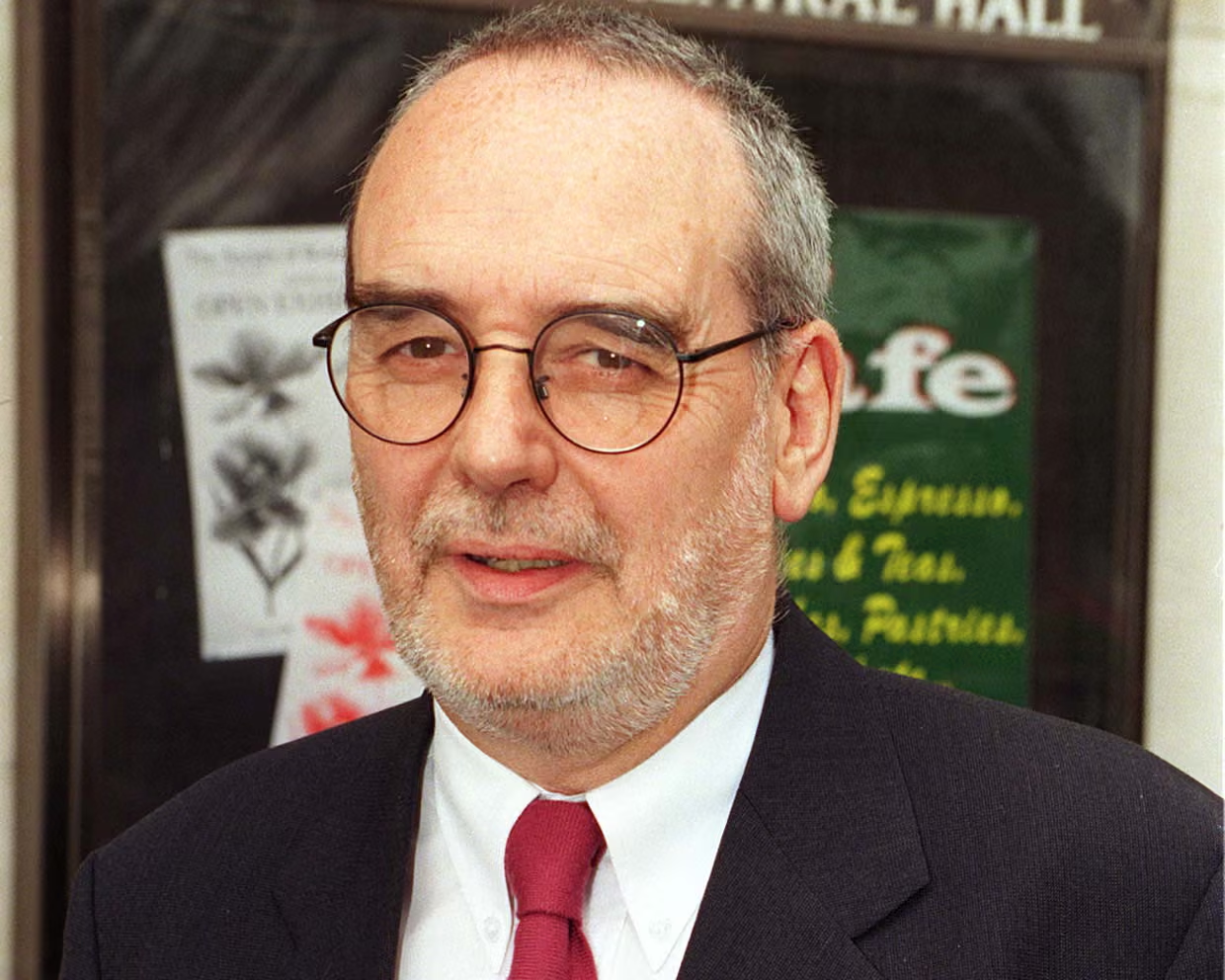

Labour Party leader Keir Starmer has praised the life and legacy of Lord Tom Sawyer, who has died at the age of 82. As general secretary during the New Labour period, Lord Sawyer was deeply involved in the party’s transformation and its return to power in 1997.
Starmer said that Lord Sawyer’s place in Labour’s history is well secured. In a heartfelt statement, he acknowledged Sawyer’s work alongside key party figures to bring the party to victory in the general election. Starmer paid tribute to Sawyer’s lifelong commitment to working-class dignity and opportunity.
A Formative Leader for a New Era
Tom Sawyer served as general secretary of the Labour Party from 1994 to 1998. He had been active in the trade union movement for decades, rising through the ranks of the National Union of Public Employees (NUPE) and later UNISON. His appointment by Tony Blair reflected his reputation as a reformer prepared to lead the party into a new age.
Sawyer was widely credited with helping design the organisational changes that defined New Labour. He guided the party through key reforms, including the shift of headquarters to Millbank and internal restructuring to modernise its operations. Under Sawyer’s leadership, Labour achieved a sweeping victory in 1997 and began major social and economic changes across the UK.
Words From Sir Tony Blair and Hollie Ridley
Tony Blair, who recruited Sawyer in 1994, described him as instrumental in delivering Labour’s transformation. He remembered Sawyer as embodying serious trade unionism and a deep commitment to working-class Britain. Blair added that Sawyer remained loyal, thoughtful, and humble throughout his remarkable career.
Hollie Ridley, Labour’s current general secretary, paid tribute as well, highlighting Sawyer’s pivotal role in the 1997 landslide victory and the years of rebuilding public services that followed. Ridley noted that Sawyer’s legacy lives on in the governments that lifted millions out of poverty, particularly in his beloved northeast England.
From the Factory Floor to the House of Lords
Tom Sawyer’s personal journey began on the factory floor. Born in 1943 in Darlington, he left school at a young age to work in engineering. By 1971, he was a NUPE officer and steadily rose through union ranks. He served on the Labour Party’s National Executive Committee throughout the 1980s and briefly chaired it before becoming general secretary in 1994.
In 1998, Sawyer stood down from his role in the party and was elevated to the House of Lords as Baron Sawyer of Darlington. He later served as chancellor of the University of Teesside and held several public sector advisory roles until his passing.
A Legacy Built on Reform and Respect
Sawyer’s work is often described as foundational in transforming Labour into a modern political movement. Alongside leaders like Neil Kinnock and Tony Blair, he helped push through pragmatic changes at a time when the party needed renewal.
Historians and former colleagues cite his leadership on organisational reforms like the Policy Review and Partnership in Power. These reforms helped to professionalise the party’s structure and sharpen its electoral message. Senior figures have credited Sawyer with providing continuity during years of internal debate and political change.
Community and Personal Tributes
Starmer’s recognition of Sawyer as a lifelong advocate for working people underscores the widespread respect he earned through decades of service. Observers and colleagues alike noted his humanity, wisdom, and unwavering dedication to public service. His passing marked the end of an era for many within the Labour movement who saw him as a vital bridge between union values and party strategy.
Summary of Key Contributions
| Role | Period | Impact |
|---|---|---|
| NUPE/UNISON Officer | 1971–1994 | Championed workers’ rights and union representation |
| Labour NEC Member and Chair | 1981–1991 | Helped shape policy and party governance |
| Labour General Secretary | 1994–1998 | Led organisational reforms and election campaign |
| Life Peer (Lord Sawyer) | 1998 onward | Continued public service and advocacy |
Why It Matters
Lord Tom Sawyer’s death prompts reflection on his key role in reinventing Labour politics. His leadership helped reposition the party away from decades in opposition toward winning power and delivering transformative policies. Through his union roots and political vision, he helped shape Labour into an effective governing force.
Keir Starmer’s tribute highlights Sawyer’s core belief in equality, opportunity, and dignity for all—a message still central to Labour’s identity today.
Final Thoughts
As tributes pour in from across the political spectrum, Lord Sawyer’s legacy is marked by humility, reform, and steadfast purpose. From his early days on the factory floor to the corridors of power in Westminster, he remained committed to advancing opportunity and justice.
In celebrating his life, those who knew him speak of a man who blended trade union principles with political acumen. His contributions to Labour’s transformation and the 1997 victory are remembered as essential turning points in modern British politics.
Lord Sawyer’s life is a reminder that politics can be shaped by values and shaped by individuals willing to work tirelessly for change.

