
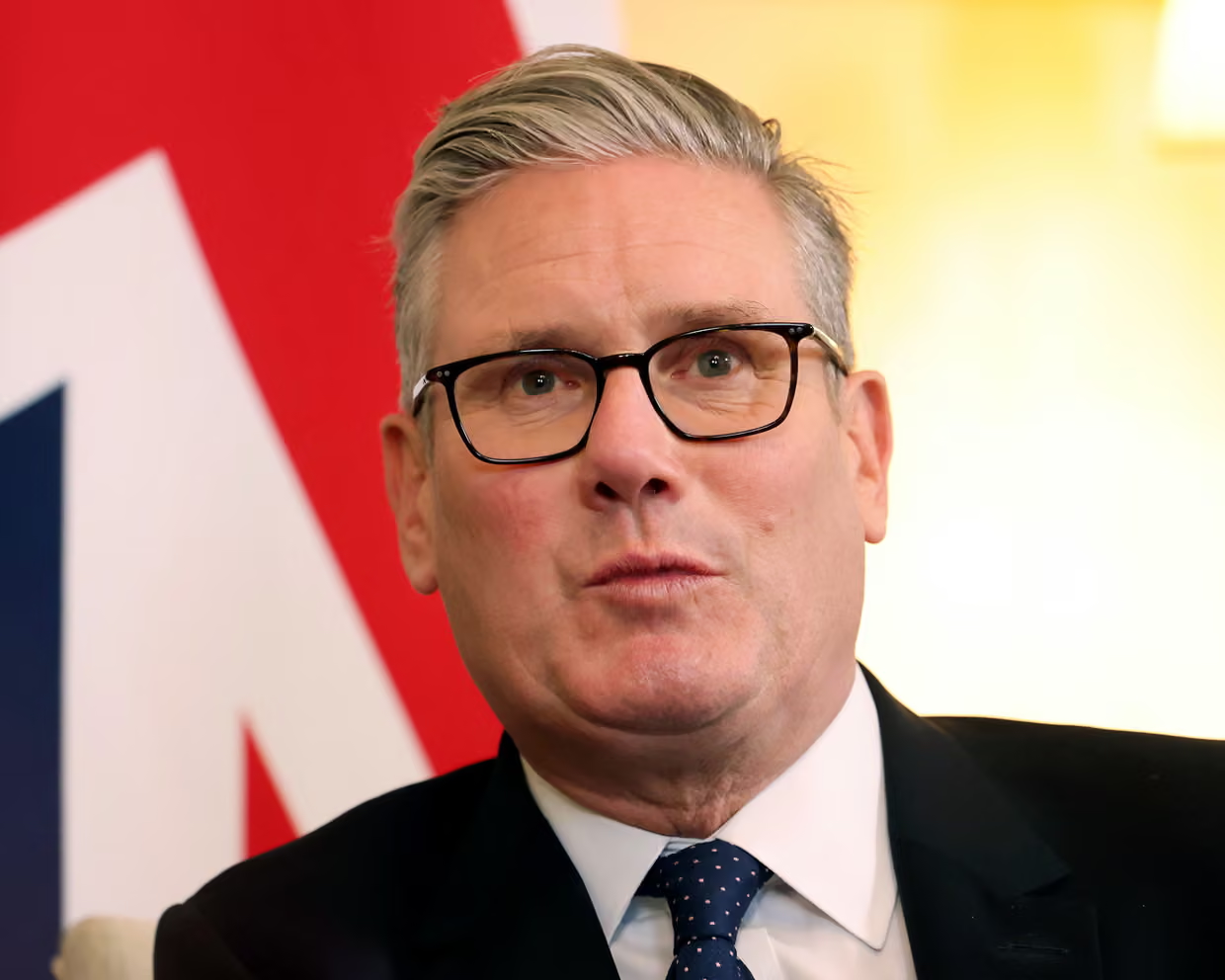

Labour leader Keir Starmer has issued a stark warning to his party, describing the current political moment as a “fight for the soul of the nation.” Speaking to the Guardian ahead of a pivotal party conference in Liverpool, Starmer said history would not forgive the government if it fails to confront Reform UK and the populist right.
The prime minister’s remarks come amid growing concern within Labour over declining poll numbers. Recent surveys show Labour trailing Reform UK by 10 points, highlighting the urgency for a clear strategy to reclaim political ground.
Starmer Calls for Unity
Addressing party members, Starmer emphasised that now is “not the time for introspection” or internal divisions. His comments were widely interpreted as a subtle critique of figures like Andy Burnham, the mayor of Greater Manchester, who has occasionally been positioned by political commentators as a potential leadership challenger.
“I have to say to all of those attending conference, this is a real opportunity for us to make our argument about patriotic national renewal, to own patriotism, to define it for what it is,” Starmer said.
By framing patriotism as central to Labour’s platform, Starmer aims to counter populist narratives and reclaim the conversation about national identity from Reform UK, which has sought to appeal to voters dissatisfied with traditional parties.
The Challenge from Reform UK
Reform UK, led by Richard Tice, has capitalised on populist sentiment, drawing support from voters frustrated with established political institutions. Their rise presents a significant challenge to Labour, forcing the party to confront both ideological competition and voter perception.
Starmer’s strategy seeks to differentiate Labour from both Reform UK and the Conservative Party, positioning Labour as a patriotic, forward-looking alternative capable of national renewal. Analysts note that this approach is intended to resonate with voters who may feel alienated by populist rhetoric but still value strong leadership on issues like the economy, healthcare, and national identity.
Recent Challenges for Labour
The warning comes at a difficult time for Starmer’s leadership. Labour has faced a series of missteps and departures, contributing to internal unease and raising questions about the party’s ability to effectively counter populist forces.
Despite these setbacks, Starmer’s focus remains on projecting confidence and unity, urging members to rally behind a cohesive and strategic message ahead of the upcoming elections.
Strategic Vision
Starmer’s remarks underscore a strategic pivot toward patriotic messaging, aiming to redefine how Labour is perceived on national identity and pride. By doing so, he hopes to neutralise Reform UK’s appeal and strengthen Labour’s connection with traditional and moderate voters.
Political observers note that this messaging reflects a broader trend across European and Western politics, where mainstream parties are increasingly emphasising national pride and identity to counter populist movements.
Conference Agenda
At the Liverpool conference, Starmer is expected to lay out a comprehensive vision for Labour, focusing on:
- Economic renewal and investment in domestic industries
- Strengthening public services and healthcare
- National security and global competitiveness
- Reframing patriotism as a unifying principle
By addressing these areas, Starmer aims to reassure party members and the electorate that Labour is both pragmatic and principled, capable of standing firm against the populist right.
Implications for Labour’s Future
Starmer’s framing of the political moment as a “fight for the soul of the nation” signals a high-stakes approach to leadership. It emphasises that Labour must act decisively to maintain relevance, shape national discourse, and protect democratic norms against rising populist sentiment.
Success at the conference could help solidify Starmer’s leadership, unify the party, and provide a platform to challenge Reform UK’s growing influence. Conversely, failure to deliver a compelling message risks further erosion of support and internal dissent, potentially weakening Labour’s position ahead of key elections.
Keir Starmer’s warning highlights the critical crossroads facing the Labour Party. With Reform UK gaining traction and internal pressures mounting, the prime minister is calling for unity, clarity, and strategic messaging to reclaim the political narrative.
As the Liverpool conference approaches, Labour members and political observers alike will be watching closely to see whether Starmer’s vision for patriotic national renewal can translate into electoral momentum, party cohesion, and a credible challenge to the populist right.

