
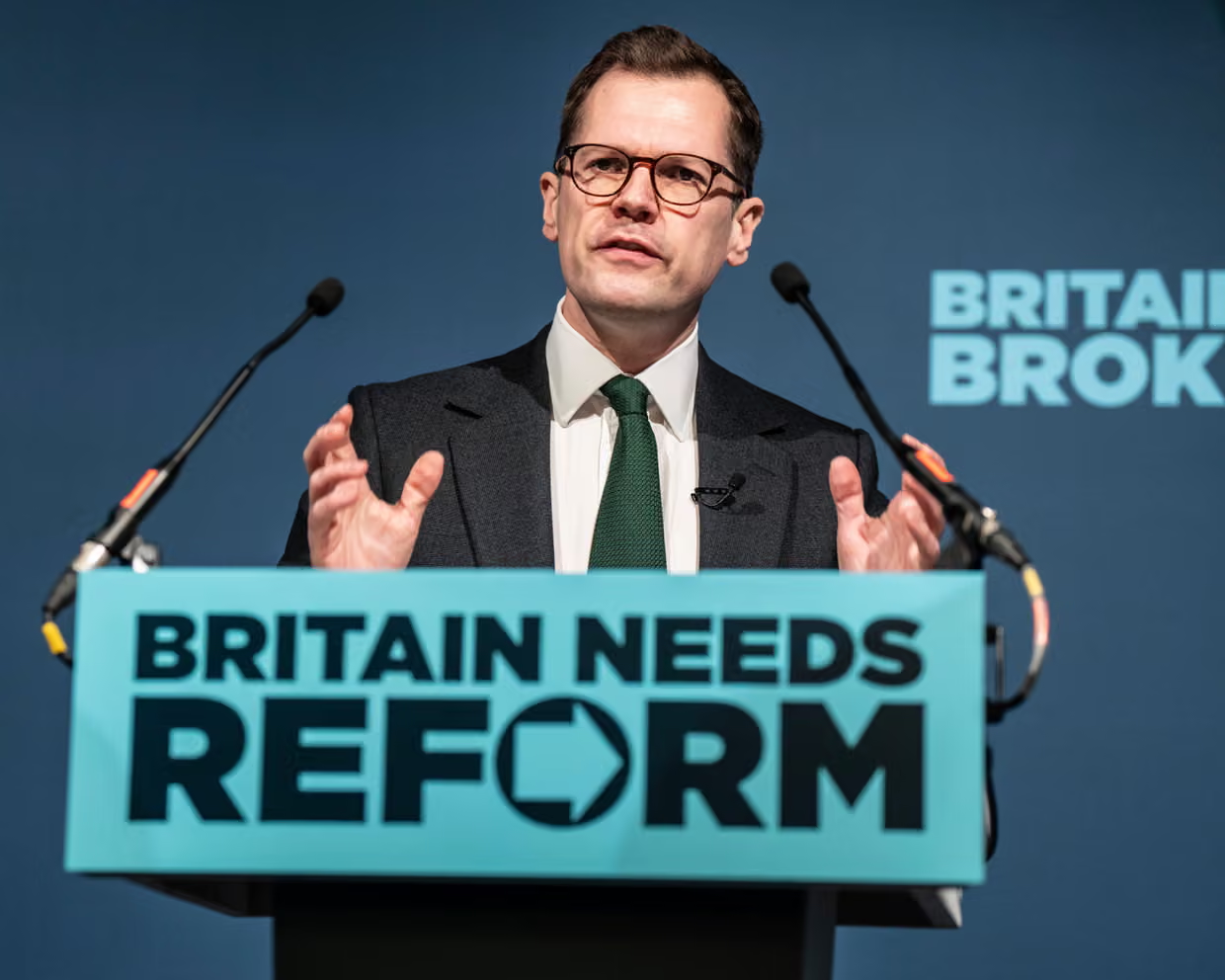

In a significant policy reversal, Reform UK announced that it would fully restore the two-child benefit cap, with Robert Jenrick delivering the announcement in his first speech as the party’s Treasury spokesperson. The decision marks a U-turn from the position set by former leader Nigel Farage, who had pledged to scrap the limit entirely.
Jenrick argued that the restoration reflects the party’s focus on fiscal responsibility while maintaining support for targeted welfare, though critics warn it could push hundreds of thousands of children into poverty.
Key Points of the Policy
- Two-Child Benefit Cap: Families will once again face limits on child tax credit and universal credit payments beyond two children.
- Disability Benefits: According to a Treasury spokesperson, Reform UK also plans to limit some disability benefits, signaling tighter welfare spending.
- Bank of England Independence: Despite these welfare reforms, the party confirmed that the Bank of England would remain independent, separating monetary policy from fiscal policy changes.
The announcement comes amid broader debates over UK welfare policy and the role of government support in addressing poverty.
Reaction from Critics and Advocates
The U-turn has drawn immediate criticism:
- Child advocacy groups and social policy experts warn the policy could increase child poverty, disproportionately affecting large families in low-income households.
- Labour and other opposition parties have condemned the move as regressive and harmful to vulnerable children.
- Supporters within Reform UK argue the change is necessary to ensure sustainable public spending and prevent excessive welfare dependency.
The policy shift also highlights tensions within Reform UK, as the party navigates internal disagreements and seeks to refine its public messaging under Jenrick’s leadership.
Political Context
The two-child benefit cap has long been a contentious issue in UK politics:
- Introduced under previous Conservative governments, the cap was designed to control welfare spending but faced criticism for its impact on larger families.
- Reform UK initially signaled a softer stance, reflecting Farage’s call to scrap the limit, but political and economic pressures appear to have prompted the U-turn.
- The announcement positions Reform UK as pursuing stricter fiscal policies while balancing public and internal political expectations.
Observers note that the U-turn may influence voter sentiment ahead of upcoming elections, particularly among families affected by the cap.
Implications for Families
Families with more than two children could see:
- Reduced access to child-related financial support under universal credit or child tax credits.
- Potential strain on household budgets, particularly for low-income households.
- A renewed debate on welfare reliance, with social advocacy groups pushing for alternative support measures.
The policy is expected to have the greatest impact on large families in economically vulnerable regions.
Looking Ahead
Reform UK’s policy U-turn sets the stage for further debates on welfare and fiscal policy:
- The party is likely to defend the decision as a step toward sustainable public finances.
- Opposition parties, child advocacy groups, and media commentators will continue to scrutinize its social impact.
- Monitoring the policy’s effect on child poverty and household finances will be critical for evaluating its real-world consequences.
As the discussion unfolds, families, policymakers, and political analysts will be watching closely to assess whether the restored cap achieves the intended fiscal goals without causing undue harm.

