
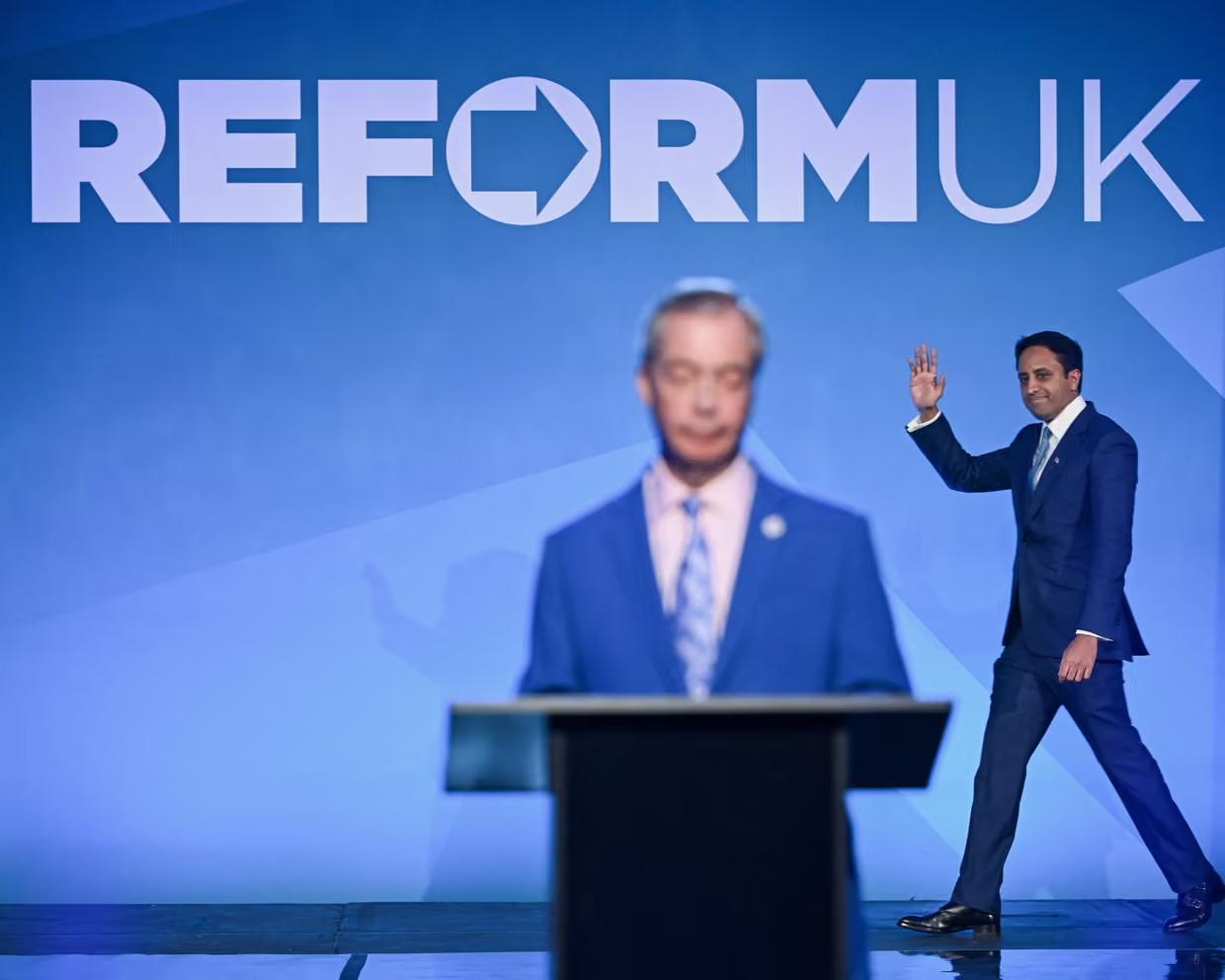

Reform UK has unveiled a controversial and ambitious immigration policy that could dramatically reshape the country’s approach to migration and law enforcement. The plan, announced by party spokesperson Zia Yusuf, includes the creation of a new state agency modelled on the U.S. Immigration and Customs Enforcement (ICE), the end of indefinite leave to remain (ILR), and an expansion of stop-and-search powers.
The proposals aim to deport up to 288,000 people a year, operating five flights per day, while also imposing stricter controls on residency and visas. The plan has sparked intense debate, drawing praise from supporters of stricter immigration controls and fierce criticism from civil liberties groups, opposition parties, and community organisations.
Creating a UK Version of ICE
At the heart of Reform UK’s plan is the establishment of a new agency, dubbed the “UK Deportation Command,” modelled on ICE in the United States. This agency would centralise immigration enforcement, detention, and deportation operations under one powerful organisation.
According to party officials, the agency would be able to detain up to 24,000 migrants at any given time and coordinate multiple daily deportation flights. The goal, they say, is to streamline immigration enforcement, ensure the rapid removal of those living illegally in the country, and reduce the administrative burden on local authorities.
Supporters argue that a centralised force could make deportation processes more efficient and prevent delays that have historically allowed illegal residents to remain in the UK. Critics, however, warn that concentrating such power in a single agency raises serious human rights concerns and risks abuses.
Ending Indefinite Leave to Remain
Another cornerstone of the Reform UK proposals is the abolition of indefinite leave to remain. Under current rules, ILR allows migrants to settle permanently after meeting residency requirements. Reform UK plans to replace this system with a renewable five-year work visa tied to employment, salary thresholds, and language requirements.
The party says this approach would make residency conditional on economic contribution and integration, reducing the number of people able to settle permanently without clear ties to work or community. Critics argue that removing ILR would destabilise families, undermine community cohesion, and create uncertainty for long-term residents.
Expanding Stop-and-Search Powers
In addition to immigration enforcement, Reform UK proposes a dramatic expansion of police stop-and-search powers. The plan calls for broader discretionary authority in areas deemed high-crime and the ability to carry out saturation patrols to tackle knife crime and violent incidents.
Party officials argue that stronger stop-and-search measures are necessary to protect public safety, deter criminal activity, and address rising concerns about violent crime in urban areas. Opponents, however, warn that such policies disproportionately target ethnic minority communities, strain relations with the police, and may not deliver measurable improvements in safety.
Mass Deportations and Logistics
The Reform UK plan envisions up to five deportation flights per day, potentially removing 288,000 people annually. To achieve this, the party proposes converting existing infrastructure, including former military sites, into detention and processing centres.
The plan also includes visa restrictions on countries that refuse to accept deported citizens. Nations such as Pakistan, Afghanistan, Syria, Eritrea, Sudan, and Somalia could face temporary freezes on visas for their citizens until they cooperate with repatriation efforts. Reform UK argues this gives the government leverage to enforce returns and ensure accountability from other countries.
Political and Social Reactions
The proposals have provoked strong reactions across the UK. Opposition parties describe the plan as extreme, un-British, and likely to destabilise families who have lived in the country for years. Labour and Liberal Democrat representatives have warned that mass deportations would create fear and uncertainty for immigrant communities while undermining trust in law enforcement.
Civil rights groups have also condemned the proposals, arguing that centralised detention powers, expanded stop-and-search, and the abolition of ILR risk violating human rights and social cohesion. They caution that the logistics of deporting nearly 300,000 people a year are impractical and could lead to legal challenges and costly delays.
Supporters, by contrast, argue that the plan is a strong stance on border control, public safety, and national security. They say it addresses long-standing issues with illegal migration and demonstrates that the government is willing to enforce immigration laws robustly.
Potential Implications
If implemented, Reform UK’s proposals would represent one of the most significant overhauls of UK immigration and policing in decades. The creation of a UK ICE-style agency, the elimination of indefinite leave to remain, and expanded police powers would fundamentally shift how the state interacts with migrants and minority communities.
The plan could also influence political debates leading up to the next general election, serving as a defining issue for voters concerned about immigration, national security, and crime. The proposals are likely to dominate public discussion and shape the narrative around immigration policy for years to come.
Reform UK’s hard-line immigration blueprint signals a bold and controversial approach to national security and migration. By proposing an ICE-style agency, mass deportations, and an end to indefinite leave to remain, the party is positioning itself as a major advocate for stricter immigration control.
While supporters argue the policies would enforce the law and protect communities, critics warn of human rights abuses, social division, and logistical impossibilities. As the proposals enter the political spotlight, debates over fairness, legality, and public safety are likely to intensify, making this one of the most contentious policy announcements in recent UK politics.

