
Trump’s Trade Turmoil: How Europe’s Strategic Response Can Shift Global Economic Power

A Shaken Global Economic Landscape
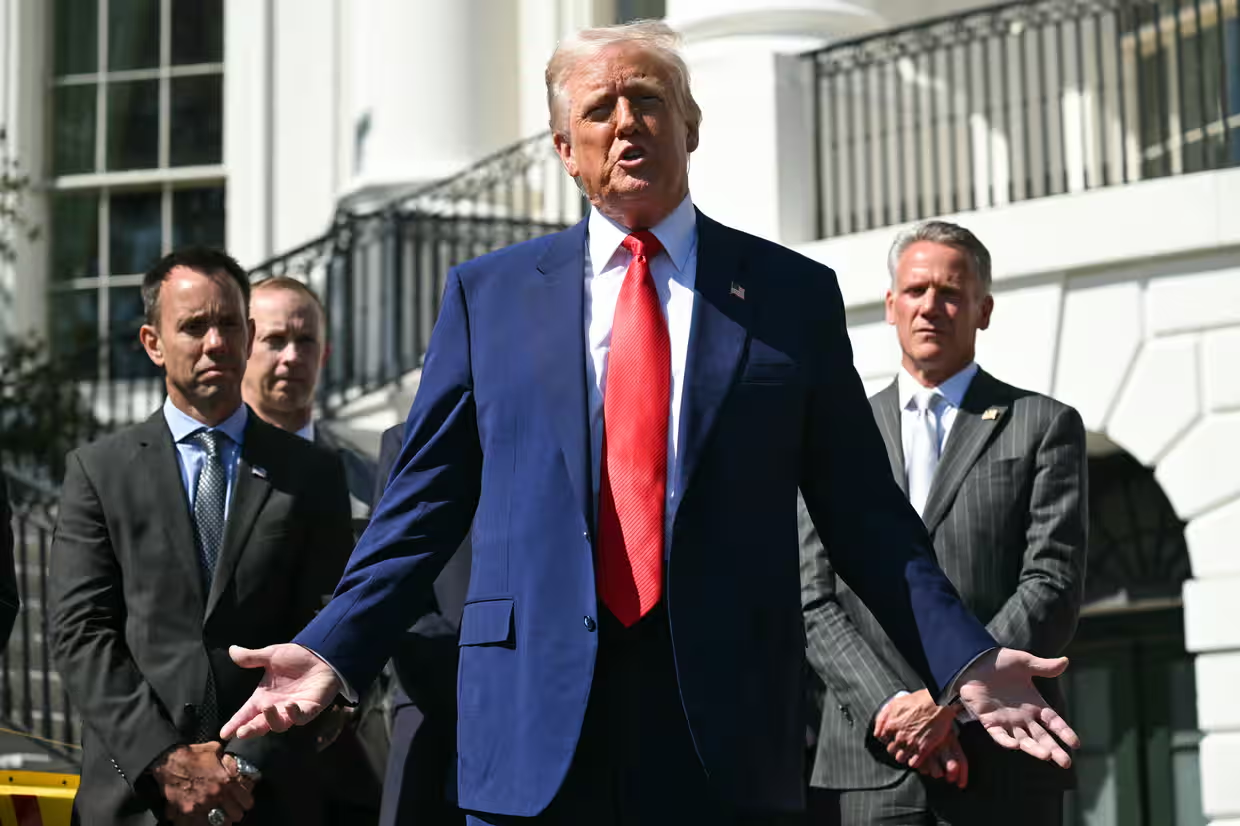
In a dramatic turn of events, President Donald Trump’s recent trade policies have sent shockwaves through the global financial system. The imposition of steep tariffs on various nations, including a 60% levy on Chinese goods and a 10% tax on imports from other countries, has led to significant market volatility. This bold move has not only strained international relations but also raised concerns about the stability of the U.S. economy and its standing as a safe-haven for investors.
The Immediate Impact: U.S. Financial Markets in Turmoil
The announcement of these tariffs resulted in a rare and alarming trifecta for U.S. financial markets: sharp sell-offs in stocks, bonds, and the dollar. Investors’ concerns were further exacerbated by the potential for a trade-induced recession and destabilizing political maneuvers. The dollar hit its lowest level since 2022, and Treasury bonds sold off amid fears of rising inflation and a less accommodative Federal Reserve.
Global Reverberations: Europe’s Economic Vulnerability
Europe, particularly the UK, finds itself vulnerable to these U.S. trade actions. The UK’s economy could face a reduction in growth by 0.7 to 0.5 percentage points in the first two years following the implementation of these tariffs. Additionally, inflation rates may rise by 3-4 points, and interest rates could increase by 2-3 points. Sectors heavily reliant on exports to the U.S., such as automotive and aerospace, are particularly at risk.
European manufacturers, especially in Germany and France, are also at risk. Germany’s economy has already experienced contraction in four of the last eight quarters, and the imposition of U.S. tariffs could further strain its manufacturing sector, which is heavily export-dependent.
Strategic Opportunities: Europe’s Path Forward
In the face of these challenges, Europe has a unique opportunity to recalibrate its position on the global stage. By leveraging its economic strengths and fostering deeper intra-European collaborations, the continent can mitigate the adverse effects of U.S. trade policies.
1. Strengthening Intra-European Trade
Europe can enhance its internal market by reducing trade barriers among member states, promoting the free flow of goods, services, and capital. This internal cohesion can buffer against external shocks and create a more resilient economic bloc.
2. Diversifying Trade Partnerships
Expanding trade relationships beyond the U.S. and traditional partners is crucial. By forging stronger ties with emerging markets in Asia, Africa, and Latin America, Europe can reduce dependence on any single economy and open new avenues for growth.
3. Investing in Innovation and Technology
Allocating resources to research and development can position Europe as a leader in emerging technologies such as artificial intelligence, renewable energy, and biotechnology. This focus on innovation can drive economic growth and enhance global competitiveness.
4. Advocating for a Rules-Based Global Trade System
Europe should champion the preservation and strengthening of international trade norms and institutions. By advocating for a rules-based system, the continent can work towards mitigating protectionist measures and ensuring fair trade practices globally.
Navigating a Shifting Economic Terrain
President Trump’s aggressive trade policies have undeniably disrupted the global economic order, presenting both challenges and opportunities for Europe. By adopting strategic measures that enhance internal cohesion, diversify trade relationships, and invest in future technologies, Europe can navigate these turbulent waters and emerge as a formidable force in the redefined global economic landscape.

