
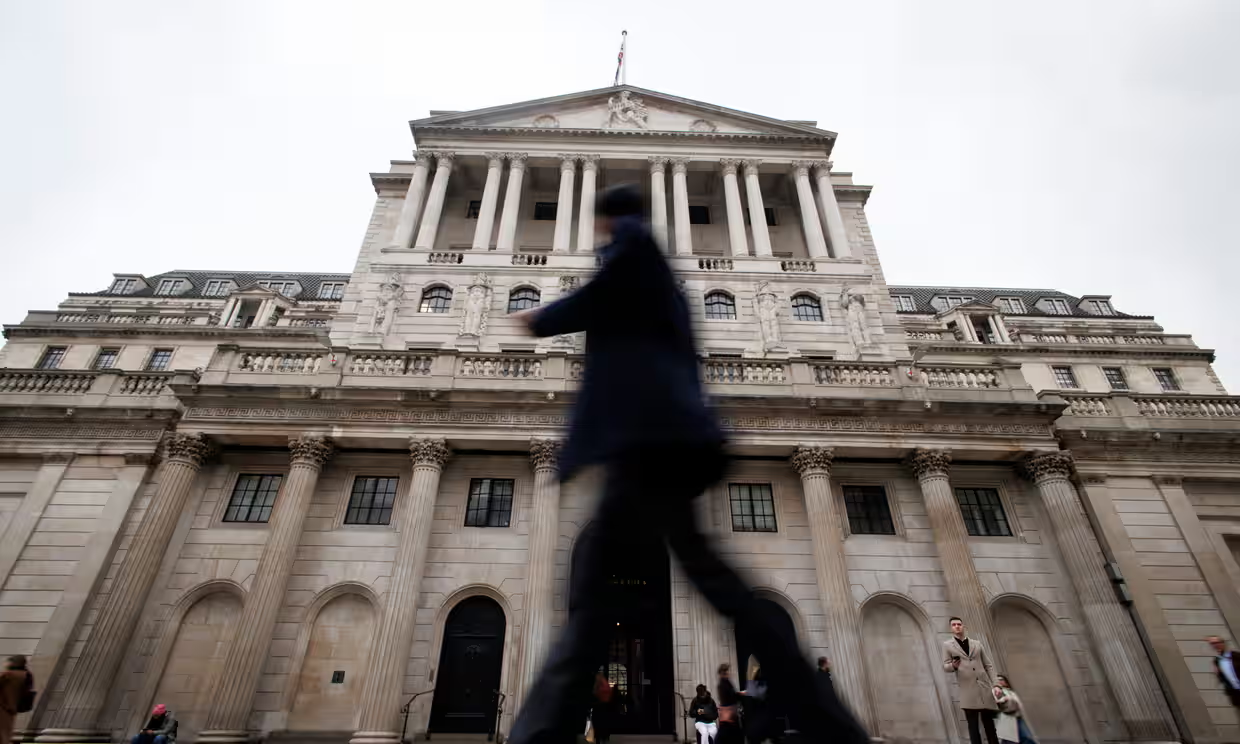

The latest data from the Bank of England (BoE) paints a worrying picture of the UK economy as growth in consumer lending slows and mortgage approvals fall short of expectations. This disappointing trend is in line with other indicators showing that the British economy is losing momentum. Let’s break down the numbers and what they mean for UK households and the broader economy.
Consumer Credit Growth Hits Its Lowest in Over a Year
In November, consumer credit growth—which includes loans, credit cards, and other forms of borrowing—fell to its slowest pace since mid-2022. According to the Bank of England, the annual growth rate slowed to 6.6% from 7.3% in the previous month. This marks the weakest growth since June 2022, indicating that British consumers are becoming more cautious about borrowing.
This dip in borrowing activity is a clear sign that households are tightening their belts, likely in response to rising inflation and ongoing economic uncertainty. It also points to a broader trend of economic slowdown in the UK, which is becoming more evident across various sectors.
Mortgage Approvals Fall Below Expectations
At the same time, the number of mortgages approved in November was lower than anticipated, further adding to the signs of a cooling economy. The Bank of England’s data revealed that fewer people were approved for home loans, suggesting that rising interest rates and higher living costs are making it more difficult for individuals to take on large financial commitments like buying a home.
Many prospective homebuyers are likely holding off on purchasing property, unsure of where interest rates and property prices will head next. This is a troubling sign for the housing market, especially when you consider how crucial the housing sector is to the broader economy.
A Stagnant Economy: What’s Going On?
The slowdown in consumer borrowing and mortgage approvals reflects the overall economic stagnation that the UK is experiencing. The UK economy grew at a standstill in the third quarter of 2023, with little to no growth, and there are fears that the fourth quarter could follow suit. This comes as a major disappointment to the Labour government, which had promised to boost growth following its October budget.
Despite efforts to stimulate the economy, government spending has failed to provide the immediate boost many had hoped for. The Office for Budget Responsibility (OBR) had forecasted a flatlining economy for the rest of the year, and these latest figures seem to support that gloomy outlook.
Household Caution Amid Rising Costs
According to Elias Hilmer, an economist at Capital Economics, the data shows that households are continuing to hold back on both borrowing and spending as they wait for greater economic certainty. “November’s money and lending data suggests that households’ caution with their borrowing and saving ahead of the Budget hasn’t gone away,” Hilmer said.
With inflation still a concern, many households are choosing to save rather than spend, fearing that rising living costs could make things harder in the near future. This cautious approach to personal finance is a reflection of the growing sense of economic uncertainty.
UK Government’s Efforts to Stimulate Growth
In an effort to address the economic stagnation, Finance Minister Rachel Reeves unveiled a set of policies in the October 30 Budget aimed at stimulating growth. This included tax increases on businesses and a rise in government borrowing to fund more public spending and investment.
While some believe that this increased spending will provide a temporary boost to the economy in 2025, others remain skeptical. Business surveys conducted after the budget have shown deteriorating confidence, with companies wary of higher taxes and global economic uncertainty.
Global Economic Concerns Loom Large
The UK’s economic recovery could face more challenges in the coming months, especially with global trade tensions potentially spurred by the policies of U.S. President-elect Donald Trump. If the global economic environment becomes more volatile due to trade frictions, the UK may find it even harder to recover.
The global trade landscape is crucial for the UK economy, especially post-Brexit, and any disruption to international supply chains or trading relationships could exacerbate the slowdown. This adds a layer of uncertainty to the already fragile economic situation.
What This Means for UK Households and the Economy
For UK households, these economic trends mean continued pressure on finances. With consumer credit growth slowing, more people are becoming reluctant to borrow, which could have ripple effects on businesses that rely on consumer spending. The housing market is also feeling the pinch, as fewer mortgages are being approved, and those that are tend to be at higher interest rates, making homeownership more difficult for many.
For the government, the path to boosting the economy remains uncertain. Despite efforts to stimulate growth through increased spending and tax policies, economic growth is still sluggish, and business confidence is low. The road ahead could be long, and the government may need to reconsider its strategies for revitalizing the economy.
Looking Ahead: Will the UK Economy Recover?
Looking forward, the UK economy faces significant challenges. While higher public spending might help in the short term, longer-term recovery will depend on a variety of factors, including the stability of global trade, the effectiveness of government policies, and the ability of businesses and consumers to regain confidence.
The outlook remains uncertain—with fears of a slow recovery exacerbated by global factors like potential trade disruptions. However, if the UK government can implement effective economic strategies, there might still be hope for a rebound in 2025. Until then, households will likely continue to remain cautious, holding back on borrowing and spending.
Conclusion
The latest Bank of England data paints a picture of a slowing UK economy with consumer lending and mortgage approvals both falling. With inflationary pressures, sluggish economic growth, and uncertain global factors, many UK households are choosing to save rather than spend. While government efforts to boost growth are underway, they have yet to produce significant results. As we look to 2025, the UK faces a challenging path ahead, and how the government responds to these economic hurdles will determine the future outlook.

