
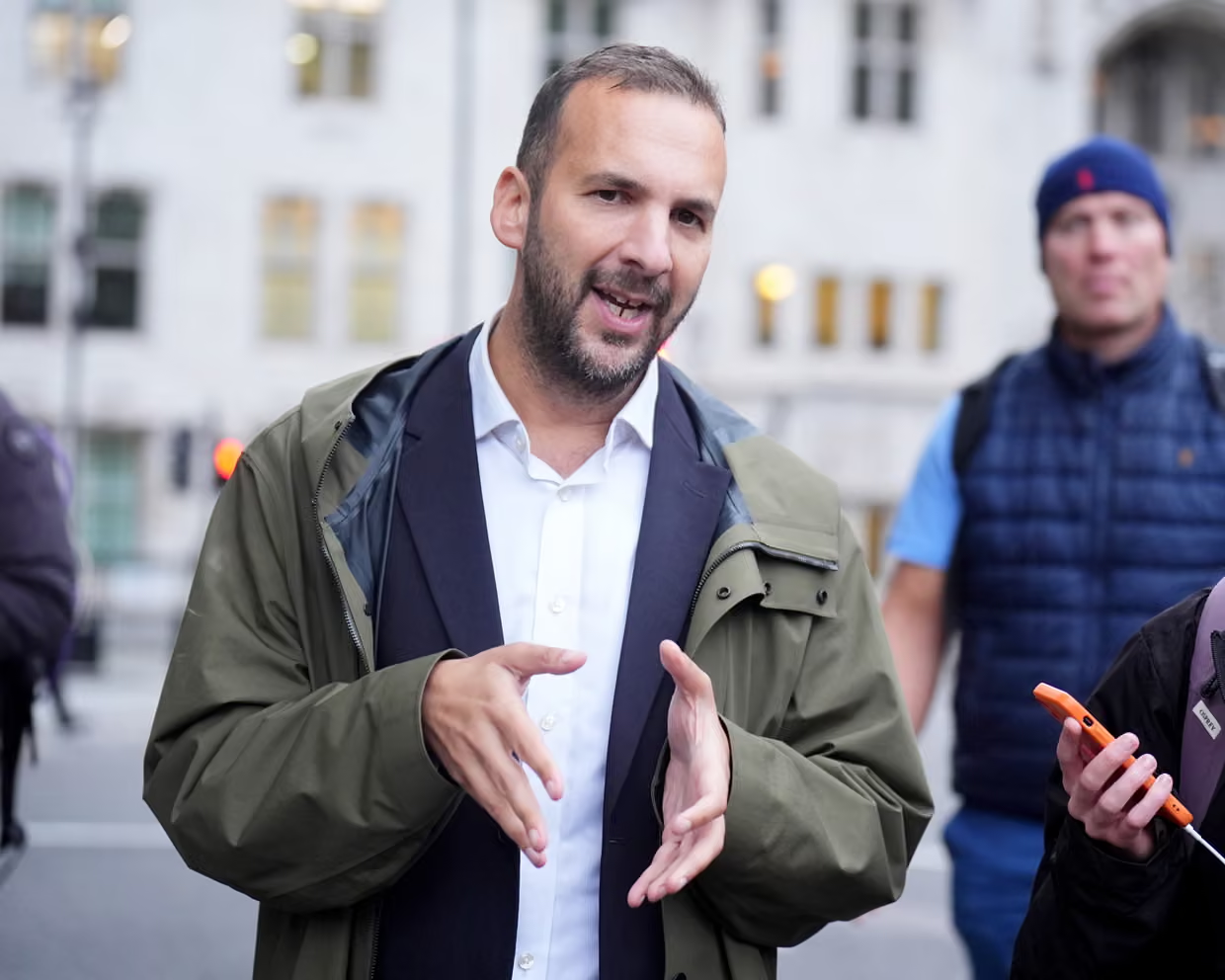

The privatisation of key industries in the United Kingdom is a major driver of the ongoing cost-of-living crisis, according to Zack Polanski, leader of the Green Party. Speaking in response to a recent Guardian report, Polanski criticized decades of mass privatisation as a “failed experiment” that has left millions of households paying more for essential services while public infrastructure suffers.
Privatisation Premium and Household Costs
The Guardian report highlights that UK households have been paying an average “privatisation premium” of £250 per year since 2010. This cost is attributed to the shift of public utilities and services—such as rail, energy, water, and postal services—into private hands. According to the findings, shareholders of these industries have received approximately £200 billion since privatisation, a figure that underscores the financial benefits flowing away from public coffers to private investors.
Polanski emphasized that the additional costs imposed on households are not just an economic issue but a social one. “Privatisation has been one of the key drivers of the cost-of-living crisis and growing inequality,” he said. “The Conservatives were the architects of this failed experiment, but the Labour government has done virtually nothing to change course.”
Impact on Public Services
Critics argue that privatisation has undermined the quality and reliability of critical services. For instance, Northern Rail passengers have frequently protested over poor service, delays, and increased ticket prices. Similar concerns have been raised about energy, water, and postal services, where consumers often face higher costs and inconsistent service compared to publicly owned models.
Polanski and other Green Party officials contend that privatisation has prioritized shareholder profit over public welfare, leaving essential services underfunded and less accessible. This has created a situation where citizens not only pay more but also receive lower-quality services—a combination that exacerbates economic pressure on households already struggling with rising inflation and living costs.
Political Context
The debate over privatisation is closely tied to political leadership and policy decisions. During his campaign to become Labour leader in 2020, Keir Starmer expressed support for “common ownership” of industries including rail, mail, energy, and water. However, since assuming office, Starmer has backtracked on these commitments, ruling out nationalisation of major energy companies, water utilities, and the postal service.
Polanski criticized this shift, arguing that continued reliance on private ownership perpetuates economic inequality and fails to address systemic issues. “Labour had the opportunity to reverse the damage caused by decades of privatisation, but they have largely maintained the status quo,” he said.
A Broader Economic Debate
The UK’s experience with privatisation has long been a topic of debate among economists, politicians, and policy analysts. Proponents argue that private ownership encourages efficiency, competition, and innovation, potentially reducing costs and improving service. Critics, however, point to rising prices, service inconsistencies, and shareholder profits as evidence that privatisation has failed to deliver public benefits.
Recent analyses suggest that the financial gains for investors often come at the expense of everyday consumers, creating a structural imbalance. Polanski’s comments reflect growing frustration among citizens who feel that essential services are increasingly unaffordable and that government policy has done little to mitigate these effects.
Implications for Cost of Living
Households across the UK are feeling the impact of rising utility bills, increased rail fares, and higher costs for other essential services. The £250 “privatisation premium” per household is particularly significant in the context of wider inflation and stagnating wages. Polanski argues that reversing privatisation or moving toward common ownership could help alleviate some of this financial pressure while improving service quality.
Beyond immediate economic relief, advocates of public ownership contend that nationalisation could also provide long-term benefits, including greater investment in infrastructure, improved accountability, and a fairer distribution of profits from essential services.
Public Sentiment
Public opinion on privatisation is divided. While some view it as necessary for modernising industries and encouraging competition, a growing segment of the population is concerned about the rising costs and perceived neglect of service quality. Polls and reports suggest that support for nationalisation or greater public control of key industries has increased, particularly among younger voters and those most affected by the cost-of-living crisis.
Polanski’s comments are part of a wider conversation about social and economic equity in the UK. Advocates for public ownership argue that prioritizing profit over public welfare has deepened inequality and strained the social contract, particularly in times of economic uncertainty.
Looking Ahead
As the cost-of-living crisis continues, debates over privatisation, nationalisation, and government policy are likely to intensify. While Labour has largely avoided reversing privatisation measures, pressure from opposition parties and public advocacy groups may influence future policy decisions.
For the Green Party and leaders like Polanski, the goal is clear: highlight the economic burdens imposed by privatisation, advocate for public ownership, and ensure that essential services are accessible and affordable for all citizens. Whether these proposals gain traction in the current political landscape remains uncertain, but the conversation around public versus private ownership is poised to remain a central issue in UK politics.

