

UK Responds to Trump’s Controversial Gaza Plan: What You Need to Know
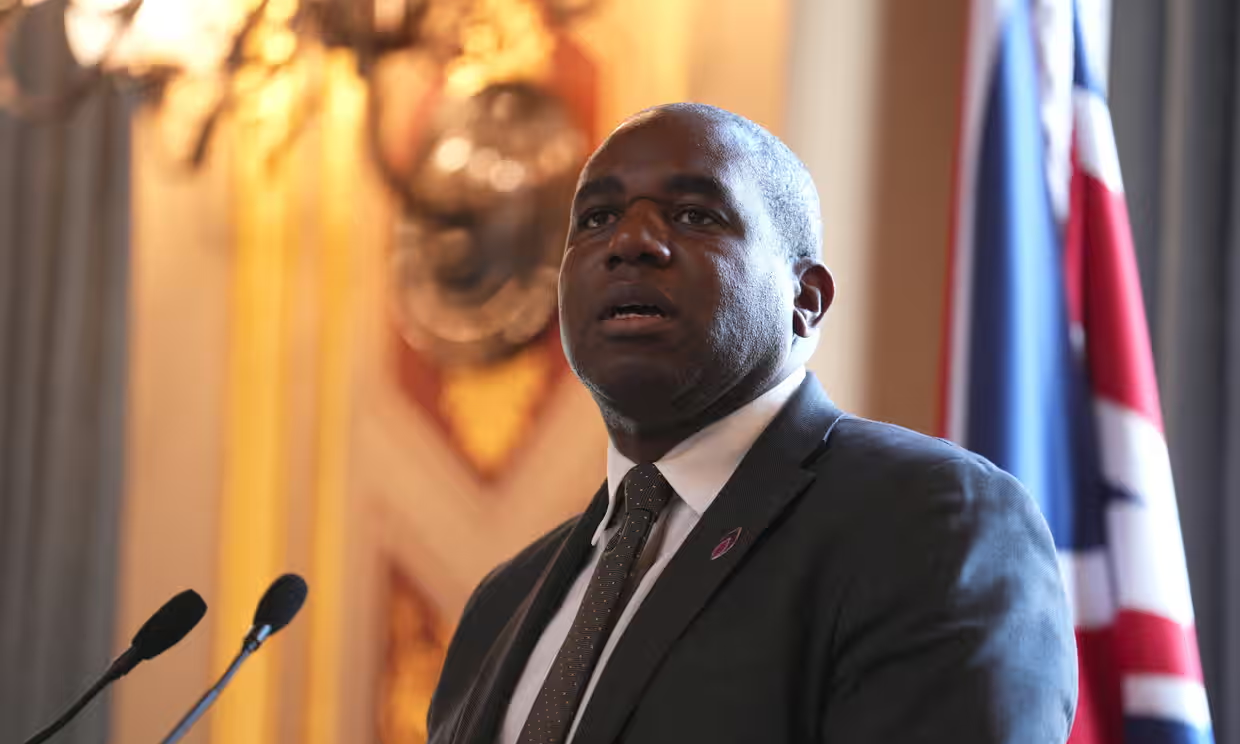
In a press conference held in Kyiv, UK Foreign Secretary David Lammy made it clear that the United Kingdom does not support Donald Trump’s controversial proposal to take control of the Gaza Strip. While Lammy acknowledged Trump’s desire to help rebuild Gaza after months of devastation, he reiterated the UK’s commitment to a two-state solution and the right for Palestinians to prosper in their own homeland.
Trump’s plan to have the U.S. “take over” Gaza, and potentially relocate Palestinians, has sparked heated debates around the world. In response to growing concerns and accusations of ethnic cleansing, Lammy carefully navigated the discussion, expressing his respect for Trump’s intentions while remaining firm on the UK’s stance for peace in the Middle East.
Trump’s Proposal: What Is the Plan?
In a recent press conference with Israeli Prime Minister Benjamin Netanyahu, U.S. President Donald Trump shocked the world by suggesting that the U.S. should take control of the Gaza Strip, a region that has been at the heart of the Israeli-Palestinian conflict for decades.
Trump’s plan involves the U.S. taking full responsibility for Gaza, which has been severely damaged by a 15-month conflict between Israel and Hamas. He also proposed that Palestinians might be relocated to other areas, a suggestion that has drawn strong criticism and calls for resistance from Palestinian leaders and international communities alike.
UK’s David Lammy Speaks Out: Praises Trump’s Desire to Rebuild, But Stands for Palestinian Rights
David Lammy, who is a senior British politician, responded to Trump’s Gaza proposal with a balanced approach. While acknowledging the devastation Gaza has faced and the urgent need for reconstruction, Lammy expressed the UK’s preference for a solution that respects the sovereignty of Palestinians.
He said:
“Donald Trump is right to acknowledge the devastation in Gaza. Looking at the destruction and the suffering of Palestinians, it is clear that Gaza is in ruins. The desire to rebuild is important. However, we have always maintained that the solution lies in a two-state approach.”
Lammy made it clear that the UK’s stance is rooted in the belief that Palestinians must have the right to live and prosper within their own homeland—specifically Gaza and the West Bank—and that the future of these territories should be determined through peaceful negotiations.
What is the ‘Two-State Solution’?
The concept of a two-state solution refers to the idea of establishing two independent nations for the Israeli and Palestinian peoples, each with its own territory. This long-discussed approach aims to resolve the decades-long Israel-Palestine conflict by ensuring both groups have sovereignty over their respective lands.
- For Israel, this would mean secure borders and the right to self-determination.
- For Palestine, it would mean the creation of a viable and independent state in the West Bank and Gaza, with East Jerusalem as its capital.
The two-state solution has been a core goal of international peace efforts for many years, supported by most global leaders, including the UK.
Why Is the UK Rejecting Trump’s Gaza Proposal?
While Lammy acknowledged that Trump’s plan could help rebuild Gaza, the UK believes it’s important to maintain a fair and lasting solution that respects the rights of both Israelis and Palestinians.
Here are the main reasons why the UK is rejecting Trump’s proposal:
- Right to a Homeland: The UK believes that Palestinians have the right to remain in Gaza, without forced relocation. Trump’s suggestion to remove Palestinians from the region is seen by many as an infringement on their fundamental rights.
- Two-State Solution: The UK continues to support the two-state solution as the best route to peace. It envisions a future where both Israel and Palestine coexist peacefully within secure and recognized borders.
- International Law: Critics of Trump’s Gaza plan, including Palestinian officials and international organizations, argue that it could violate international law. Forcing Palestinians out of Gaza would be seen by many as ethnic cleansing, which is a grave violation of human rights.
Global Reactions to Trump’s Gaza Plan
Trump’s suggestion has triggered a range of reactions from leaders around the world. Here’s how different players have responded:
- Arab Nations: Countries such as Saudi Arabia, Jordan, and Egypt have already rejected Trump’s plan. For them, Palestinian sovereignty is a red line that cannot be crossed. The suggestion of a U.S. takeover is seen as an attempt to undermine the rights of Palestinians and could destabilize the region further.
- The Palestinian Authority: The Palestinian leadership has voiced strong opposition to Trump’s plan. Mahmoud Abbas, the President of the Palestinian Authority, has stated that Palestinians will not accept any proposal that forces them out of their homes and denies them the right to live in Gaza.
- International Community: Many European countries, as well as global human rights organizations, have criticized Trump’s plan for being unrealistic and potentially dangerous. They argue that true peace can only be achieved through negotiations that respect both Israeli and Palestinian rights.
What’s Next for Gaza and the Middle East Peace Process?
The situation in Gaza remains dire, and Trump’s proposal adds a new layer of complexity to an already volatile conflict. As the U.S. presses forward with its strategy, global leaders like David Lammy will continue to push for a solution that is rooted in international law and human rights.
While Trump’s plan has been met with resistance, it is clear that the Gaza issue will remain central to the Middle East peace process for years to come.
The UK, along with other international partners, will continue to support efforts to rebuild Gaza and help Palestinians rebuild their lives. However, as Lammy emphasized, any lasting solution will need to respect the two-state vision and allow both Israelis and Palestinians to live in peace and security.
Final Thoughts: A Call for Peace and Diplomacy
As the situation in Gaza evolves, it is crucial that world leaders remain committed to finding a peaceful resolution that puts human rights and justice at the forefront. While bold plans like Trump’s may generate headlines, the true path to peace will be through dialogue, negotiation, and a deep respect for the rights of all peoples involved.
For now, the UK stands firm in its commitment to the two-state solution, and hopes for a future where Gaza and the West Bank can thrive as independent, peaceful states.
Stay tuned as this story develops, with global leaders and the international community watching closely.

