
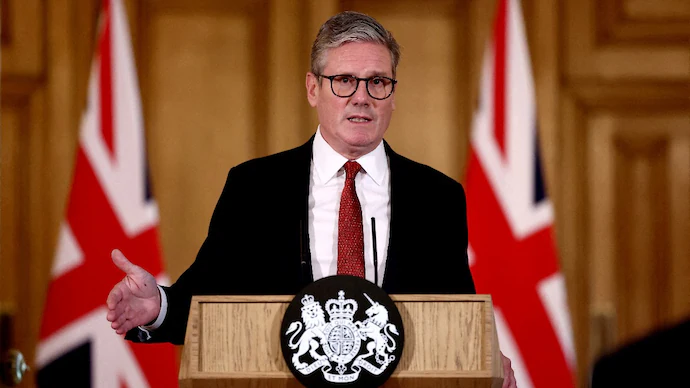
UK Signals Recognition of Palestinian State Unless Israel Agrees to Immediate Ceasefire, Says Prime Minister Keir Starmer

The United Kingdom is poised to take a significant step in the Israeli-Palestinian conflict, signaling it will recognize a Palestinian state at the United Nations General Assembly in September — unless Israel agrees to an immediate ceasefire and takes concrete steps toward peace and humanitarian relief. This announcement came from UK Prime Minister Keir Starmer on Tuesday, amid mounting international concern over the ongoing violence and humanitarian crisis in Gaza.
Growing Pressure on the UK Government
Starmer’s decision follows intense domestic and international pressure. Within his own Labour Party and across the wider British public, voices have grown louder calling for a stronger response to the escalating conflict. The situation has been made all the more urgent by heartbreaking images emerging from Gaza — particularly those showing starving and suffering children caught in the crossfire.
“The Palestinian people have endured terrible suffering,” Starmer told reporters during his announcement, underscoring the urgency of the situation and the need for immediate action.
The Context Behind the Announcement
The Israeli-Palestinian conflict, one of the most enduring and complex disputes in modern history, has once again reached a critical flashpoint. In recent months, Gaza has experienced intense violence, resulting in thousands of casualties and widespread devastation. The humanitarian situation has worsened dramatically, with limited access to food, water, medical supplies, and shelter.
The international community has repeatedly called for a ceasefire, but political complexities and deep-seated tensions have made such agreements elusive. The UK’s announcement signals a willingness to leverage diplomatic recognition as a tool to encourage de-escalation and push for peace.
What Does UK Recognition of Palestine Mean?
Official recognition of a Palestinian state by the UK would be a major diplomatic move. Currently, Palestine is recognized as a non-member observer state at the United Nations, but few countries formally acknowledge it as a sovereign nation. Recognition by the UK, a major global power and permanent member of the UN Security Council, would carry significant weight.
Such recognition could potentially strengthen Palestine’s position in international negotiations, provide increased access to international aid, and shift diplomatic dynamics in the region. However, it would also likely provoke strong opposition from Israel and some of its allies, who view the recognition of Palestinian statehood as a threat to the peace process and Israeli security.
The Ceasefire Condition
Prime Minister Starmer made it clear that the UK’s recognition of Palestine is contingent on Israel agreeing to an immediate ceasefire and taking meaningful steps toward peace and humanitarian assistance. This condition highlights the UK’s desire to support a peaceful resolution rather than deepen divisions.
Starmer’s stance aligns with calls from many international actors who stress the need to stop violence first, before moving forward with political changes. The ceasefire would provide a much-needed pause for humanitarian aid to reach civilians in Gaza and could serve as a foundation for future peace talks.
Domestic Politics and Labour Party Pressure
Starmer’s announcement also reflects pressures within his own party. The Labour Party, historically seen as more sympathetic to Palestinian rights compared to the Conservative Party, has seen rising calls from its grassroots and members demanding a firmer stance against Israeli military actions.
Balancing this internal pressure with maintaining the UK’s broader diplomatic relationships is a delicate task for Starmer. His willingness to potentially recognize Palestine demonstrates a strategic effort to address party concerns while still promoting diplomacy.
International Reactions and the Road Ahead
The UK’s announcement is likely to reverberate across international circles. Many countries already recognize Palestine and have supported its bid for statehood at the UN. However, others, particularly the United States, have traditionally opposed formal recognition without a negotiated peace agreement.
If the UK proceeds with recognition, it could encourage other countries to follow suit, increasing pressure on both Israel and Palestine to negotiate. At the same time, it risks escalating tensions with Israel and its allies, potentially complicating diplomatic relations.
Humanitarian Crisis in Gaza: The Driving Force
At the heart of this political maneuver is the severe humanitarian crisis unfolding in Gaza. Years of conflict, blockade, and periodic military escalations have left the population vulnerable. Basic necessities such as food, clean water, electricity, and medical supplies are scarce. Hospitals are overwhelmed, and infrastructure has been decimated.
Images and reports of children suffering from malnutrition and lack of medical care have fueled international outrage. For many, this crisis is a moral imperative that demands urgent intervention.
Starmer’s emphasis on peace and humanitarian aid as prerequisites for UK recognition reflects the urgent need to alleviate this suffering. The ceasefire would open a crucial window for aid delivery and potentially pave the way for a longer-term resolution.
A Complex and Contentious Issue
The UK’s potential recognition of Palestine comes at a time when the Israeli-Palestinian conflict is more polarized than ever. Decades of failed negotiations, mutual distrust, and violence have hardened positions on both sides.
While some see recognition as a path to empowering Palestinians and encouraging peace, others warn it could harden Israel’s stance or disrupt ongoing negotiations. The UK’s move is a high-stakes diplomatic gamble aimed at breaking the cycle of violence.
A Moment of Decision
Prime Minister Keir Starmer’s announcement represents a pivotal moment in the UK’s foreign policy toward the Middle East. By linking Palestinian state recognition to an immediate Israeli ceasefire and humanitarian action, the UK is taking a firm position that balances justice for Palestinians with a desire for peace.
As the UN General Assembly approaches in September, all eyes will be on the UK and its diplomatic choices. Whether this move will help de-escalate the conflict or deepen divisions remains to be seen. But one thing is clear — the suffering of the Palestinian people has pushed the UK to act, signaling a potential shift in international efforts to address one of the world’s most intractable conflicts.

