
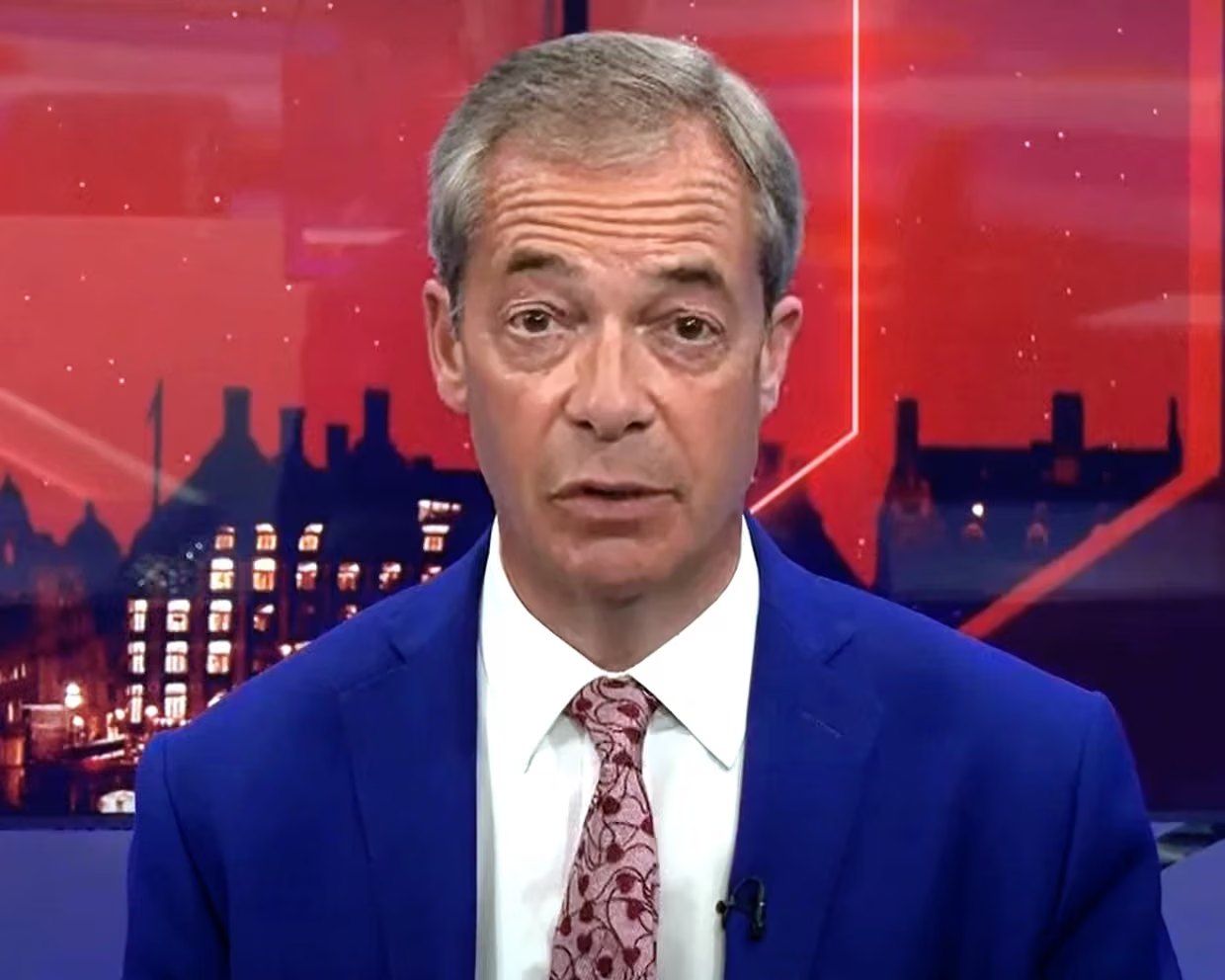
Nigel Farage Caught in Tax Row: Reform Leader Uses Private Company to Cut GB News Bill

Nigel Farage Accused of Using Private Company to Reduce Tax on GB News Earnings
Nigel Farage, the leader of Reform UK and Clacton MP, is facing fresh scrutiny after revelations that he has been using a private company to reduce the tax he pays on earnings from his GB News show and other outside employment.
The arrangement, described as a “television star-style” setup, has become increasingly controversial in recent years, with many broadcasters moving away from the practice amid criticism that it allows high earners to avoid paying their fair share.
How the Arrangement Works
Instead of receiving his broadcasting fees and other outside income directly, Farage diverts the payments into a private company.
- The profits are then taxed at the corporation tax rate of 25%.
- By contrast, if he were paid directly as an individual, he could face up to 40% income tax.
- The company structure also allows him to offset some expenses, further reducing the overall bill.
This means Farage benefits from a significantly lower tax burden than he would if his GB News income were paid straight to him.
A Familiar Pattern
The revelation is striking because Farage has long been outspoken about tax issues.
- In the past, he described those who avoid tax as the “common enemy.”
- He has also previously come under fire for creating a trust fund in an offshore tax haven.
- Yet he has defended certain schemes as legitimate, once saying: “Most forms of legal tax avoidance are OK, but clearly some are not. Nobody voluntarily paid anything to HMRC.”
His critics argue that this latest arrangement exposes a double standard between his rhetoric and personal financial practices.
Farage’s Political Role
Farage is not only a television presenter but also a sitting MP for Clacton, earning an annual salary of £94,000. His dual role as a politician and media personality amplifies the controversy.
As the face of Reform UK, Farage has built his political brand on populist themes, attacking elites, calling for lower taxes for ordinary people, and branding himself as a straight-talking outsider. Allegations of tax minimization cut directly against that image.
Broader Criticism of TV Star-Style Tax Arrangements
This type of private company setup has become a flashpoint across the media industry.
In the past, major broadcasters — including the BBC and ITV — have faced criticism for allowing presenters to be paid through similar corporate structures. Many have since tightened their policies, wary of public backlash.
Politicians, too, have expressed concern that such practices undermine public confidence in the fairness of the tax system. With Farage now revealed to be using the same model, pressure is mounting for him to explain his position.
Political Reactions
Members across the political spectrum have previously condemned tax avoidance schemes of this kind. Labour and Conservative MPs alike have argued that leaders must set an example when it comes to paying taxes.
Farage, however, has so far insisted that he acts within the law and has long defended the principle of lowering one’s tax bill if legally possible. Whether this line will hold in the face of renewed public scrutiny remains to be seen.
The Timing of the Row
The timing of the revelations is particularly sensitive for Farage. Reform UK has been gaining traction in opinion polls, boosted by Nadine Dorries’s recent defection from the Conservative Party, and is increasingly positioning itself as a serious threat to both Labour and the Tories.
A damaging story about Farage’s finances could distract from that momentum and give ammunition to his opponents.
Looking Ahead
As the story develops, questions remain:
- Will Farage defend his arrangement as simply “tax efficiency” within the rules?
- Could this force Reform UK to address transparency and accountability more directly?
- And how will voters react to a populist leader minimizing his tax burden while drawing a taxpayer-funded MP salary?
For now, the row has cast a shadow over Farage’s image as a politician who claims to speak for ordinary people.