
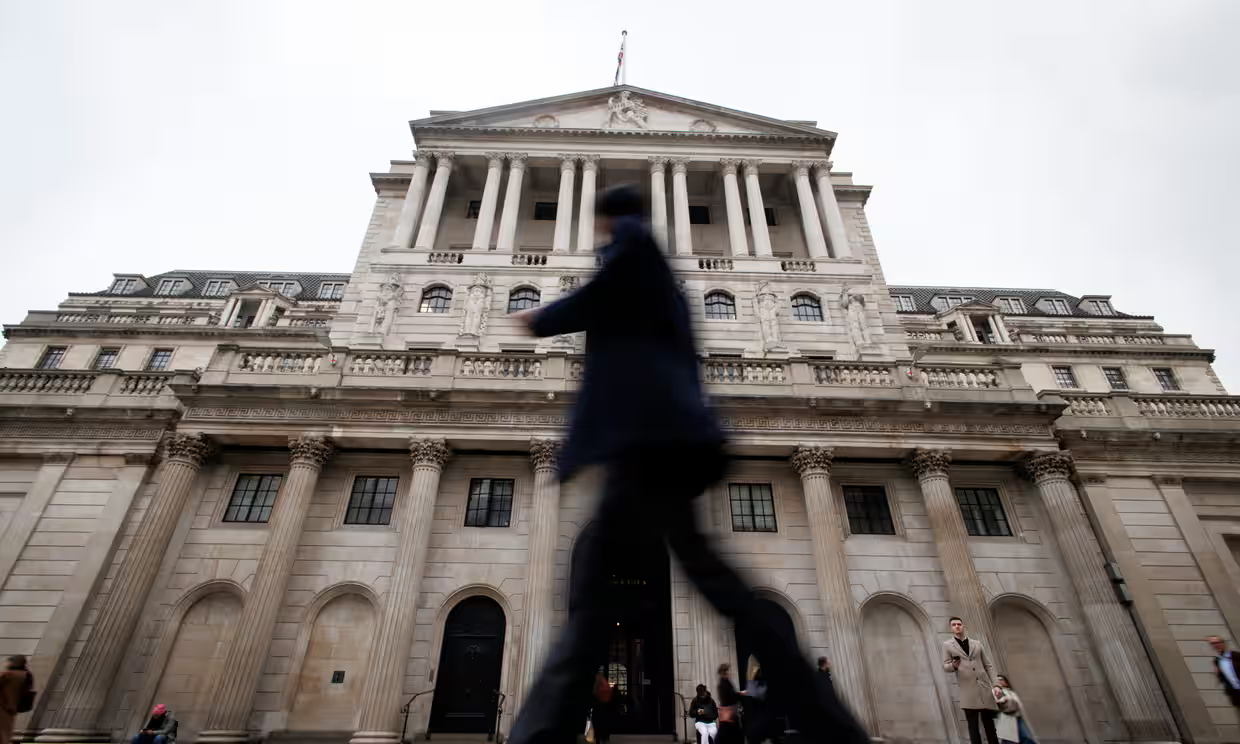
Bank of England Holds Interest Rates Steady, But Warns of UK Economic Stagnation

In a critical move for the UK economy, the Bank of England (BoE) has decided to keep its interest rates unchanged at 4.75%, signaling that the central bank is still concerned about inflation even though growth in the UK is stagnating. This decision comes at a time of rising economic uncertainty, with the BoE also downgrading its growth forecast and highlighting the growing risks that could slow down the UK economy further.
Why Did the Bank of England Keep Rates Steady?
1. Inflation Still a Major Concern
Despite the UK economy showing signs of slowing down, the Bank of England’s Monetary Policy Committee (MPC) is still worried about inflation. This was the driving force behind their decision to keep interest rates at their current level. With inflation remaining persistently high, the central bank is taking a cautious approach, wanting to ensure that inflation does not spiral out of control.
Inflation refers to the rising prices of goods and services, which can impact everything from the cost of groceries to energy bills. High inflation reduces purchasing power, meaning people can afford less, which is why the BoE wants to keep a close eye on it.
2. No Immediate Cuts, But Signals for Future Change
Despite keeping rates on hold, the BoE has signaled that it may lower borrowing costs in the future. A notable split among the MPC members, where three out of nine members voted for an interest rate cut, hints that the central bank may soon ease borrowing costs. This could happen in the next policy meeting scheduled for February 2025.
The push for an interest rate cut came from Dave Ramsden, a deputy governor, alongside Swati Dhingra and Alan Taylor, external members of the MPC. They argued that the UK economy is slowing and that a small reduction in rates could help stimulate growth.
Bank of England Downgrades Growth Forecast: Why is the UK Struggling?
1. Weak Economic Growth Ahead
The Bank of England has significantly downgraded its forecast for the UK economy, now predicting zero growth for the final quarter of the year. This is a big shift from earlier predictions in November 2024, when it expected the UK economy to grow by 0.3%.
The lack of growth means that the UK is at risk of stagnation, where the economy is neither growing nor shrinking but simply staying flat. Stagnation can lead to high unemployment and low consumer spending, which would hurt businesses and consumers alike.
2. Impact of the Budget and Rising Inflation
One key reason for the downgrade in the forecast is the impact of the UK government’s budget, specifically the £40 billion in new taxes that Chancellor Rachel Reeves introduced. These tax hikes are expected to weigh on household spending and business investment, further slowing the economy.
Additionally, rising inflation continues to put pressure on the Bank of England’s ability to stimulate growth. Even though the economy is faltering, inflation is still a major concern. The BoE’s decision to keep interest rates high is aimed at combating inflation, but it risks further slowing down the economy.
3. Geopolitical Risks: Trump and Global Trade
Another major concern affecting the UK economy is global trade uncertainty, particularly related to the potential actions of Donald Trump, who is expected to take office again as U.S. president. Trump’s policies on trade could disrupt international markets and make it harder for the UK to engage in global trade. This adds another layer of uncertainty to an already struggling economy.
The Debate Over Interest Rates: To Cut or Not to Cut?
1. Split Decision Among MPC Members
The decision to keep interest rates on hold was not unanimous. As mentioned earlier, three of the nine MPC members voted for a rate cut. This reflects a growing debate within the Bank of England about whether maintaining high interest rates is the best way to balance inflation control with the need for economic growth.
The three members advocating for an immediate 0.25% rate cut believe that the UK economy is weakening and that lower borrowing costs could help stimulate spending and investment. A rate cut could make loans and mortgages cheaper, which may encourage businesses to invest and consumers to spend more.
However, the majority of the committee felt that keeping rates steady was necessary to continue fighting high inflation. While the economy is slowing, inflation is still high enough to require caution.
2. What’s Next?
Looking ahead, BoE Governor Andrew Bailey and other officials will likely continue to monitor inflation closely. If inflation persists or worsens, the BoE may choose to keep interest rates high. But if the economy continues to stagnate and growth fails to pick up, there could be a shift in policy as early as February 2025.
What Does This Mean for UK Households and Businesses?
1. Household Impact: Higher Borrowing Costs
For UK households, the decision to keep rates at 4.75% means higher borrowing costs continue to put pressure on family budgets. Many homeowners with variable-rate mortgages or people who need to take out loans for big purchases will feel the pinch.
Though the BoE has indicated that it might lower rates in the future, for now, many people are still grappling with higher mortgage payments and increased costs on credit cards and personal loans. The strain on household budgets could slow consumer spending and further weaken the economy.
2. Business Impact: Stagnation Risk
For businesses, especially small and medium-sized enterprises (SMEs), the uncertainty created by high interest rates could dampen investment. Companies that rely on borrowing to fund expansion or innovation may delay these plans as it becomes more expensive to take on new debt.
The Bank of England’s warning of stagnation means businesses must be prepared for the possibility of a flat economic environment. In such times, it’s crucial for companies to be cautious in their growth plans and to focus on efficiency and cost control.
Conclusion: A Delicate Balancing Act for the UK Economy
The Bank of England’s decision to keep interest rates at 4.75% reflects its ongoing battle to control inflation while also navigating a fragile economic recovery. With zero growth expected in the final quarter of 2024, the UK economy is at risk of stagnation, and many households and businesses are feeling the impact of high borrowing costs.
The BoE’s cautious approach suggests that interest rates may remain high for the time being, but the possibility of a rate cut in February could signal a shift in policy if the economy doesn’t improve. In the meantime, the Bank of England will need to carefully monitor both inflation and growth, trying to strike a balance that will allow the UK to avoid both stagnation and runaway inflation.

