
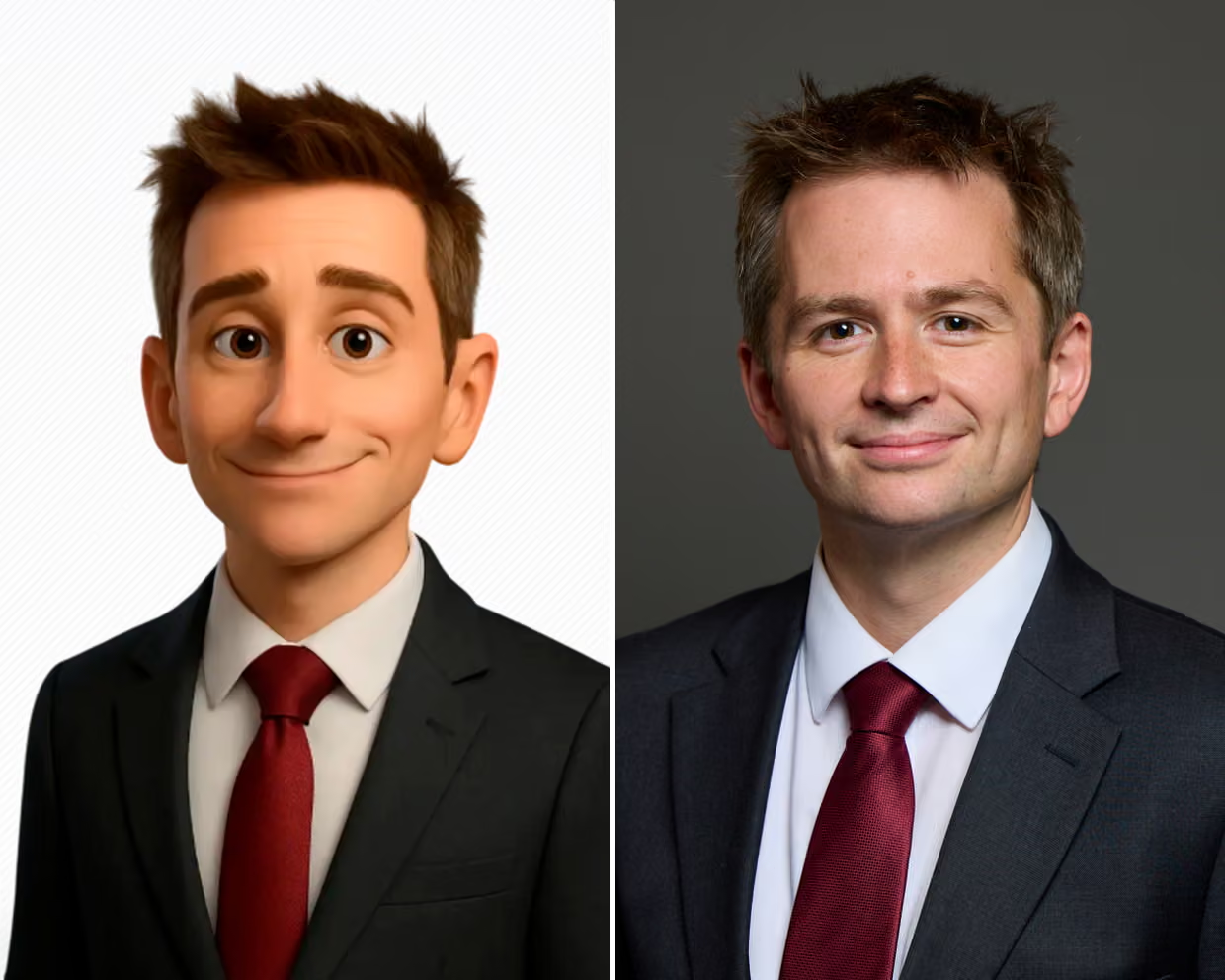
I Spoke to the AI Avatar of a Leeds MP — How Did It Cope with My Yorkshire Accent?

In an age where artificial intelligence is rapidly transforming communication, political figures are beginning to experiment with digital tools to connect with their constituents. Leeds MP Mark Sewards recently launched an AI-powered digital assistant designed to answer questions and engage with residents of his constituency. Intrigued by the novelty, I decided to put the avatar to the test — specifically, by speaking to it in my strong Yorkshire accent.
The Rise of AI in Politics
Artificial intelligence has been making waves across numerous sectors, from healthcare to customer service, and now even politics. Politicians are increasingly turning to AI avatars and chatbots as a means to efficiently handle constituent inquiries and offer round-the-clock support. This technology promises to alleviate the workload of MPs’ offices, providing instant responses on policy positions, local projects, and more.
Mark Sewards’ AI avatar represents a step forward in this trend, promising a digital, accessible way for constituents to engage with their representative. But how well does the technology perform when faced with a distinct regional accent like Yorkshire’s?
Testing the AI with a Yorkshire Twang
I approached the AI avatar with some skepticism. Regional accents can often trip up voice recognition software, leading to misunderstandings or garbled responses. Yorkshire accents, with their unique vowel sounds and local idioms, are no exception.
To my surprise, the AI managed to comprehend my questions quite well. Whether I asked about upcoming community events, local infrastructure projects, or Sewards’ stance on national issues, the avatar responded promptly and accurately. Its voice recognition software appeared to have been trained on a diverse range of accents, making it impressively adaptable.
There were a few minor hiccups — a misheard word here and there — but nothing that impeded the overall flow of conversation. The AI’s replies were clear, concise, and relevant, making the experience surprisingly smooth.
What This Means for MPs and Their Offices
Despite the success of the AI avatar, MPs’ human aides have little to fear. The technology is still far from perfect and is best viewed as a supplement rather than a replacement for personal interaction. Complex, nuanced discussions about policy or sensitive constituent concerns still require a human touch.
However, digital assistants like Sewards’ avatar can take care of routine queries, freeing up staff to focus on more critical tasks. They also provide constituents with instant access to information, which can improve engagement and satisfaction.
The Future of Political Communication
The experiment with the AI avatar in Leeds is a glimpse into the future of political communication. As voice recognition and natural language processing technologies continue to improve, we can expect more MPs to adopt AI tools to enhance their outreach.
These digital assistants will likely become more sophisticated, capable of handling a wider array of questions, and adapting even better to different accents and dialects.
For now, Mark Sewards’ AI avatar shows that even with a strong Yorkshire accent, artificial intelligence can hold its own — a promising sign for the continued integration of technology in public service.