

ChatGPT Creator Partners with Britain to Bring AI Innovations to Justice, Security, and Education
In a major step forward for artificial intelligence in government, OpenAI, the company behind the popular ChatGPT language model, has signed a new deal with the UK government to explore how AI can be used to improve public services. The agreement aims to unlock AI’s potential in areas like justice, national security, and education.
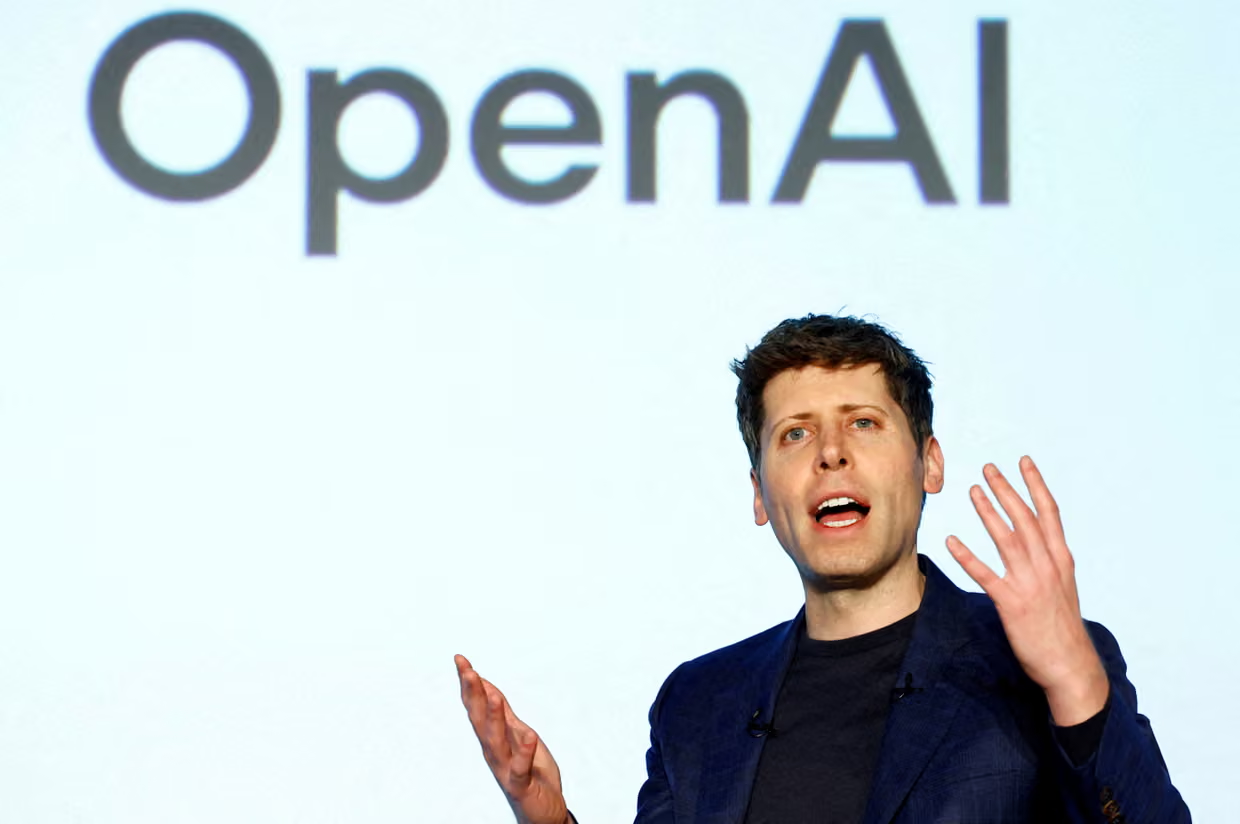
The deal was announced on Monday when OpenAI CEO Sam Altman met with the UK’s science and technology secretary, Peter Kyle, to sign a memorandum of understanding (MoU). This broad collaboration signals a commitment to carefully explore AI’s role in government while addressing the challenges that come with such powerful technology.
What Does the Deal Mean?
The MoU sets the stage for OpenAI and the UK government to work closely on identifying practical ways to deploy advanced AI models within government agencies. Key goals include:
- Helping civil servants work more efficiently by automating routine tasks
- Assisting citizens in navigating public services more easily
- Improving decision-making processes in critical areas like justice and security
- Exploring AI’s potential in education to support teachers and students
The partnership is described as wide-ranging and collaborative, emphasizing responsible AI use that benefits both the government and the public.
How This Fits Into the UK’s AI Strategy
This agreement with OpenAI builds on the UK government’s ongoing efforts to integrate AI into public administration responsibly. It comes shortly after a similar deal was signed with Google, another AI giant, to explore AI applications in government.
Both deals reflect the UK’s desire to stay at the forefront of AI innovation while navigating the tricky balance between harnessing technology and safeguarding public interests.
Concerns and Criticisms
Despite the excitement around AI’s possibilities, some experts and campaigners have raised red flags about these deals.
Critics argue that partnerships with private tech companies—whether OpenAI or Google—could create a dangerous dependence on external providers for critical government functions. There are fears this might:
- Limit government control over sensitive data and systems
- Make it harder to regulate powerful AI technologies effectively
- Increase risks related to privacy and security
- Lead to unequal access or bias if AI tools aren’t carefully managed
In particular, some groups have called the government’s agreement with Google “dangerously naive,” warning that the public sector might be locked into contracts that prioritize corporate interests over citizens’ rights.
OpenAI’s deal, while framed as collaborative and responsible, faces similar scrutiny. Transparency, accountability, and clear guidelines will be essential to ensure these partnerships benefit the public.
What Makes OpenAI Different?
OpenAI has positioned itself as a leader in AI ethics and safety, often highlighting its mission to ensure AI benefits all of humanity. The company is known for creating ChatGPT, a widely used AI chatbot capable of understanding and generating human-like text, and for promoting transparency around AI capabilities.
The UK government’s partnership with OpenAI signals trust in the company’s approach to developing and deploying AI models carefully. Still, the challenge will be to translate those ideals into real-world government applications without unintended consequences.
Potential Applications of AI in Government
The UK government is looking at a variety of ways AI could transform public services:
1. Justice System
AI could assist judges and lawyers by analyzing case law, identifying patterns, and speeding up legal research. This could help reduce backlogs and improve fairness, but only if used carefully to avoid biases.
2. Security and Intelligence
AI tools might help intelligence agencies analyze vast amounts of data to identify threats more quickly. However, ensuring privacy and avoiding overreach will be critical.
3. Education
AI could support teachers by personalizing learning materials or automating administrative tasks, freeing educators to focus more on students.
4. Citizen Services
Chatbots and virtual assistants powered by AI could guide people through complex government websites, helping with everything from applying for benefits to booking appointments.
5. Efficiency Improvements
Automating repetitive administrative tasks could save time and resources, allowing civil servants to focus on higher-value work.
Looking Ahead: What to Watch For
As this partnership progresses, several key factors will shape its success:
- Transparency: The government should keep the public informed about what data is used and how AI decisions are made.
- Regulation: Clear rules will be needed to govern AI’s use in sensitive areas like law enforcement and healthcare.
- Ethics: Avoiding bias and ensuring fairness in AI outputs must be priorities.
- Public Trust: Building confidence that AI is being used to help—not harm—citizens will determine whether such projects succeed.
A New Era for AI in UK Public Services
The deal between OpenAI and the UK government marks an important moment in AI’s growing influence over public life. It offers exciting possibilities to modernize government functions and improve services for millions of people.
But it also raises serious questions about control, fairness, and the role of private tech firms in public governance.
With AI advancing rapidly, the UK’s approach could set a global example for how governments integrate these powerful tools responsibly. The world will be watching closely as OpenAI and the British government work together to explore this brave new frontier.

