
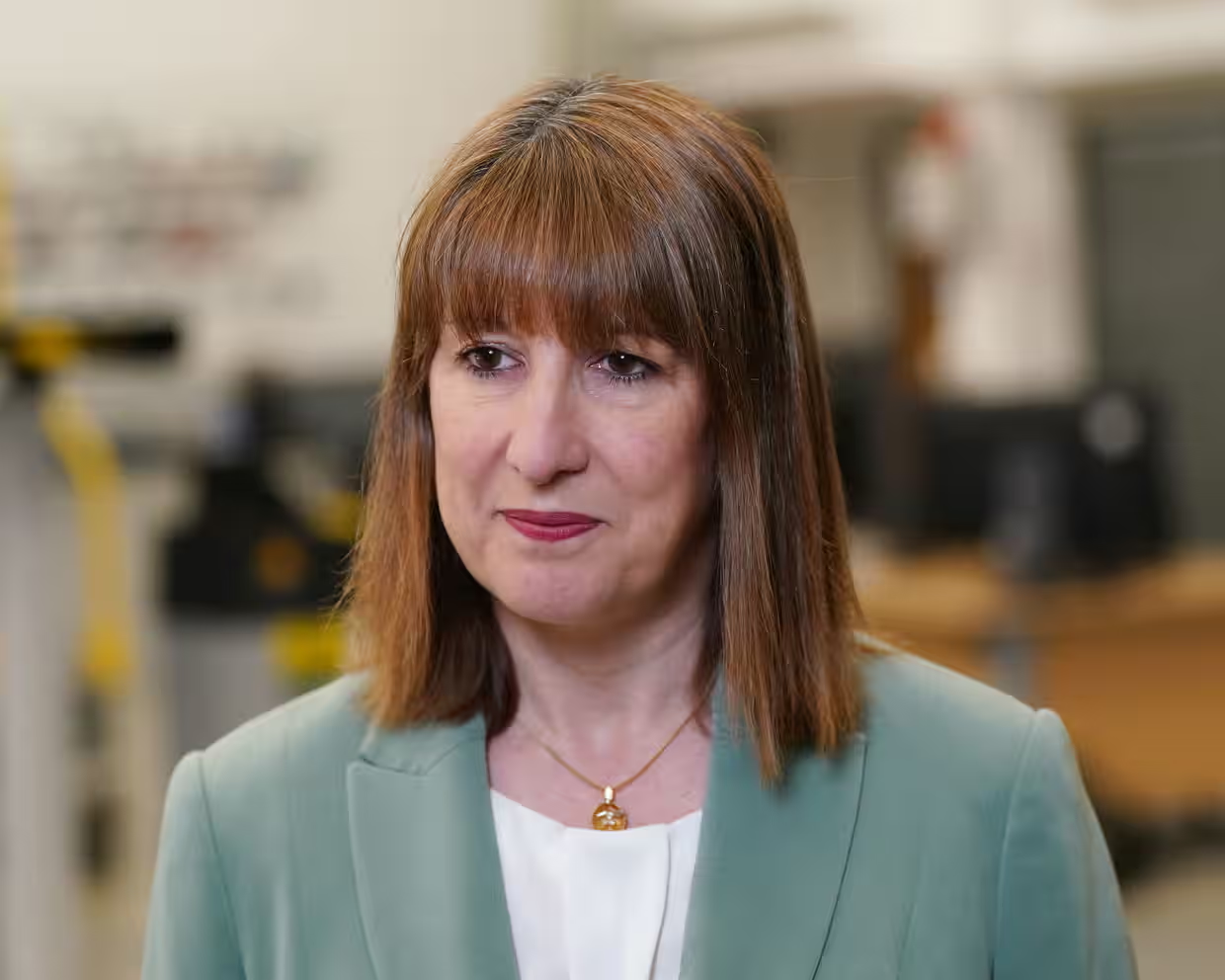
Rachel Reeves Poised to Raise Taxes: Income Threshold Freeze Likely After Welfare U-Turn

Reeves Set to Extend Income Tax Freeze as Welfare U-Turn Blows Hole in Budget
After a major policy reversal on welfare cuts, Chancellor Rachel Reeves is now expected to freeze income tax thresholds beyond 2028 to plug an emerging multibillion-pound gap in public finances. The move would see more people paying higher rates of tax in the years ahead—despite previous Labour promises to avoid further tax hikes.
This latest shift signals growing pressure on Reeves and Prime Minister Keir Starmer, as they try to reconcile ambitious plans to fix public services with strict fiscal rules and political promises.
What’s Behind the Move?
Welfare U-Turn Creates Budget Shortfall
Starmer’s decision to roll back controversial disability benefit cuts—after backlash from Labour MPs and disability rights groups—has added an estimated £3 billion annual cost to government spending by 2029-30, according to the Resolution Foundation.
That blow to the Treasury comes just as Reeves was already walking a tightrope: balancing Labour’s pledge to rebuild crumbling public services and grow the economy without increasing borrowing.
Now, independent economists and government insiders agree—tax rises are almost inevitable.
The Income Tax Threshold Freeze Explained
What Is the Freeze?
The current income tax threshold freeze—originally introduced by former Chancellor Jeremy Hunt—means the points at which taxpayers move into higher brackets are not rising with inflation. As a result, more people are pushed into higher tax bands each year, even if their income hasn’t significantly increased in real terms.
- The freeze is set to end in 2028, but an extension by Reeves could add another £8 billion per year to the Treasury’s income.
- Already, 500,000 more people are expected to pay the higher rate of tax this year, bringing the total to 7 million.
“The most obvious thing would be to extend the income tax thresholds for another two years,” said Ruth Curtice, director of the Resolution Foundation.
Why the Freeze Is Politically Convenient
Unlike headline tax rate hikes, freezing thresholds is a stealthy way of increasing tax revenue. It doesn’t require changing the actual percentages, making it easier for ministers to claim they’ve kept tax rates the same—even as the average household pays more.
Impact on Workers
- Middle-income earners will feel the pinch most, particularly those just edging into higher bands.
- It disproportionately affects younger professionals and public sector workers, many of whom haven’t seen real-terms pay rises for years.
- Some critics call it a “tax by stealth.”
What This Means for Labour’s Economic Agenda
A Clash Between Vision and Reality
Rachel Reeves has promised to be both “pro-business” and “fiscally responsible.” But the growing cost of Labour’s social pledges, combined with pressure to avoid new borrowing, means she is being forced to consider tough trade-offs earlier than expected.
In the coming Autumn Budget, expected later this year, she will need to demonstrate how Labour can fund:
- Increased investment in the NHS and public services
- The ongoing cost of welfare support
- Energy transition and infrastructure spending
- While also meeting fiscal targets that limit how much the government can borrow
Raising income tax through stealth threshold freezes is now seen as one of the least politically explosive options available—though not without its own risks.
Backlash Already Brewing
Opposition From the Left
Some Labour backbenchers have warned that extending the freeze will hit working families hard, undermining Labour’s brand as the “party of fairness.” Many had supported the welfare U-turn under the belief it would protect the most vulnerable—but now fear that middle earners will be asked to foot the bill.
“If the government makes the right call on welfare but funds it by taxing the squeezed middle, they’re just shifting the pain,” one Labour MP told reporters.
Right-Wing Criticism
Meanwhile, Conservatives are likely to accuse Labour of breaking its no-tax-rise pledge—even though the freeze was their policy to begin with.
What to Watch Next
| Timeline | Key Milestones |
|---|---|
| July–August 2025 | Behind-the-scenes budget planning, departmental reviews begin |
| Autumn 2025 | Rachel Reeves delivers her first full Autumn Statement as Chancellor |
| 2026–2028 | Potential phase-in of new tax thresholds, if freeze extended |
| 2029–30 | Estimated full fiscal impact of welfare U-turn hits Treasury |
Final Thoughts
The political honeymoon may be ending for Rachel Reeves and Keir Starmer. Their welfare U-turn, while popular with the public and human rights campaigners, now leaves Labour facing tough fiscal realities. If Reeves does push ahead with an extended income tax threshold freeze, it will represent a defining moment for Labour’s economic strategy—one that could reshape how millions of Britons feel about their tax bill.
For Reeves, it’s a classic chancellor’s dilemma: spend or save, raise or reform—and do it without alienating either voters or her own MPs.