
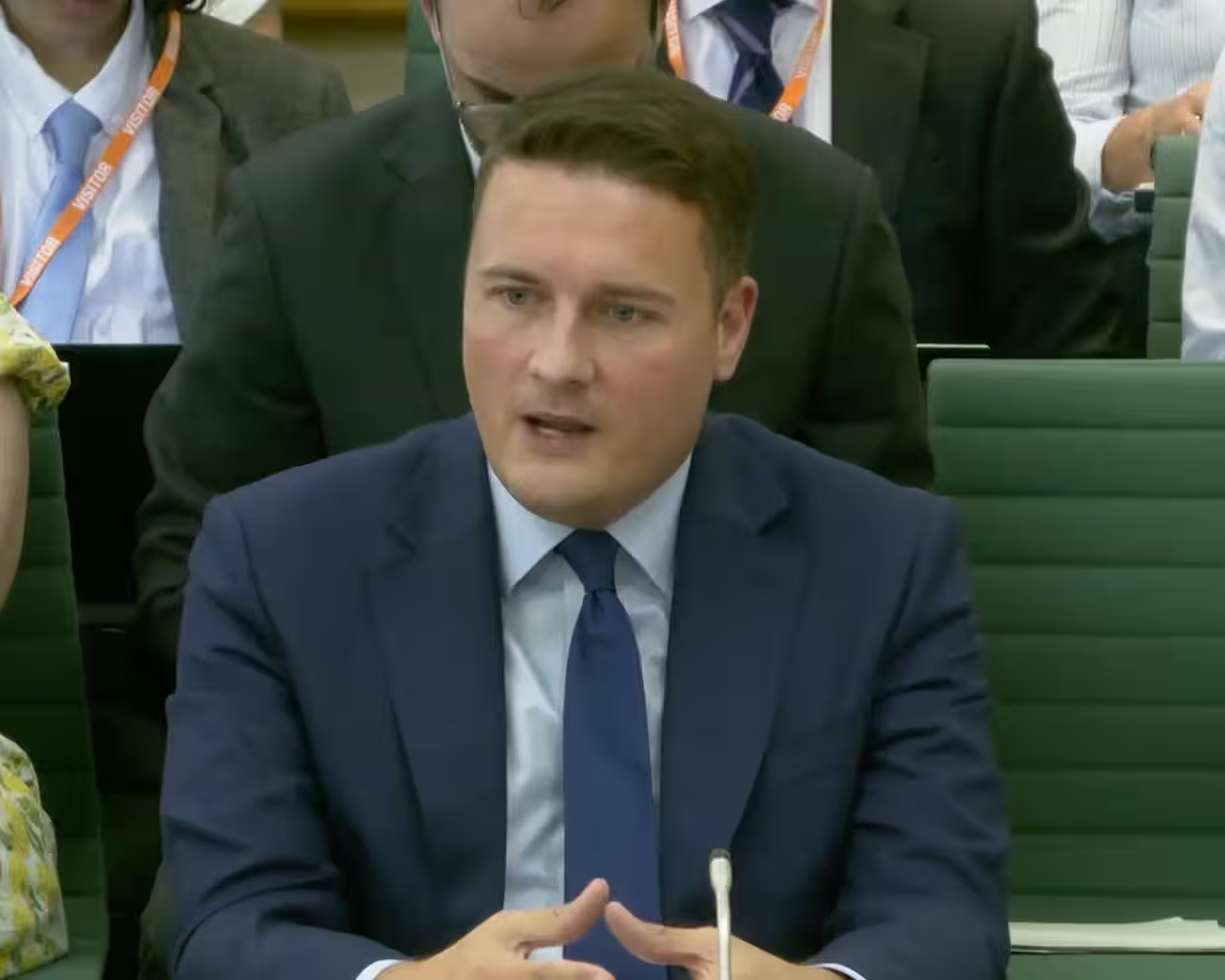
Resident Doctors’ Strikes Pose Political Threat, Warns Health Secretary Wes Streeting

As tensions rise in the United Kingdom’s health sector, Health Secretary Wes Streeting has issued a stark warning about the potential fallout from planned strikes by resident doctors. In a candid address to Labour MPs, Streeting underscored the political risks posed by industrial action, describing it as a “gift to Nigel Farage” and a dangerous distraction at a critical time for the National Health Service (NHS).
The looming strikes, organized by the British Medical Association (BMA), are scheduled to take place over five days beginning 25 July, representing the latest escalation in a protracted dispute over pay, working conditions, and the future sustainability of the NHS workforce. Streeting’s message came ahead of a high-stakes meeting with BMA officials this week, where he will attempt to broker a resolution and avert the impending industrial action.
The Context: A Health Service Under Pressure
The NHS is grappling with unprecedented challenges as it recovers from the strains of the COVID-19 pandemic. Years of austerity measures, rising patient demand, staff shortages, and funding gaps have stretched the system to its limits. Resident doctors—who play a critical role in delivering frontline medical care across hospitals in England—have repeatedly raised concerns about their pay failing to keep pace with inflation, excessive working hours, and the impact these pressures have on patient safety and care quality.
The BMA’s decision to authorize strike action follows months of negotiations with the government that have yet to yield a satisfactory pay settlement. For many doctors, the strikes represent a last resort to draw attention to their grievances and compel urgent action to address long-term systemic issues.
Streeting’s Warning: Political Stakes Are High
In his remarks to Labour MPs, Streeting framed the strike not merely as an industrial dispute but as a broader political challenge. “These strikes would be a gift to Nigel Farage,” he warned, referring to the former leader of the Brexit Party and a prominent right-wing populist figure who has frequently criticized public sector institutions, including the NHS.
Streeting explained that Farage’s agenda includes advocating for the dismantling of the publicly funded, universally accessible NHS in favor of a privatized, insurance-based healthcare system—a model that is deeply unpopular with the British public. “If Labour fail,” Streeting said, “he will point to that as proof that the NHS has failed, and must now be replaced by an insurance-style system.”
The Health Secretary stressed that the stakes of the current dispute extend beyond doctors’ pay or working conditions. “We are in the fight for the survival of the NHS, and it is a fight I have no intention of losing.” He painted the situation as a critical juncture where unity and compromise are vital to preserving the NHS’s founding principles.
The Labour Party’s Dilemma
Labour finds itself in a difficult position. While it is the party of the NHS and traditionally champions public healthcare, it must also manage the fiscal realities of governing and public expectations amid economic challenges like inflation and post-pandemic recovery.
Streeting’s comments reveal a government deeply concerned that protracted industrial disputes could alienate voters frustrated by health service disruptions, thereby undermining Labour’s political standing ahead of the next general election. A breakdown in relations with healthcare workers risks feeding the narratives of political opponents who portray the party as incapable of managing the NHS effectively.
The BMA’s Perspective and the Case for Strikes
From the doctors’ viewpoint, strike action is a last resort after repeated efforts to engage with the government. The BMA argues that real-terms pay cuts over recent years have eroded morale and made the NHS a less attractive employer at a time when recruitment and retention are already major issues.
Resident doctors face demanding schedules, often working long and irregular hours while carrying high levels of responsibility. Many have expressed concern about burnout and mental health impacts, issues exacerbated by the pandemic’s relentless pressure.
The BMA maintains that fair pay rises and improved working conditions are essential not only for staff wellbeing but also for ensuring patients receive safe, high-quality care. Their call for strikes highlights a broader crisis in NHS workforce sustainability that government officials must urgently address.
Potential Impact of Strikes on Patients and the NHS
The prospect of resident doctors striking raises understandable concern among patients and the wider public. Strikes in healthcare are highly sensitive given the life-or-death nature of medical services.
While emergency care and critical treatments are typically maintained during strikes, elective procedures, outpatient appointments, and some routine hospital services often face disruption or delay. This can compound existing waiting lists and exacerbate patient frustration, potentially damaging public confidence in the NHS.
For a health service already struggling to manage demand, any interruption can have cascading effects, putting further strain on other parts of the system.
Navigating a Path Forward: The Government’s Challenge
Streeting’s upcoming meetings with the BMA will be pivotal. There is a narrow window to reach a compromise that addresses doctors’ core concerns without overstretching government budgets or setting precedents that other health workers might follow with their own demands.
The Health Secretary and his team face the daunting task of balancing fiscal responsibility, political pressures, and the urgent need to maintain NHS functionality and morale. There is a clear need for long-term investment in NHS staffing, pay frameworks that reflect economic realities, and structural reforms to improve working conditions and healthcare delivery.
Wider Implications for UK Politics
Beyond the NHS itself, this dispute reflects deeper divisions in British politics over public services, economic policy, and social equity. The healthcare system remains a potent symbol of national identity and values—universality, fairness, and collective responsibility.
Streeting’s warning about Nigel Farage capitalizing on strike action highlights how industrial unrest can become fodder for political polarization, feeding populist narratives that threaten social cohesion.
The resolution of this dispute, therefore, will reverberate far beyond hospital wards, potentially shaping the political landscape as parties prepare for future elections.
At a Crossroads
The upcoming weeks represent a critical crossroads for the NHS and British politics. The planned strikes by resident doctors underscore the urgent need for renewed dialogue, mutual understanding, and practical solutions that protect the workforce while safeguarding patient care.
Health Secretary Wes Streeting’s warning signals the high stakes involved—not only for healthcare but for the broader political battle over the future of public services in the UK. Navigating this crisis successfully will require careful negotiation, political will, and a shared commitment to preserving the NHS as a cherished institution.
If unresolved, the consequences could be severe: further strain on the NHS, deteriorating public trust, and political gains for those seeking to undermine the public healthcare model.
For now, all eyes remain on the government and the BMA as they prepare to meet, hoping to avoid strikes that could disrupt lives and fuel political turmoil. The survival of the NHS, Streeting insists, depends on their ability to find common ground.