
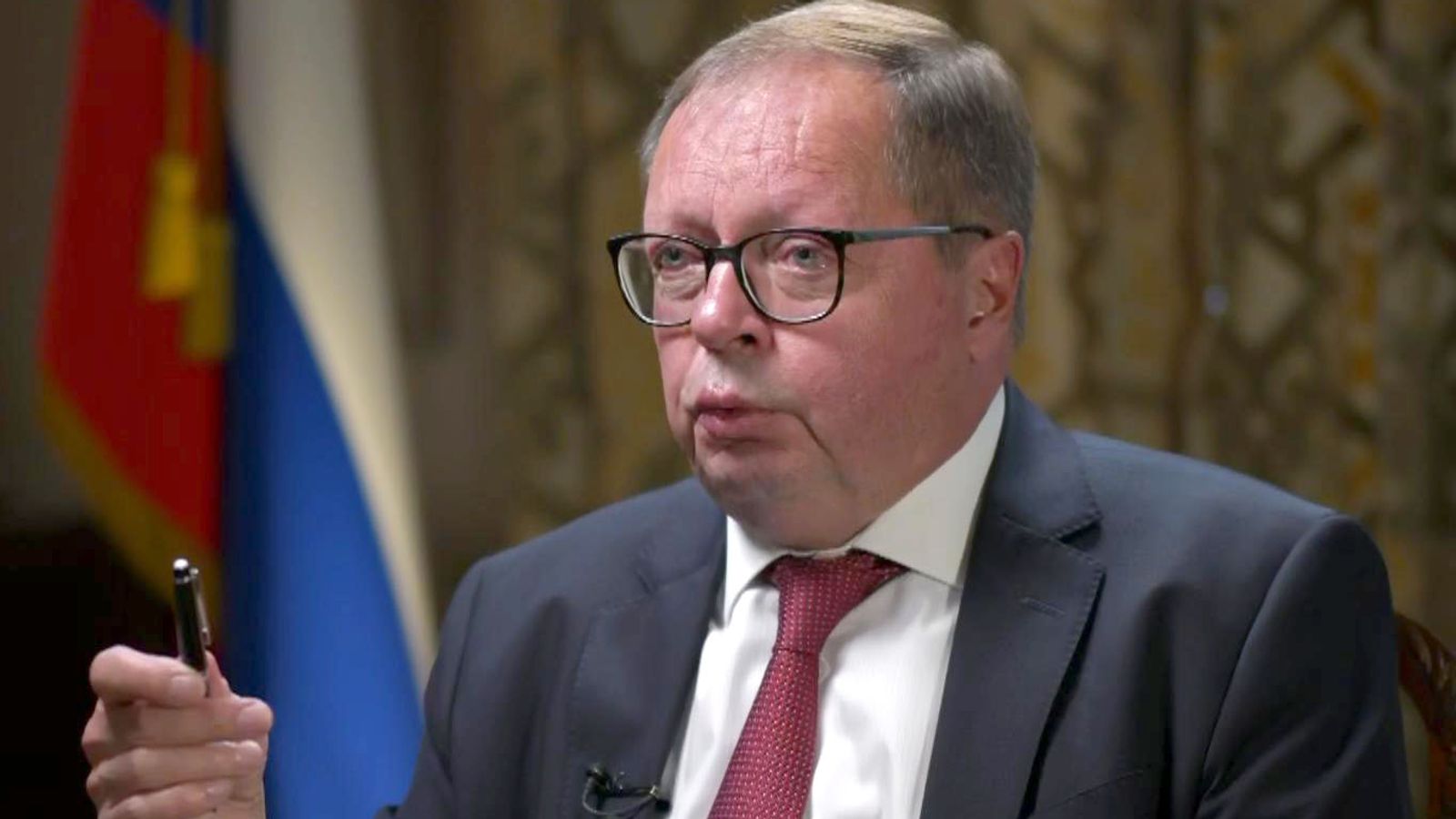
Russia Calls for “Quick Peace” in Ukraine, Claims UK Is Blocking It, Says Ambassador

In a recent interview, Andrei Kelin, Russia’s ambassador to the UK, made bold statements about the ongoing war in Ukraine. Kelin expressed that Russia is eager for a swift peace deal, but he believes that certain countries, particularly the UK, are standing in the way of that peace. According to the ambassador, the UK is at the forefront of a group of nations resisting a peaceful resolution to the conflict.
Russia’s Desire for a “Quick Peace”
As the war in Ukraine continues, Russia’s ambassador to the UK, Andrei Kelin, stressed that Moscow wants a “quick peace” in Ukraine. He emphasized that the ongoing conflict has taken a heavy toll and that Russia is ready for a resolution. In his interview with Sky News, Kelin outlined Russia’s position and argued that Moscow had already made certain territorial advances in Ukraine, which they believe should be acknowledged as part of any peace deal.
Russia’s request is clear: they want to see their territorial gains recognized by the international community in order to move forward with a peace agreement. According to Kelin, this is a key part of the peace process from Russia’s perspective.
UK, France, and Europe: A Roadblock to Peace?
Kelin did not hold back when talking about the role of the UK and other European nations in the conflict. He accused the UK, along with France and other European countries, of actively resisting efforts to bring about a resolution to the war in Ukraine. According to Kelin, these nations are more focused on prolonging the conflict rather than working toward peace.
The Russian ambassador suggested that the UK’s resistance to peace talks is one of the key reasons why the war has not yet ended. This marks a stark contrast to Russia’s stance, which is focused on achieving peace quickly, even if that means accepting territorial shifts that have already occurred.
The Territorial Issue: What Does Russia Want?
A major point of contention in the peace talks is Russia’s territorial demands. According to the Russian ambassador, Moscow believes that its territorial advances in Ukraine should be recognized as part of any future peace deal. This includes areas that have been seized by Russia during the conflict, and the ambassador made it clear that these territorial changes are non-negotiable from Russia’s perspective.
The recognition of these territories as part of Russia’s sovereign land is seen as an essential element of the peace agreement, Kelin explained. However, this demand could be a significant sticking point in any peace negotiations, as it directly contradicts Ukraine’s stance on the preservation of its territorial integrity.
The UK’s Role: A Nation Under Fire for Its Position
Kelin specifically singled out the UK, suggesting that London is leading the resistance to peace talks. While other European nations are also involved, he placed particular blame on the UK for prolonging the conflict. The UK has been a major supporter of Ukraine, providing both military and financial aid to the country since the start of the war.
British Prime Minister Rishi Sunak and other government officials have repeatedly affirmed their support for Ukraine, backing its right to self-defense and the restoration of its territorial integrity. This stance has put the UK at odds with Russia, and Kelin’s remarks suggest that Moscow sees the UK’s support for Ukraine as an obstacle to peace.
International Reactions to Russia’s Claims
Russia’s claims about the UK and other European nations have sparked a range of reactions. Supporters of Ukraine argue that the UK’s involvement is essential in helping the Ukrainian people defend themselves and resist Russian aggression. On the other hand, critics of the UK’s involvement in the conflict may feel that the prolonged support for Ukraine is delaying peace efforts.
The conflict between Russia and Ukraine has become a focal point in international politics, with many countries divided on how to handle the situation. The UK’s position, advocating for Ukraine’s sovereignty and supporting its military efforts, is viewed by Moscow as a major hurdle to peace.
What’s Next?
With the war continuing and no clear end in sight, the question remains: can a peace agreement be reached? Russia’s call for a “quick peace” may be a sign that Moscow is ready to negotiate, but the recognition of territorial gains remains a major sticking point. For many nations, including the UK, agreeing to such terms would be unacceptable, given the principle of territorial integrity.
As the conflict drags on, the international community will continue to debate the best way forward. Russia’s call for peace will likely be met with skepticism, as many Western leaders view the Russian invasion of Ukraine as a breach of international law. However, Moscow’s insistence on recognizing territorial gains will continue to complicate efforts toward a resolution.
A Divided International Community
Kelin’s remarks highlight a division within the international community when it comes to addressing the conflict in Ukraine. On one side, there are countries like the UK that are firmly aligned with Ukraine, providing substantial support. On the other, Russia is pushing for a peace deal that acknowledges the territories it has captured, further complicating the already tense situation.
As negotiations continue, it remains unclear if any common ground can be found. While Russia may want a “quick peace,” the international community’s support for Ukraine and its territorial sovereignty will likely remain a key point of contention. Whether the UK and its European allies will change their stance or continue to resist Russia’s demands remains to be seen.

