
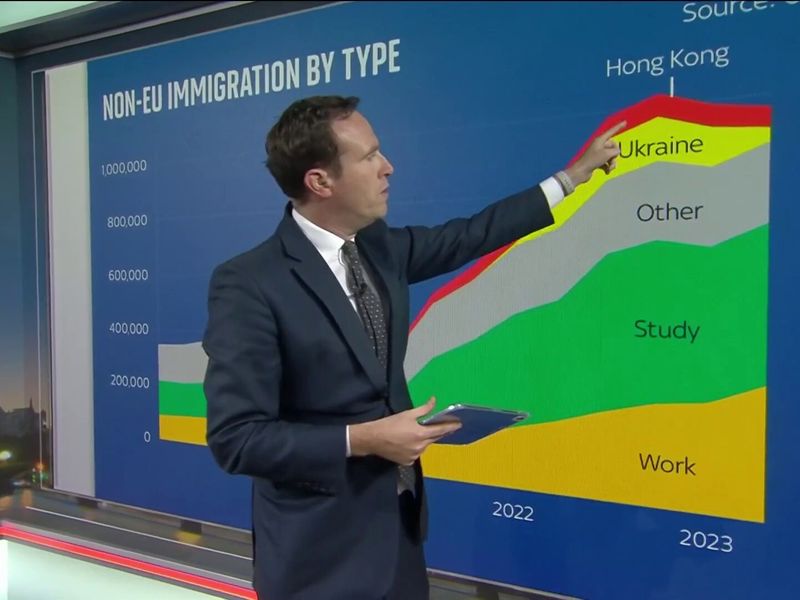

In recent years, the United Kingdom has seen immigration reach levels that many would describe as astonishing. While media attention often focuses on high-profile incidents such as people arriving on small boats, these represent only a small fraction of the overall movement. The bigger story is that government policies, particularly those implemented after Brexit, have been a major factor in shaping migration trends. The result is a complex landscape where unprecedented highs are being recorded across multiple categories of migration.
Brexit and the End of Free Movement
One of the biggest changes driving immigration patterns in the UK has been the country’s departure from the European Union. For decades, citizens from EU countries were able to move to the UK freely, seeking work, education, or family reunification without significant paperwork. After Brexit, this arrangement ended, and new immigration systems were introduced.
The government’s points-based immigration system, launched after Brexit, aims to attract highly skilled workers while restricting lower-skilled migration from Europe. While this has reduced some categories of movement, it has unintentionally opened the door to other forms of immigration. The UK now actively recruits workers from outside the EU to fill gaps in sectors such as healthcare, construction, hospitality, and agriculture. These routes have been used extensively, contributing to the sharp rise in immigration.
Skilled Worker Visas and Shortage Occupation Lists
A central plank of the post-Brexit immigration system is the Skilled Worker visa, which has been widely used by employers in sectors struggling with labor shortages. The government maintains a Shortage Occupation List, allowing certain professions to fast-track visa applications with lower salary thresholds. Jobs in nursing, engineering, and IT, among others, are prioritized.
As a result, thousands of workers from countries like India, Pakistan, and Nigeria have been approved to work in the UK, helping fill crucial gaps left by EU workers returning home. The rising demand for healthcare professionals, particularly in the wake of the pandemic, has led to a surge in applications. Many of these workers are essential to maintaining public services, and their presence has become critical to the functioning of the NHS and other industries.
Students and International Education
Student migration has also been a significant factor in the recent immigration surge. The UK remains one of the world’s top destinations for higher education, with thousands of students arriving each year from across the globe. New visa rules, including more accessible post-study work options, have made the UK an attractive place to study and then work.
Universities across the country have seen a sharp increase in international student numbers, many of whom remain in the UK after graduation to build their careers. This influx has been especially visible from countries such as China, India, and Nigeria, contributing further to the overall immigration figures.
Family Reunification and Humanitarian Routes
Family reunification visas have also played a role in boosting immigration levels. New pathways allowing spouses, children, and other dependents to join relatives living in the UK have contributed to the numbers. The government has pledged to maintain a compassionate approach to vulnerable families, although critics argue that visa rules remain too strict for some.
Humanitarian migration, including asylum seekers and refugees, is another contributing factor. Wars, political unrest, and climate change continue to displace people around the world, and the UK remains a destination for those seeking refuge. Although the numbers in this category are smaller compared to work or student visas, they still form part of the broader migration picture.
The Small Boats Crisis
While the vast majority of immigration occurs through legal routes, the arrival of people crossing the English Channel in small boats has dominated headlines. In reality, the number of arrivals via small boats is a small percentage of total immigration, but it has reached record levels in recent years, prompting political debates and public concern.
Government officials have linked these arrivals to broader issues such as global inequality, human trafficking, and conflict in regions like the Middle East and Africa. In response, new border enforcement strategies have been introduced, alongside diplomatic efforts to curb illegal crossings at the source.
Economic and Social Impacts
The rapid rise in immigration has sparked discussions across the political spectrum about the impact on public services, housing, and the labor market. Supporters argue that immigration has been vital in addressing worker shortages, filling essential roles, and contributing to the economy through taxes and consumer spending.
Critics, however, warn that local communities are struggling to meet increased demand for housing, schools, and healthcare. The government has responded by promising investment in infrastructure and services to accommodate the changing demographics.
Looking Ahead
Experts believe that immigration will remain a defining issue for the UK in the coming years. As the government seeks to balance labor market needs with public concerns, it faces the challenge of creating policies that are both humane and economically sound.
The record-high levels of immigration reflect a combination of global trends, domestic labor shortages, and policy choices made in response to Brexit. While much of the debate continues to center around illegal crossings, the broader picture is one of a nation adapting to new realities—one where skilled workers, students, and families from around the world are helping shape the future of the UK.
The UK’s record-breaking immigration levels are not the result of a single factor but a combination of post-Brexit policies, global migration trends, and economic needs. Skilled worker visas, student migration, and family reunification have all contributed to the surge, while new regulations and enforcement efforts attempt to manage the challenges. As the country navigates these changes, immigration will remain at the heart of policy discussions, shaping the social and economic landscape for years to come.

