
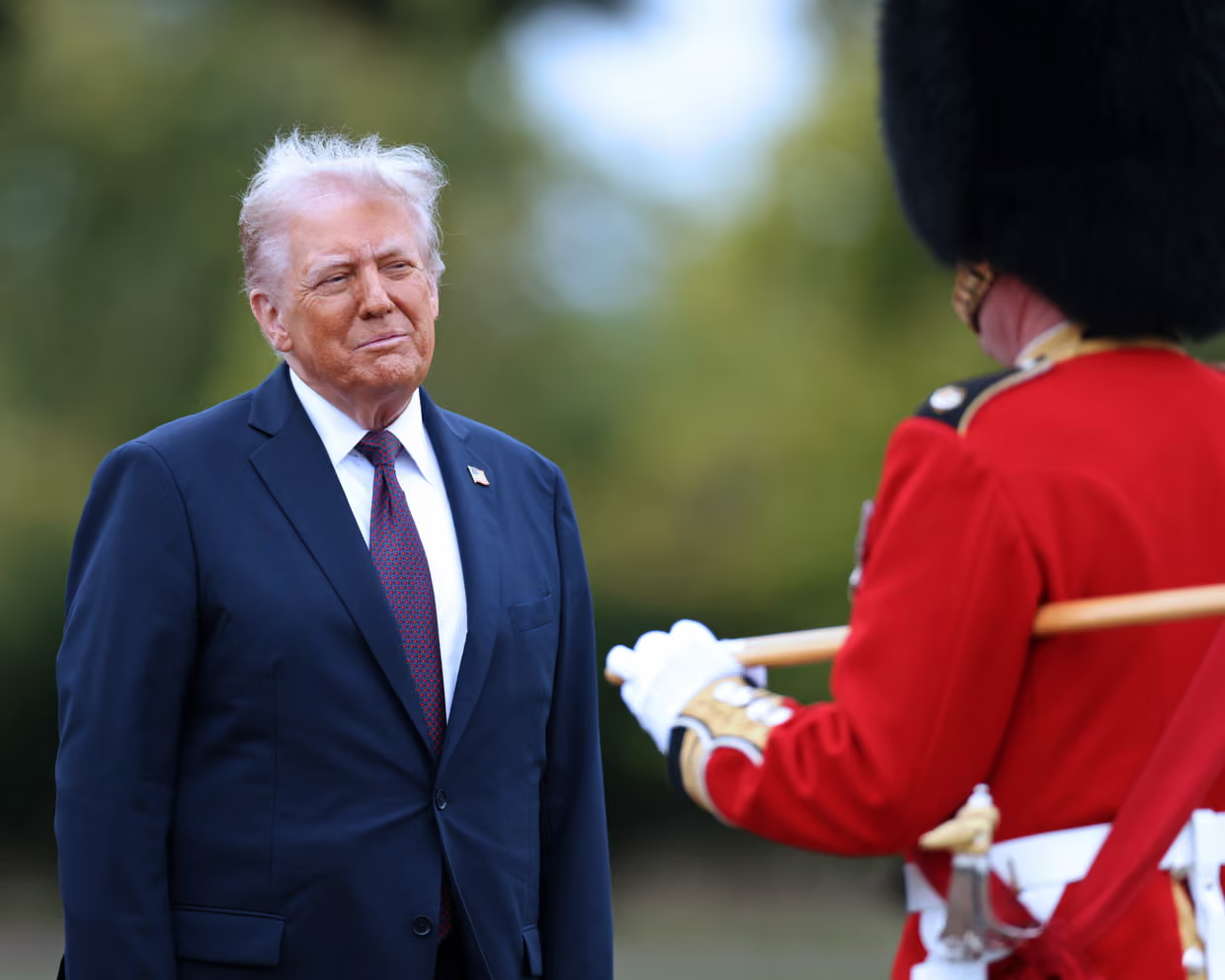

The Australian Broadcasting Corporation (ABC) has been barred from attending a press conference featuring former U.S. President Donald Trump in the United Kingdom this week. The decision follows a previous clash between Trump and ABC’s Americas editor, John Lyons, during a Washington DC event concerning the former president’s business dealings.
Press Accreditation Withdrawn
The ABC’s London bureau was informed by Downing Street that its accreditation to attend the joint press conference with Trump and British Prime Minister Keir Starmer had been withdrawn for “logistical reasons.” Despite this, the broadcaster retains access to other official events, including Trump’s planned lunch with Starmer at the Prime Minister’s country residence, Chequers.
An ABC spokesperson stated, “The ABC’s London bureau is still accredited to attend Chequers; however, Downing Street media has said it no longer has a spot at the joint press conference due to logistical reasons.” While officials cited logistical concerns, critics argue that the move may be influenced by Trump’s prior interactions with the journalist, raising questions about press freedom and media access during high-profile diplomatic visits.
Background on the Clash
The conflict between Trump and John Lyons occurred during a U.S.-based event, where Lyons questioned the former president about his business dealings. The exchange reportedly became tense, with Trump visibly frustrated by the line of questioning. Since then, the former president has been known to scrutinize media outlets he perceives as critical, and the ABC’s exclusion from the UK press conference comes amid this broader context.
The incident has sparked debate over media access and the treatment of journalists at state-level events. Observers note that such exclusions can undermine the transparency and accountability expected during high-profile diplomatic meetings, particularly those involving international media coverage.
Significance of the Press Conference
The press conference was scheduled to take place following Trump’s lunch with Prime Minister Starmer at Chequers. It was intended to provide a platform for both leaders to address bilateral relations, trade, and other diplomatic issues while allowing international journalists to ask questions. With ABC barred, one of Australia’s leading national broadcasters will be unable to represent its audience during this key moment of political discourse.
The move has drawn attention from media watchdogs and press freedom advocates. Many argue that logistical reasons often serve as a convenient justification for limiting access to critical media outlets, especially when the subject matter could be contentious or politically sensitive.
Media Freedom and Diplomatic Protocol
Excluding journalists from high-profile events raises important questions about the balance between security, logistics, and freedom of the press. While state visits typically require tight security measures and coordination among media, critics argue that selective exclusion undermines the principles of fair reporting and accountability.
In this case, the ABC’s removal comes against the backdrop of Trump’s broader contentious relationship with the media. Throughout his presidency and subsequent public appearances, Trump has frequently criticized journalists and news outlets, sometimes limiting access or labeling unfavorable coverage as “fake news.” Analysts suggest that these dynamics may be influencing decisions around media participation in the UK visit.
Reactions from Australia
The ABC’s exclusion has prompted concern in Australia regarding the ability of national media to cover international political events. Some commentators view the move as a discouraging sign for journalists reporting on U.S.-related politics, particularly in situations involving controversial figures like Trump.
John Lyons’ previous interactions with Trump highlight the challenges faced by investigative journalists covering high-profile leaders. Observers note that questioning powerful figures often comes with the risk of reduced access, but insist that maintaining independent and robust reporting is essential for public accountability.
Diplomatic Context
Trump’s second state visit to the UK has already attracted significant attention, combining ceremonial pageantry with widespread public protests. The event itself, including the luncheon at Chequers and the joint press conference, is highly symbolic, emphasizing U.S.-UK relations while navigating sensitive political and diplomatic terrain.
The exclusion of ABC from the press conference adds another layer to the visit’s complex dynamics, drawing focus to how media access is managed during high-stakes diplomatic interactions. Analysts suggest that such incidents can shape public perception, potentially creating tensions between governments, media organizations, and the public.
Looking Ahead
While the ABC remains accredited to attend other aspects of Trump’s UK visit, its inability to participate in the press conference limits its coverage of a major diplomatic moment. Observers will be watching closely to see how Downing Street and the involved media organizations address these concerns, particularly given ongoing debates about press freedom and equitable media access.
The incident underscores the challenges journalists face when covering political figures with a history of contentious interactions with the press. It also highlights the importance of transparency and fairness in granting media access to state-level events, particularly those with international significance.
The barring of ABC from Donald Trump’s UK press conference has reignited discussions around press freedom, media access, and the treatment of journalists during high-profile political events. While Downing Street cites logistical reasons, the timing and context suggest broader implications regarding media relations, transparency, and accountability in international diplomacy.
As Trump continues his state visit, the treatment of journalists like John Lyons and the ABC will remain under scrutiny, reflecting ongoing tensions between political figures, media organizations, and the public’s right to be informed.