
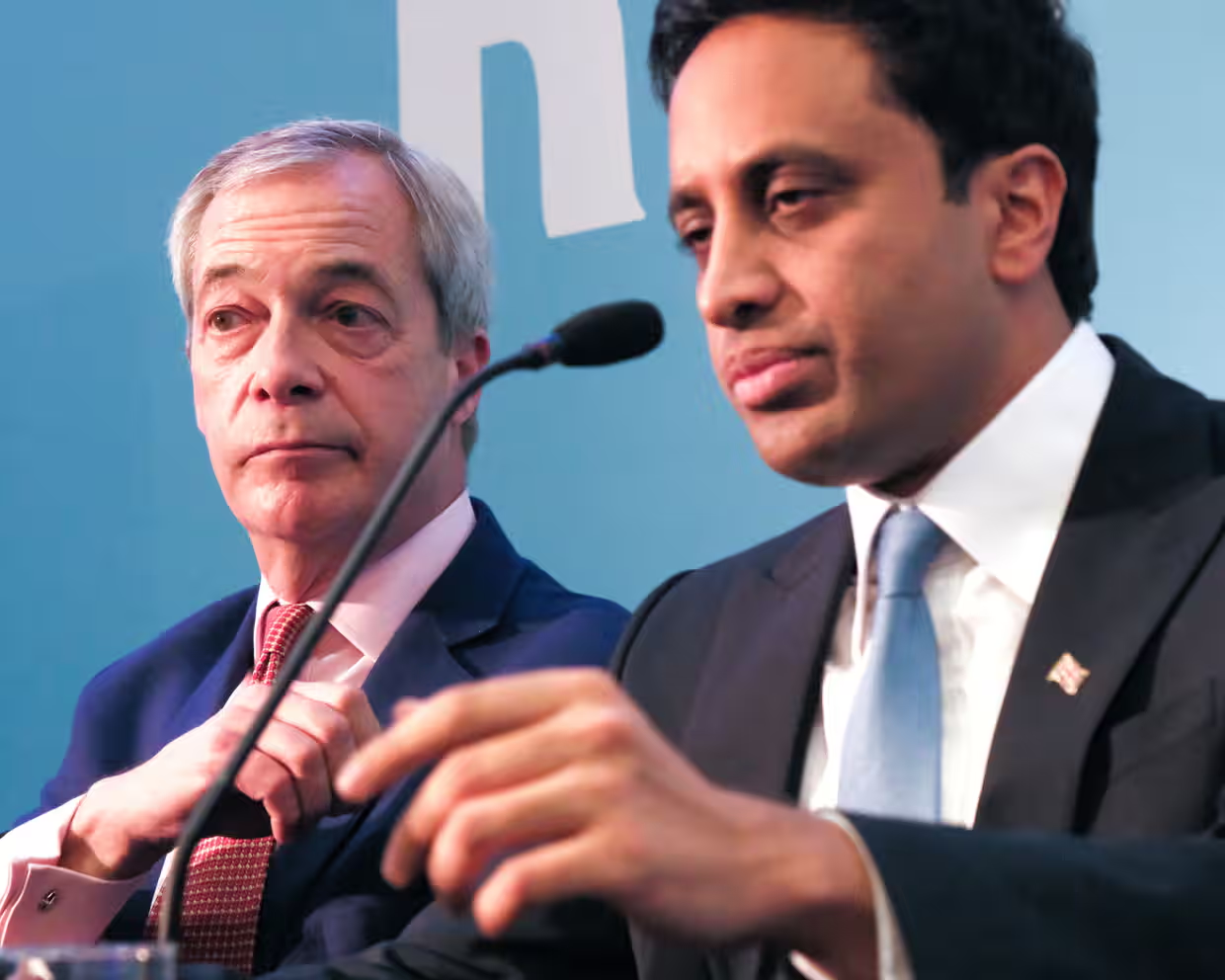
Departure of Reform UK Chair Zia Yusuf Adds to Nigel Farage’s Long Line of Party Fallings-Out

The recent announcement that Zia Yusuf, the chair of Reform UK, is stepping down has sent ripples through the UK political landscape. Yusuf, who has been widely credited with helping to steer Reform UK’s recent successes, describes himself as a “British Muslim patriot.” His departure marks the latest in a pattern of high-profile exits connected to Nigel Farage, the party’s founder and one of the most polarising figures in modern British politics.
In understanding the significance of Yusuf’s exit, it is essential to consider both his contributions to Reform UK’s rise and the broader context of Farage’s leadership style — one that has repeatedly seen falling-outs with key allies.
Zia Yusuf: A Key Architect Behind Reform UK’s Momentum
Since joining Reform UK, Zia Yusuf emerged as one of the party’s most prominent and respected voices. His identity as a British Muslim who openly supports nationalist and conservative causes helped the party broaden its appeal beyond traditional voter bases. Yusuf’s leadership as chair involved not just organizational oversight but also acting as a bridge to diverse communities, often sidelined by mainstream political parties.
Under Yusuf’s stewardship, Reform UK saw a noticeable increase in public support, particularly in regions feeling economically and socially neglected. The party positioned itself as a champion for working-class voters who felt abandoned by Labour and the Conservatives alike. Yusuf’s role was crucial in expanding Reform’s credibility as more than just a protest movement, aiming instead to become a serious political force.
His ability to navigate complex political and cultural landscapes gave Reform UK a degree of respectability and helped attract media attention that was often more substantive than the usual headline-grabbing soundbites associated with Farage.
What Does Yusuf’s Departure Mean for Reform UK?
Yusuf’s exit comes at a pivotal time for Reform UK. The party has been riding a wave of momentum but also faces the daunting challenge of transitioning from a protest platform to a stable political organization with lasting influence.
Insiders suggest that Yusuf’s departure could disrupt the party’s efforts to consolidate its gains. He was seen as a unifying figure within a party often characterised by internal debates and factional tensions. Losing a leader who brought both vision and stability could open the door to further internal disagreements.
However, the core of Reform UK’s support — particularly among working-class voters disillusioned with traditional parties — remains strong. Many observers believe that while Yusuf’s departure is a blow, it may not necessarily derail the party’s overall trajectory if new leadership can maintain discipline and focus.
Nigel Farage’s Leadership: A History of High-Profile Fallings-Out
To fully understand the significance of Yusuf’s departure, it’s important to look at Nigel Farage’s leadership style and his history of partings with close allies. Farage, who first rose to prominence as the leader of the UK Independence Party (UKIP), has long been a figure who inspires both loyalty and controversy.
Throughout his career, Farage has had several notable falling-outs with key figures within his political circles. These breakups often stem from disagreements over strategy, personality clashes, or differences in vision for the party’s future. While Farage’s charisma and media savvy have propelled his political movements to significant heights, his sometimes fractious leadership approach has also contributed to instability within his parties.
For example, UKIP experienced numerous leadership challenges and defections during Farage’s tenure, highlighting tensions that often flared between Farage and his deputies or senior officials. This pattern has continued with Reform UK, a party Farage launched as a fresh political vehicle after Brexit.
The departure of Yusuf is consistent with this broader pattern of turmoil, underscoring the challenge of sustaining unity under a leader with a strong personality and uncompromising style.
What Lies Ahead for Reform UK?
Reform UK now stands at a crossroads. The party’s future success depends heavily on how it manages leadership transitions and whether it can build a cohesive platform beyond its protest origins. Finding a new chairperson who can emulate Yusuf’s ability to engage with diverse communities and maintain internal harmony will be critical.
Moreover, Reform UK must continue to translate its electoral momentum into tangible policy proposals that resonate with voters. Issues like the cost of living, immigration, national identity, and public services remain front and centre in the party’s messaging. Balancing these priorities with the demands of party management will be a key challenge for the leadership team moving forward.
If Reform UK can weather the storm of Yusuf’s departure and maintain its current support base, it could continue to challenge the traditional political order in the UK. However, failure to manage internal divisions risks fragmentation and loss of voter confidence.
The Broader Implications for UK Politics
Yusuf’s departure also highlights the volatility of new political movements that emerge rapidly around charismatic leaders. Parties like Reform UK often experience rapid rises but can struggle with institutional stability. The UK political landscape, marked by increasing fragmentation, offers opportunities for such parties but also demands strong organizational foundations.
Nigel Farage’s influence on UK politics remains substantial, but the repeated fallings-out among his allies suggest underlying vulnerabilities. The ability of Reform UK to mature beyond a personality-driven movement will be tested in the coming months.
Zia Yusuf’s decision to leave Reform UK is more than just a personnel change; it symbolizes ongoing challenges within a party trying to establish itself amid shifting political dynamics. Yusuf’s role in Reform’s success cannot be overstated — his departure creates a gap that will need careful management.
For Nigel Farage, it is another reminder of the difficulties in maintaining a united front when leading a party built on strong personalities and polarising politics. Reform UK’s future will depend on how it navigates these internal tensions while continuing to connect with voters dissatisfied with the status quo.
In the fast-moving world of UK politics, Yusuf’s exit is a turning point — one that could either trigger further upheaval or push Reform UK toward greater stability and influence.