
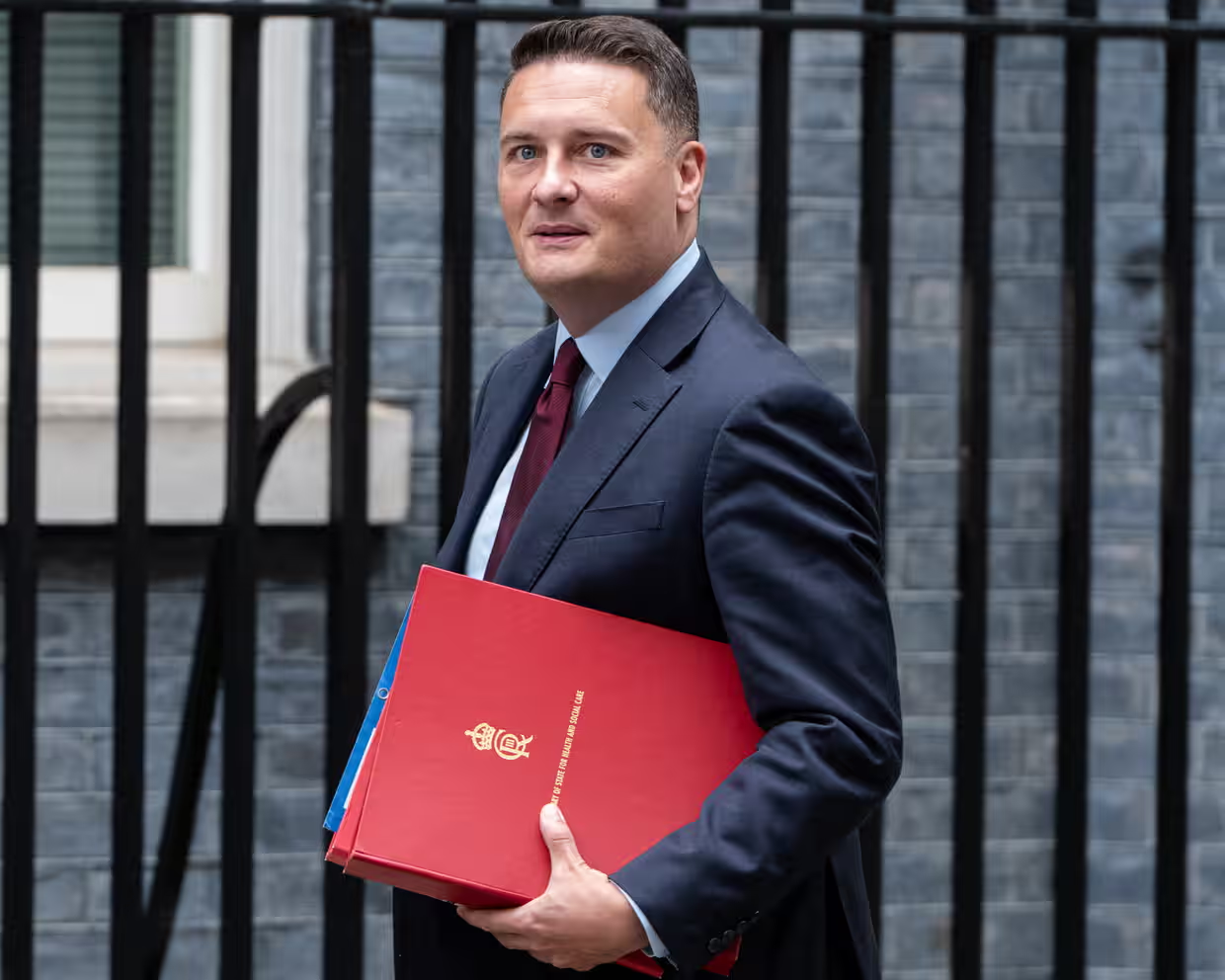
NHS Assisted Dying Service Faces Budget Questions as Health Secretary Warns ‘There Isn’t a Budget for This’

The recent parliamentary vote to legalise assisted dying in England and Wales has sparked a crucial debate about whether the NHS can afford to set up such a service. Health Secretary Wes Streeting, once a supporter of assisted dying, has raised serious concerns about the financial and ethical challenges involved, warning that the NHS lacks the budget and capacity to implement the new procedure effectively.
What Has Happened So Far?
Last week, MPs voted in favour of a bill to legalise assisted dying, allowing terminally ill patients to choose to end their lives under medical supervision. The legislation marks a significant shift in UK law and has been a subject of passionate debate for years.
However, with the bill’s passage comes the practical question: how will this new service be funded and delivered through the NHS, already under immense pressure?
Wes Streeting’s Change of Heart
Wes Streeting, the Health Secretary, has publicly changed his position on assisted dying. While he was previously in favour, he now says that the NHS cannot afford to set up and maintain the necessary infrastructure and services required to support assisted dying safely and ethically.
In a message to his constituents, Streeting wrote, “The truth is that creating those conditions will take time and money. Even with the savings that might come from assisted dying if people take up the service – and it feels uncomfortable talking about savings in this context, to be honest – setting up this service will also take time and money that is in short supply.”
His statement underscores the difficult financial balancing act facing the government, especially in the context of other urgent health priorities.
What Does Setting Up an Assisted Dying Service Involve?
Creating an assisted dying service within the NHS is complex. It requires training medical staff, developing strict legal and ethical guidelines, setting up oversight bodies, and ensuring that vulnerable patients are fully protected.
There must be safeguards to prevent abuse or coercion, thorough assessment procedures, and clear pathways for patients wishing to access the service. All of these steps come with costs—both financial and human resource-related.
Ethical and Practical Concerns
Streeting’s shift reflects more than just budget concerns. He has also highlighted ethical worries about introducing assisted dying before the NHS is adequately resourced and patients’ care options are fully improved.
“The politics of this is about prioritising,” he said. “It is a daily series of choices and trade-offs. I fear we’ve made the wrong one.”
His position suggests that while the goal of assisted dying might be compassionate, implementing it prematurely—without sufficient NHS funding—could strain services further and detract attention from improving existing end-of-life care.
The Wider Debate
Supporters of assisted dying argue that the service will give terminally ill patients more control over their lives and deaths and that it represents a compassionate response to suffering.
Opponents worry about the potential for abuse, moral implications, and the risk of diverting resources from palliative care services.
The financial angle, however, is often less discussed publicly but is critical in real terms. The NHS is under severe pressure from rising demand, staff shortages, and budget constraints.
What Comes Next?
With the bill now passed, the government faces the challenge of turning legislation into reality. This means allocating funding, setting up regulations, and ensuring medical staff are prepared and supported.
Health Secretary Streeting’s comments suggest that the government will need to carefully consider how to balance this new responsibility alongside other NHS priorities. Whether additional funding will be earmarked specifically for assisted dying remains unclear.
Why This Matters to the Public
For many people, assisted dying touches on deeply personal and ethical issues around autonomy, dignity, and suffering. But it also highlights the practical realities of how public health services operate and are funded.
If the NHS cannot afford to run the service safely, there could be risks to patient welfare, trust in the system, and overall quality of care.
The UK is at a crossroads with assisted dying legislation. The parliamentary vote marks a historic moment, but the journey from law to practice is fraught with challenges—especially financial ones.
Wes Streeting’s warnings remind us that good intentions alone aren’t enough. Setting up an assisted dying service requires careful planning, funding, and safeguards to truly serve patients’ needs without compromising the NHS’s already stretched resources.
As the government moves forward, the public will be watching closely to see how this balance is struck—and what it means for the future of end-of-life care in the UK.