
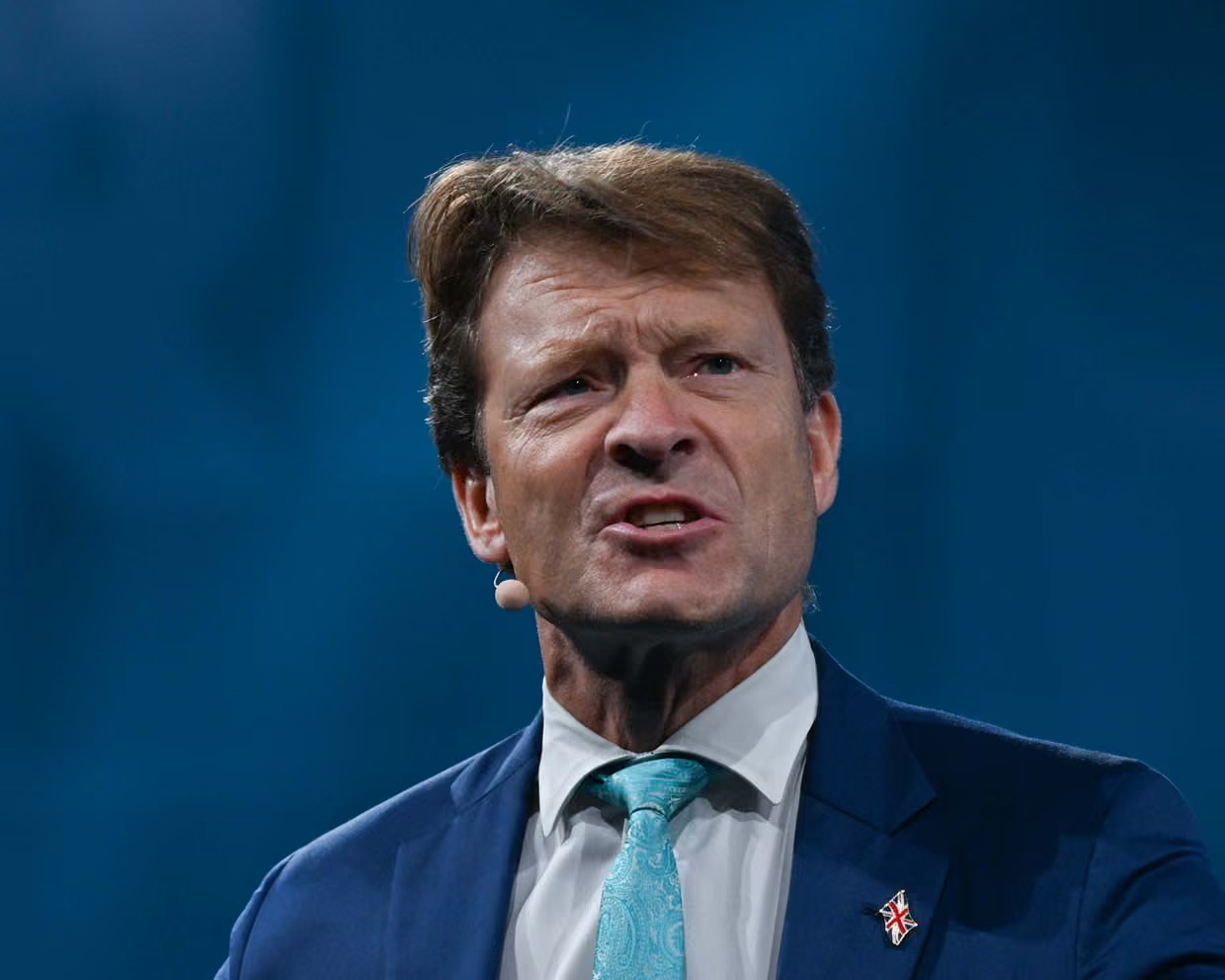
Reform UK’s Bold Stance: High-Speed Rail to the North ‘Not Worth It,’ Says Richard Tice

Reform UK’s deputy leader Richard Tice has delivered a blunt message that is shaking up the debate on northern transport infrastructure. Tice announced that if Reform forms the next government, it would axe any high-speed rail schemes earmarked for northern England, including Labour’s proposed Liverpool-Manchester line and extensions of the HS2 project. His warning to companies considering bids for such projects is simple: “Do not bother.”
The message comes at a critical moment. Labour is preparing to announce its support for the Northern Powerhouse Rail (NPR) initiative, a £17 billion plan to link key northern cities with faster, more efficient transport connections. But Tice’s comments highlight the ideological and political divides shaping Britain’s approach to infrastructure investment.
A Clear Break from the Past
Tice’s remarks are part of a wider critique of high-speed rail investments that have long been touted as game-changers for northern cities but often mired in delays, escalating costs, and questionable returns. In a foreword to a report from the Policy Exchange think tank—written by Andrew Gilligan, a vocal opponent of HS2—Tice called high-speed rail “a handful of lines serving a handful of cities” that ignores the everyday needs of commuters and small businesses.
According to Tice, voters outside political circles are far less enthusiastic about grand transport projects than government officials and industry lobbyists assume. Instead, he argued, residents want practical solutions: better-maintained railways, safer roads, and investments that directly impact their lives.
“Do not bother bidding for these schemes,” Tice told construction firms, “because the money would be better spent on what the country actually needs.”
Labour’s Revival Plan
Labour, for its part, is set to revive Northern Powerhouse Rail, with a particular focus on the Liverpool-Manchester route. The scheme would use parts of the HS2 northern extension scrapped by former Prime Minister Rishi Sunak in 2023. Labour’s Chancellor, Rachel Reeves, hinted at the upcoming announcement in her budget speech, and sources suggested the full plan would be unveiled ahead of the party conference.
For supporters, NPR represents a long-awaited investment to modernize the region’s transport network, create jobs, and address historic inequalities between northern and southern England. The project is seen as central to Labour’s promise of “levelling up,” offering hope to communities that have suffered from underinvestment.
Critics Push Back
The opposition’s stance has not gone unchallenged. Henri Murison, chief executive of the Northern Powerhouse Partnership, condemned the Reform UK proposal as “irresponsible,” warning that it would undermine efforts to boost employment and productivity.
“The north has waited too long for reliable transport infrastructure,” Murison said. “To threaten to scrap these plans before they are even fully set out will jeopardize growth, investment, and opportunities for the next generation.”
Murison’s concerns reflect fears among business leaders and policymakers that abandoning high-speed rail ambitions could widen regional divides and leave critical infrastructure needs unmet.
What’s at Stake?
At the heart of the debate is a question of priorities. Reform UK’s approach emphasizes fixing existing networks and investing in infrastructure that serves a broader population. Its critics, however, argue that such short-term thinking could stall transformative projects designed to reshape northern transport and boost the economy over the long term.
The proposed NPR line and revived HS2 extension would connect major hubs, improve access to airports like Manchester, and potentially attract investment in logistics, technology, and manufacturing. Yet critics point out that the benefits may not be evenly distributed and that cost overruns could strain public finances.
The Transport Department, responding to Tice’s intervention, reiterated its commitment to addressing the north’s longstanding transport deficiencies. “The north has been stuck with second-rate transport for too long,” a spokesperson said. “We are delivering infrastructure for faster, more reliable journeys to create jobs and growth.”
A Political Gamble?
With Labour aiming to shore up northern support and Reform UK riding a wave of rising popularity, the battle over infrastructure is as much political as it is logistical. Tice’s hardline stance could appeal to voters frustrated with expensive, elite-driven projects, but it risks alienating businesses and communities hoping for significant investment.
As the general election approaches, the fight over high-speed rail will likely serve as a proxy for broader debates about how government should balance ambition with practicality, long-term planning with immediate needs, and innovation with everyday functionality.
Looking Forward
For now, the future of northern transport remains uncertain. Labour’s NPR scheme promises a revitalized rail network, while Reform UK’s rejection signals a desire for a radically different approach to infrastructure spending.
As companies and policymakers brace for announcements in the coming months, one thing is clear: Britain’s transport strategy is at a crossroads. Whether the focus will be on bold, transformative projects or pragmatic improvements to existing networks will define the political landscape—and the lives of millions across the north—for years to come.