
Labour Accused of Using Jimmy Savile’s Name to Provoke Nigel Farage, Sparking Outrage from Abuse Victims’ Lawyer

Labour ministers are facing backlash after invoking the name of disgraced former TV presenter Jimmy Savile in political exchanges that appeared to target Reform UK leader Nigel Farage. Legal representatives of Savile’s victims have strongly criticised the move, calling it an act of political provocation that risks retraumatising survivors of historic abuse.
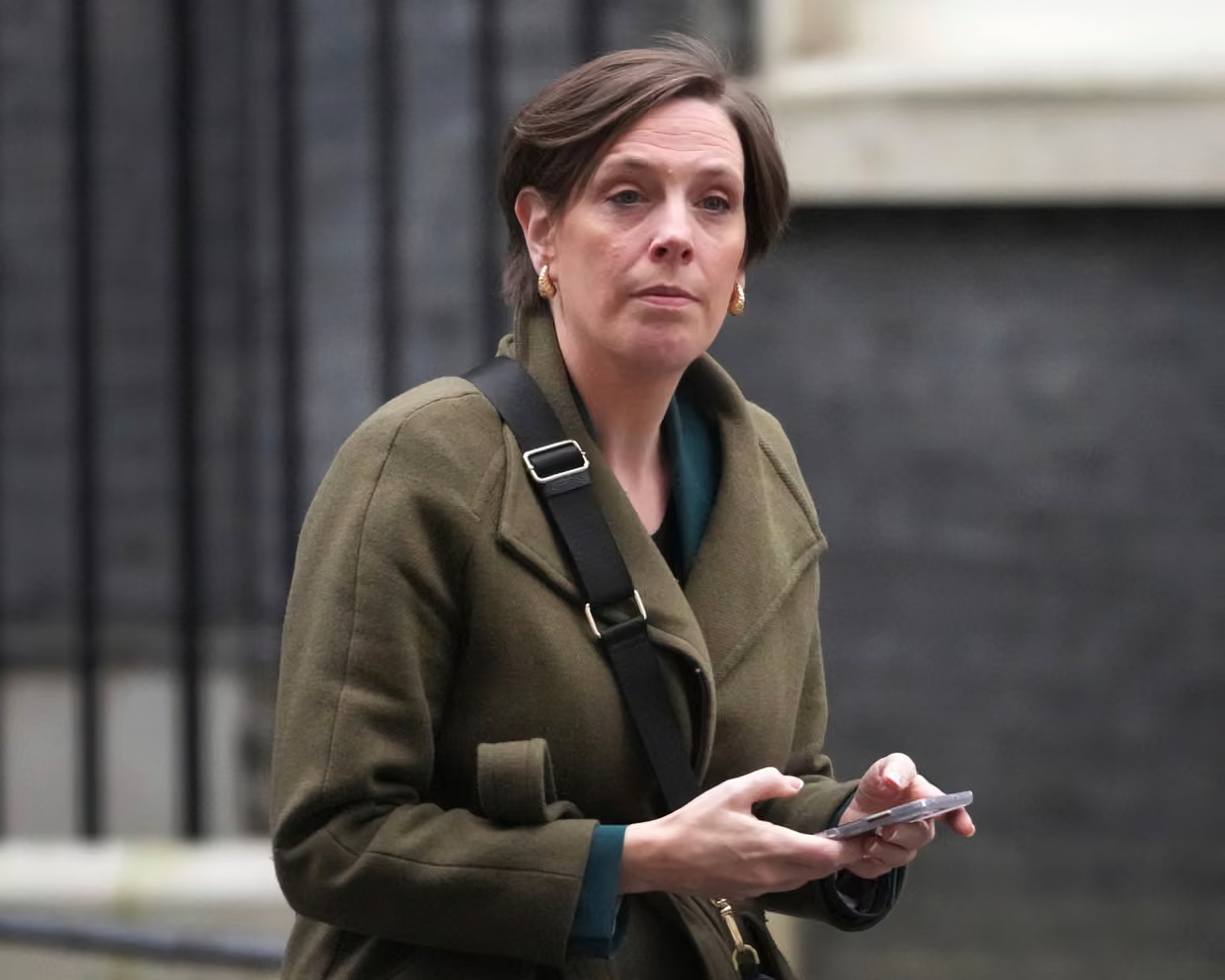
The controversy began after Jess Phillips, the UK’s safeguarding minister, mentioned Savile in connection with political discourse surrounding Farage. While the remarks did not directly accuse Farage of wrongdoing, critics argue that the reference to Savile, a widely reviled figure due to his long history of sexual abuse, was used as a tool to score political points.
Alan Collins, a lawyer at Hugh James solicitors who represents many of Savile’s victims, called the move “toxic” and “deeply concerning.” He expressed alarm that survivors of abuse were being used in a political battle they had no part in. According to Collins, such references are harmful and dismissive of the suffering endured by those who were directly affected by Savile’s crimes.
“It is troubling that Jimmy Savile’s name is still being used in political debates. For survivors, the name evokes pain, trauma, and injustice. It should never be used lightly, and certainly not as a rhetorical device in Parliament or public discussion,” Collins said.
The criticism comes amid heightened political tension in the UK, with the Labour Party and Reform UK trading increasingly sharp attacks in the lead-up to the next general election. Farage, a controversial figure in British politics and recently re-elected to the political spotlight, has long been at the centre of polarised public opinion.
Labour has yet to issue a formal apology or retraction for the remarks, though sources within the party suggest the intention was not to cause harm to victims but rather to underline concerns about safeguarding and political accountability. Nonetheless, advocacy groups say the use of such emotionally charged references must be approached with extreme caution and sensitivity.
Savile, once a beloved television personality, was posthumously exposed as one of the UK’s most prolific sexual predators. The extent of his abuse only came to light after his death in 2011, prompting nationwide outrage and a major investigation into how he was able to operate with impunity for decades. A subsequent review found that Savile had used his celebrity status and access to institutions like hospitals and the BBC to exploit hundreds of victims, many of them children.
Given the scale and horror of Savile’s abuse, his name has become a symbol of institutional failure and betrayal. Survivors and advocacy groups have consistently urged public figures to treat the subject with gravity and respect.
“It’s inappropriate to drag his name into contemporary politics,” said a spokesperson for a leading child protection organisation. “It distracts from the real issues, reopens wounds for survivors, and risks politicising the experiences of those who have suffered real harm.”
Farage himself responded to the remarks during a press event, calling the use of Savile’s name “desperate and disgraceful.” He accused Labour of weaponising sensitive topics for political gain and urged the public to reject what he called “gutter-level” tactics.
Political analysts noted that this controversy reflects a broader trend of increasingly aggressive rhetoric across the political spectrum, where personal attacks and provocative language are becoming more common.
In response to growing criticism, some Labour MPs have distanced themselves from the comments. One unnamed backbencher said the remarks were “unwise” and “not in keeping with the party’s values.” However, others within the party defended the use of strong language when discussing safeguarding and accountability in public life.
The incident has also renewed calls for all political parties to adopt a formal code of conduct regarding references to historical abuse cases. Some campaigners are pushing for parliamentary guidelines that would prevent MPs from invoking traumatic events or figures in a way that is perceived as exploitative or insensitive.
As the UK moves closer to the next general election, political messaging is likely to intensify. However, this latest controversy serves as a reminder of the importance of ethical boundaries in political discourse, especially when the language used touches on the pain of real victims.
For now, survivors of Savile’s abuse and their advocates are calling on political leaders to focus on policies and accountability, not provocative soundbites. Their message is clear: the suffering of victims should not be used as ammunition in political debates.